Monasteries in India and abroad: the bow, the kora, the hush
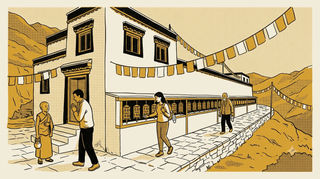
Visiting a Buddhist monastery: greet with anjali instead of a handshake, walk the kora clockwise with the building on your right, and plan around its schedule.
A lifelong learning library for being a better neighbour, at home, on the road, online, anywhere people share space.
India-rooted. World-applicable.
India is wall-to-wall sacred sites and heritage monuments. Behavior at these is shaped by faith, custom, and the basic civic responsibility to leave a place at least as well as you found it. We cover the major Indian faiths and the reverse case: Indians at faith sites abroad.
Browse all 13 lessonsVisiting a Buddhist monastery: greet with anjali instead of a handshake, walk the kora clockwise with the building on your right, and plan around its schedule.
The most visceral category. Spitting paan and gutka, public urination, nose-blowing, hand hygiene, public toilets. Each topic is uncomfortable for a reason, and the reason is that we have not had this conversation as a society. We are having it here, with care, and without lecturing.
Browse all 13 lessonsA spit-jar turns a public habit into a private one: the Mughal-era vessel it revives, what Indian Railways spends on stains, and how to build the routine.
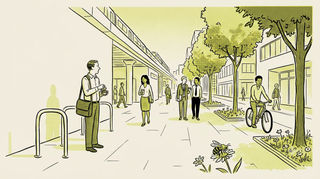
Metros, buses, trains, autos, cabs, escalators, elevators. The shared spaces that move us. Indian transit etiquette is rapidly evolving (the metro generation behaves differently from the bus generation). We document where it's going.
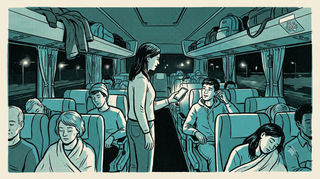
Browse all 16 lessonsOn a booked long-route bus the seat is allotted, not first-come. How to claim your printed seat number politely, and the etiquette of swapping the window.
Digital public space is public space. WhatsApp forwards shape elections, Instagram comments shape mental health, online reviews shape small businesses. We teach digital behavior as civic behavior, not personal preference.
Browse all 11 lessonsA 4-step check before sharing any claim online: source, date, verification, plausibility. How to spot 'forwarded many times' misinformation in seconds.

Queue culture is the most visible civic skill Indians get judged on, both at home and abroad. The fix is partly behavioral and partly trust: most queue jumping is fear that the line won't hold, and that fear is sometimes well-founded. We teach how to be, and how to make, queues that work.
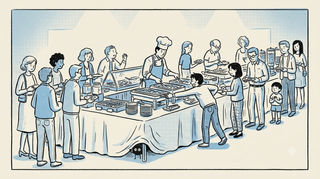
Browse all 11 lessonsA buffet line is not a competition; the food is replenished. One plate per station per trip, no reaching across, and why a slow loop first saves chaos.
This site is for everyone, across cultures, backgrounds, ages, nationalities, and genders. Civic sense isn't a national trait or a deficit. It's a set of practical habits for sharing public space respectfully. Each lesson teaches one habit, citing the law, the research, and the lived experience behind it.
Why "India-rooted"? Because India is where the platform is being written from, and most of its examples are Indian streets, queues, and gatherings. That's a choice of starting point, not a claim about anyone. The principles are universal; the casework is local. If you read three lessons, you'll see the patterns travel.
It's a lifelong learning library. Habits change slowly. New situations come up. We add lessons as we encounter them and update existing ones as the law, the data, or the framing shifts. Each article carries a last-updated date for exactly this reason.