Eating on the metro: India, Singapore, Tokyo, London
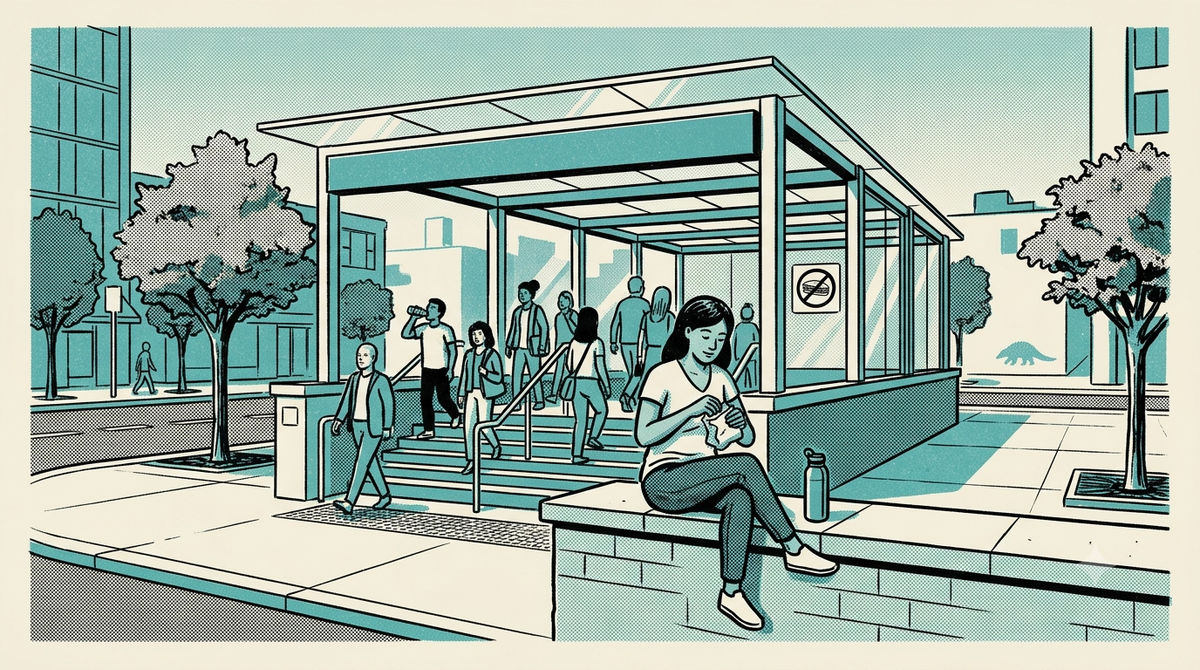
TL;DR
- Most Indian metros (except Mumbai locals) ban eating. Drinking water is allowed.
- Singapore MRT bans all eating and drinking, water included, with a S$500 fine.
- If eating is allowed, choose dry, low-smell, low-crumb, sealable food.
- When in doubt, save the food for after the ride and read the local rules.
Contents
The cultural moment
You're hungry, you're on the metro, you have a samosa or a granola bar. Can you eat it?
The answer varies by city, by metro system, by enforcement, and by social custom. Each city's answer comes from a real logic. None of them are arbitrary.
How it shows up across contexts
| Context | What's normal | Why it works there |
|---|---|---|
| In India (Delhi Metro / DMRC) | Eating and drinking are PROHIBITED inside Delhi Metro under DMRC Conduct of Passengers Rules. Fine: ₹200. Drinking water is allowed. Enforcement is sporadic but real, especially at major interchange stations. | Crumb spillage attracts pests, food smell affects other passengers in close quarters, spilled liquids damage flooring and electronic systems. |
| In India (Bengaluru Namma Metro) | Same rules: no eating, drinking water allowed. Fine ₹100-₹500. | Same reasoning as DMRC. Most Indian metros have aligned on this since DMRC's 2002 launch. |
| In India (Mumbai local trains) | Eating is universally practiced and culturally accepted. Vendors sell food on platforms; commuters carry tiffins. | Mumbai locals are often 60+ minute commutes; food on the move is a daily necessity. The system was never built around no-eating. |
| In Singapore (MRT) | Eating and drinking strictly prohibited. Fine: S$500 (~ ₹30,000). Strictly enforced by Public Transport Officers. | Singapore's strict-fines model. The rule is signaled, fined, and respected. Cleanliness of the MRT is a cornerstone of public transit pride. |
| In Tokyo (Tokyo Metro / JR) | Eating on commuter trains (not Shinkansen) is technically not prohibited but socially strongly discouraged. Bento boxes are normal on long-distance trains; sandwiches on subway trains are unusual. | Japanese transit norms heavily prioritize quiet, calm, and minimal-imposition. Eating creates smell and visual presence that interrupts others' calm. |
| In London (Tube) | No specific ban on eating; alcohol is banned (since 2008) on the Tube and London buses. In practice, full meals are uncommon, snacks are common, smelly food is socially shamed but not illegal. | Britain's libertarian transport-rules culture combined with strong informal norms. The "no smelly food" rule is enforced by collective tutting, not by fines. |
| In NYC subway | No general food ban; eating is permitted. Drinking alcohol on the subway is illegal. | American transit norms prioritize individual freedom; food is your business. Cleanliness is consequently a perpetual MTA challenge. |
The translation move
Three takeaways for the reader:
At home (Indian metros except Mumbai locals): No eating. The rule is clear and the fine is real. Drink water if needed; that's allowed. Save the food for after you exit.
In Mumbai locals: Eating is fine. Pack the trash carefully; don't leave wrappers on the seat.
Abroad (Singapore especially): Read the signs. Singapore's S$500 fine is real and enforced. Tokyo and London are about social norms, not fines, but the social cost of eating in their commuter cabins is real.
Universal rule across all cities: If you're allowed to eat, the food choices that travel well in transit are: dry, low-smell, low-crumb, sealable. A granola bar travels better than a samosa. A boxed sandwich travels better than a kebab roll. A bottle of water travels better than a cup of tea.
If the food is high-smell (anything fried, anything with strong masala, anything that needs to be eaten hot), wait for after the ride. The 15-minute delay matters less than you think; the smell-imposition matters more.
Try this next time
Before bringing food onto any metro or train, ask:
Is eating allowed here? (Most Indian metros: no. Locals: yes. Most international metros: usually no or socially discouraged.)
If yes, can the food be eaten without smell or crumb impact on the people in the seat next to you?
If no to either, save it. The 4-minute delay to exit, eat, re-enter is small.
Quick check
1. You're on the Bengaluru Namma Metro Purple Line, hungry, and you've got a samosa from the platform vendor. You're not very hungry, just want a quick bite. What's the right move?
Select an answer.
2. You're on the Singapore MRT going to Changi Airport. You have a bottle of water and a banana from the hotel. You're thirsty. What's the right move?
Select an answer.