Photography, queues, and the inner sanctum
TL;DR
- Most temples restrict photography near the sanctum and many ban devices from the gate; read the temple's official dos and don'ts before you travel, not at the door.
- The queue's one rule is your turn: no rushing the darshan line, offerings in the hundi, children's hands in yours when the line surges.
- At the sanctum: hands folded, eyes up, feet moving. The guard's 'keep moving' is the queue behind you, spoken aloud.
- Official fast-darshan systems exist and are booked on the temple's own portal; the tout's version is neither official nor faster.
Contents
The moment
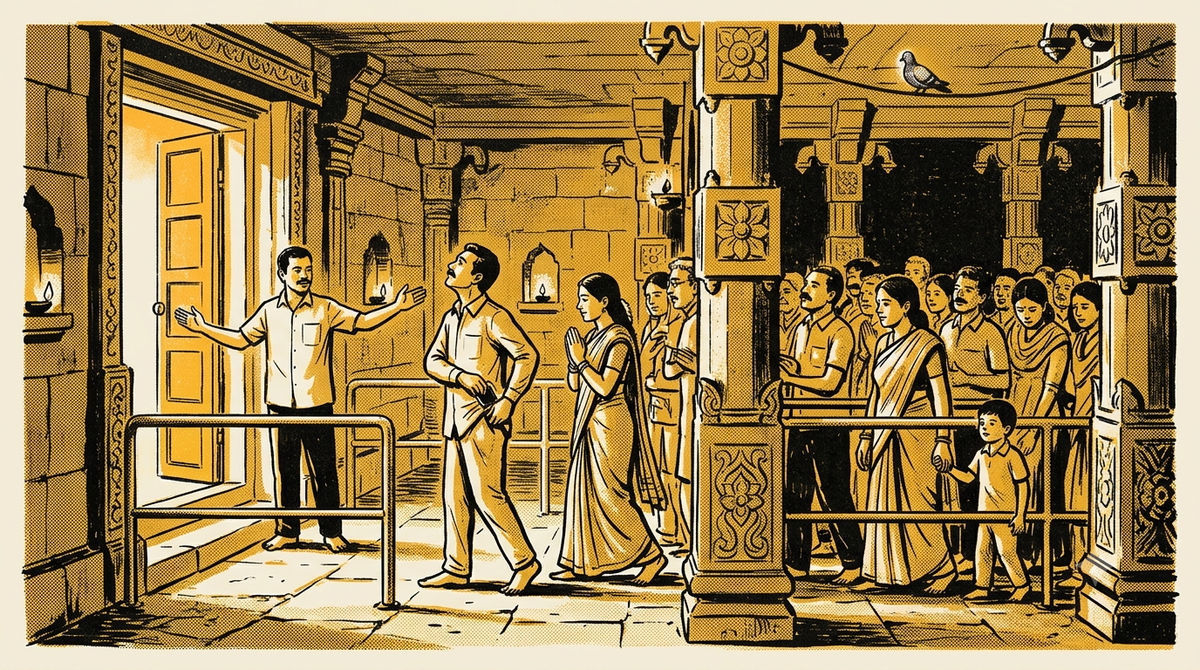
You are in the queue complex at Tirumala at 4:40 am. Three hours of compartment benches, one shared thermos, a hundred soft chants. The final corridor opens and the line compresses. Twenty feet from the sanctum, the man ahead of you raises his phone to record. A guard's voice cuts through: jaragandi, keep moving. You have about four seconds of darshan left, and one decision about what they are for.
What's actually happening
Three pressure points meet at the sanctum door. The queue is hours long and the darshan is seconds, so patience runs out exactly where conduct matters most. The phone wants to keep the moment; the temple wants the moment kept sacred. And the sanctum seconds have their own grammar (hands, eyes, feet) that nobody teaches you in the queue.
None of this is faith versus phones. The temple board is moving an enormous crowd through a doorway a metre wide. Most temples restrict photography near the sanctum, many ban devices from the complex gate onwards, and at ASI-protected temples the rules follow one national rulebook. Every paused selfie multiplies down the line behind you.
What works better
Before you travel. Read the temple's own dos and don'ts online; five minutes settles the phone question before you leave home. If devices are banned, use the deposit counter and pocket the token. For faster darshan, the official system (Tirumala's Seeghra Darshan, booked on TTD's own portal) is advertised and regulated. The tout's version is neither.
In the queue. Take your turn. TTD's list says it plainly: don't rush in for darshan instead of waiting your turn. When the line surges, close gaps at walking pace, keep children's hands in yours, and let the compression pass. Offerings go in the hundi, not over the railing. Voice low; chant softly if you chant.
At the sanctum. Hands folded, eyes up, feet moving. Don't stop for a photo. Don't prostrate in the moving line; at Tirumala the don'ts list asks you not to. The guard's jaragandi is not rudeness. It is the arithmetic of the queue behind you, spoken aloud.
Photography. Courtyards and gopurams are usually fine; sanctums are not. Other devotees are not scenery. Ask before anyone is in your frame, and when a sign or a priest says no, that ends it.
Why it matters
The darshan you queued three hours for lasts seconds, and so does everyone else's. If a thousand people ahead of you each pause for ten seconds of video, that is nearly three hours added to the day's collective wait. The discipline at the sanctum door is not bureaucracy. It is the only reason the queue moves at all.
Try this next time
Before your next temple trip, open the temple's official website and read its conduct page once. If devices are banned, deposit yours before the queue, not at the door. At the sanctum, give your four seconds to the deity, not the camera. The long look back is for the outer mandapam, where nobody is waiting behind you.
Quick check
1. You are 30 seconds from the sanctum at a major temple after a three-hour queue. Photography is banned past the gate, but the devotee ahead lifts his phone anyway, and the guard tells him to keep moving. Your own phone is in your pocket. What is the move?
Select an answer.
2. In the final corridor before the sanctum, the queue surges and a gap opens ahead of you. Two men behind you push forward, and your mother, next to you, stumbles a step. What works?
Select an answer.