The window-seat economy of the long-route bus
TL;DR
- On a booked bus the seat is allotted, not first-come. Your number is printed on the ticket.
- If someone is in your seat, show the number and ask. Do not hover and sulk, and do not squat in a seat that is not yours.
- Swapping is fine if you ask. The window seat carries shared controls: the curtain, the pane, the vent.
- The window has real value beyond the view, so a queasy passenger asking to swap into it is being sensible, not fussy.
Contents
The moment
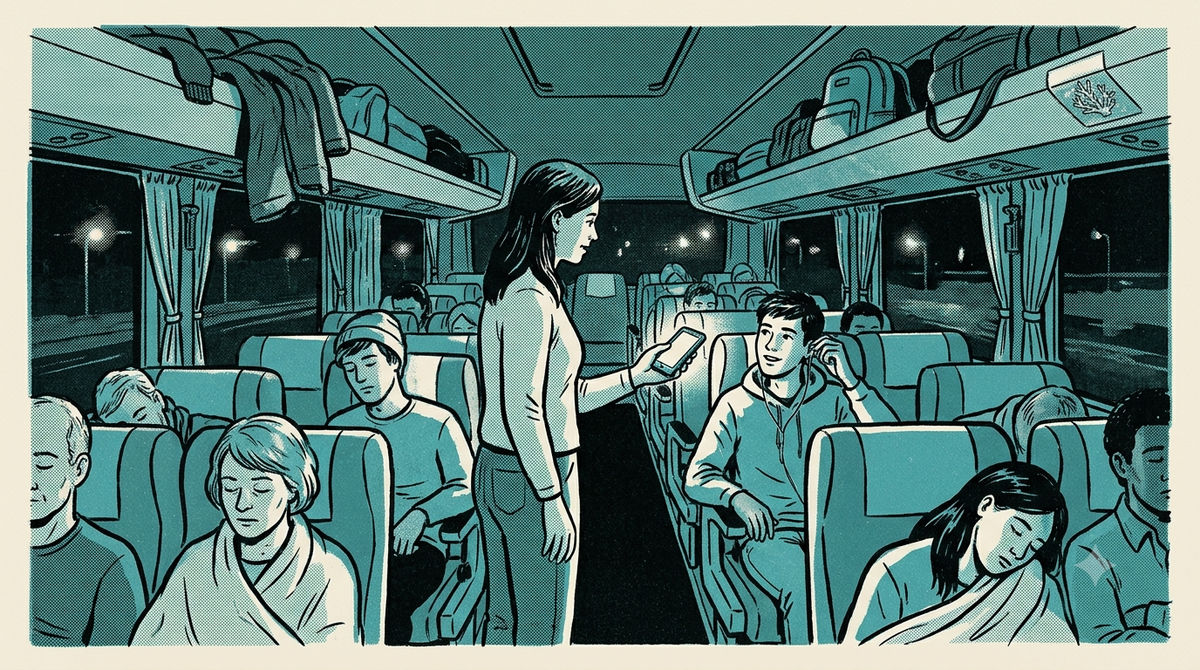
It's 9:45 pm at the Madiwala stop. You climb onto the overnight Volvo to Madikeri, find row 7, and someone is already settled into the window seat with their earphones in. Your ticket says 7A, the window. You stand in the aisle holding your phone, weighing it. Do you make a thing of it, or take the aisle and stew for six hours?
What's actually happening
On a booked long-route bus, the seat is not first-come. It is allotted. The number printed on your ticket is the one the system held for you, and the same is true for everyone else on board. The person in your window seat is probably not scheming. They boarded, saw an empty window, and sat. Boarding order feels like ownership. It is not.
There is a second thing happening too. The window seat is not just a view. It comes with controls the whole row shares: the curtain, the sliding pane, often the nearest AC vent. Whoever sits there is quietly in charge of light and air for the people beside them.
What works better
Know your seat number before you board. Your seat is the one printed on the ticket.
If someone is in it, do not hover and sigh. Show them your ticket and say, "I think this one's mine, 7A." Almost everyone moves at once. The number settles it without anyone losing face.
If you would actually rather sit elsewhere, swapping is completely fine. The rule is simple: ask, do not squat. "Would you mind swapping, I get queasy by the window" is a normal request and usually a yes.
And if you do get the window, use the controls kindly. At night, draw the curtain so oncoming headlights do not strobe the row awake. Do not hog the shared vent. If your aisle neighbour looks unwell, a cracked-open window helps them more than it troubles you.
Why it matters
Allotted seating is the quiet system that stops forty strangers from fighting over the same forty seats. KSRTC and every online-booked service print a seat number for exactly this reason. When you sit in your allotted seat, the system works and nobody has to negotiate at all.
The window seat has real value beyond the view, which is why people trade for it. The NHS lists two of its main motion-sickness tips as looking out at the horizon and getting fresh air. For a passenger who gets carsick on ghat roads, the window is not a luxury, it is medicine. That is worth a generous swap.
Try this next time
Before your next long bus journey, note your seat number from the ticket and decide in advance. If it is the window and you do not need it, you will offer it to a seatmate who does. If someone is in your seat, you will show the number, not sulk. The whole row travels easier when one person sets the tone.
Quick check
1. You board a booked overnight bus and someone is asleep, or pretending to be, in 7A, the window seat your ticket assigned you. You would genuinely prefer the window. What is the best move?
Select an answer.
2. Your seatmate on a winding ghat route says they get carsick and asks to swap into your window seat. You had been looking forward to the view. What is the kind and sensible call?
Select an answer.