Why public-shaming an offender often hurts more than it helps
TL;DR
- Filming a violation and publishing a face are two different acts. Only one of them can produce a fine.
- A crowd cannot issue a challan. It can only issue attention, and attention has no dosage, no expiry, and no appeal.
- Send the clip to the body that can act on it. Delhi's Traffic Prahari app and its city equivalents exist for exactly this.
- If you still want to post, post the behavior without the number plate and the face. You lose nothing except the pile-on.
Contents
The moment
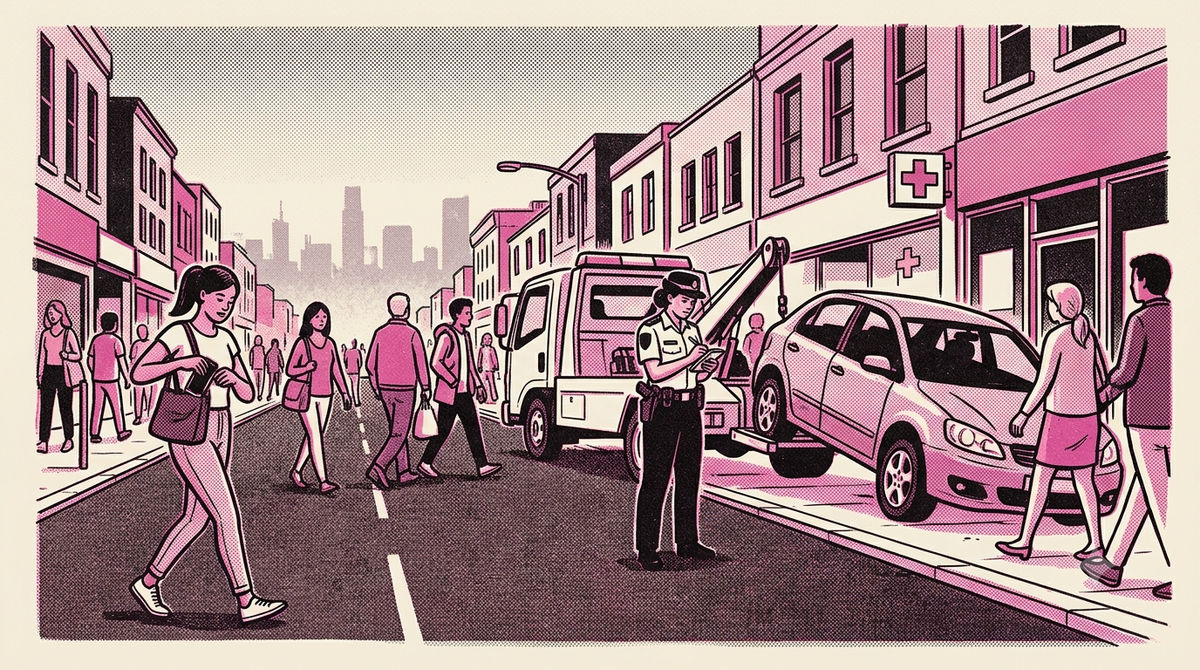
A car noses halfway across the footpath outside a chemist. Someone pushing a pram has to step into moving traffic to get around it. You film all of it: the car, the number plate, the driver's face at the moment of return. At home you post the clip with a caption asking people to tag them. Four hours later it has 900 shares, and forty people in the replies have decided they know where the driver works.
What's actually happening
You did two separate things and meant only one.
You documented a violation, which is useful. Then you handed a crowd a face, which is a different act with a different outcome. A crowd cannot issue a challan. It can only issue attention, and attention has no dosage, no expiry date, and no appeal. The footpath violation carries a fixed fine. The internet's version has no ceiling, no end, and it reaches the person's family and workplace on the way.
There is also the part you cannot check. A number plate belongs to a vehicle, not to a person. The face you filmed may not be the registered owner, and the reply that "found the office" is a guess wearing the clothes of a fact.
What works better
Split the two acts, because they need different channels.
Send the violation where it can be acted on. Delhi Police run an app, Traffic Prahari, that takes citizen photos and videos of traffic violations for prosecution. Most large Indian cities run something equivalent. What it needs is the date, the time, the place, the registration number and the violation type, which is what a notice legally requires (Source: Delhi Traffic Police). That produces a challan. A post produces a thread.
Post the behavior, not the person. Blur the plate. Crop the face. The behavior is the lesson; the individual is not. You lose nothing except the pile-on.
If you are the one being piled on, the National Cyber Crime Reporting Portal takes complaints online, including cyber bullying and stalking. If money is involved, the 1930 helpline is faster (Source: Ministry of Home Affairs).
Why it matters
In April 2013, after the Boston Marathon bombing, users on Reddit crowdsourced a hunt for the bombers. They settled on a missing university student who had nothing to do with it. His family was accused across Reddit, Twitter and Facebook for days. Reddit's general manager apologized publicly. Some of the activity on the site, he wrote, had fueled "online witch hunts and dangerous speculation" with "very negative consequences for innocent parties". The hunt, he noted, had begun "with noble intentions" (Source: NBC News).
Noble intentions is the whole problem. Nobody in that crowd meant harm. Once a face is in circulation, intent stops governing outcome, and every single person who shares is certain they are one of the reasonable ones.
Shaming works as deterrence only when it is proportionate and reversible. Online it is neither.
Try this next time
The next time you film someone breaking a rule, send it to the body that can act on it before you post it anywhere, and give yourself an hour. If you still want to post it, post the behavior with the plate and the face taken out. Default to reporting, not broadcasting.
Quick check
1. You film a car parked across a footpath, forcing pedestrians into traffic. You have the plate, the location, and the time. What actually gets the car moved and the driver fined?
Select an answer.
2. A thread is going around identifying a stranger as the person in a viral clip of an ugly incident. The evidence is a blurry frame and a name someone supplied in the replies. It is being shared widely. What's the move?
Select an answer.