The footpath is for walking
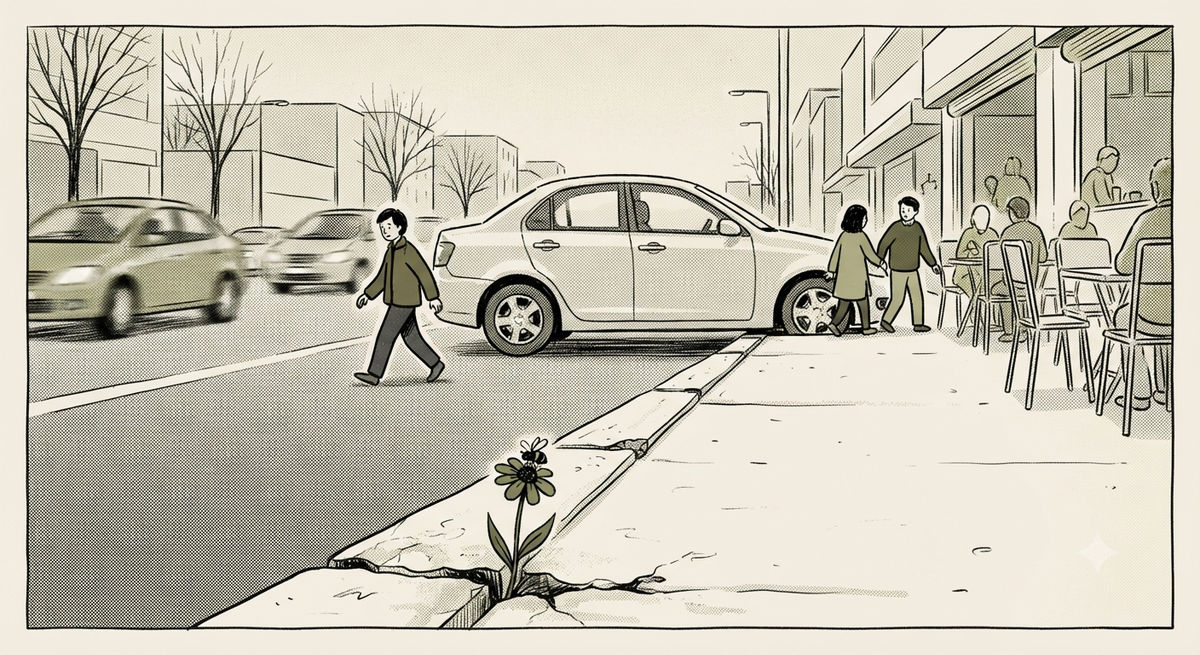
TL;DR
- The footpath is built for one purpose: people walking. Everything else on it is encroachment.
- If you drive, do not park on a footpath. Not when convenient, not when others do, not when the marshal isn't looking.
- If you witness footpath parking, a calm 'this is the footpath, can you park there?' often works. Most municipal corporations have online encroachment complaint flows.
- 35,000 pedestrians died on Indian roads in 2023, over 22% of all road fatalities. A significant share happened where the footpath was blocked.
Contents
The moment
It's 7:30 pm in Andheri West. You're walking back from the metro, a walk you've done a thousand times. The footpath outside the apartment block has three SUVs parked on it, nose to tail. Next is a tea stall with chairs spread across the entire width. After that, two scooters perpendicular to the road. You step into the road. A bike cuts past, missing your hip by 30 cm. You walk in the gutter for the last 200 meters. By the time you're home, your back is tense and your kurta is damp at the collar.
What's actually happening
The footpath is a simple thing. It is paved ground built for one purpose: walking. Everything else on it is encroachment. The SUVs, the chairs, the parked scooters, the temple extension, the building-material pile, the dustbin overflow. None are emergencies. All of them are choices: someone decided their use mattered more than the next walker's path.
The structural failure here is enormous. Indian municipal authorities have systematically under-built sidewalks, under-enforced encroachment, and under-prioritized pedestrian flow. SaveLIFE Foundation's 2022 audit found 73% of Indian school zones lack functional pedestrian crossings; the same patterns hold for residential areas.
But structural failure does not absolve individual choice. The SUV driver chose to park. The tea stall owner chose to put the chairs there. You, in different contexts, choose too.
What works better
If you drive: do not park on a footpath. Not when it's convenient, not when others do it, not when the marshal isn't looking. The footpath is a pedestrian right-of-way, by law and by design.
If you have a shop: keep your goods, chairs, signage, and customers within your shop's property line. The footpath outside is not your overflow.
If you organize an event (wedding, religious function, society gathering): plan for the people you bring. Tents, parking, decorations, queues; none belong on the footpath.
If you walk: when you find a footpath blocked, photograph it with the vehicle number visible. Use the civic action toolkit to file a complaint. Most municipal corporations have an online encroachment flow that works more often than you think.
If you witness someone parking on a footpath: a calm "this is the footpath, can you park there?" is often enough. Many will move. Some won't. The point is to make the silence less complete.
Why it matters
Indian pedestrians die at one of the highest per-capita rates in the world. In 2023, 35,000 lost their lives on Indian roads, over 22% of all road fatalities. A significant share happen on roads where the footpath was unavailable: parking, encroachment, hawking, garbage. The math is brutal.
The walkable footpath is also a public-space multiplier. Streets where walking is safe attract small business, evening crowds, kids, older walkers. Streets where the footpath is gone collapse into car-only sterile corridors. Not parking on a footpath is also an economic act, supporting the street economy.
Try this next time
Walk one of your regular routes specifically counting footpath blockages. Note: vehicles parked on it, shops spilling onto it, garbage piles, broken stretches forcing you onto the road. The number will be higher than you think.
Then, do one of these: don't park on a footpath this week, even if tempting. File one complaint about a recurring blockage. Or, the smallest move: when you see someone about to park on a footpath, calmly ask them not to. The first time is the hardest. After that it gets easy.
Quick check
1. You're driving home and the only available parking near your apartment is a 2-meter section of footpath. There's no other parking within 400 meters. What's the right move?
Select an answer.