The gate rush, and why the plane will not leave without you
The plane will not leave without you, so the gate rush changes nothing. How boarding groups actually work, and why the last group has the shortest wait.
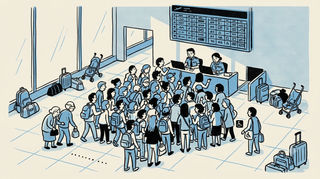
Queue culture is the most visible civic skill Indians get judged on, both at home and abroad. The fix is partly behavioral and partly trust: most queue jumping is fear that the line won't hold, and that fear is sometimes well-founded. We teach how to be, and how to make, queues that work.
11 lessons 31 min in total
The plane will not leave without you, so the gate rush changes nothing. How boarding groups actually work, and why the last group has the shortest wait.
Your boarding pass shows a GROUP or ZONE number that tells you exactly when to board. How to read it, why zones load the plane back-to-front, and when to stay seated.
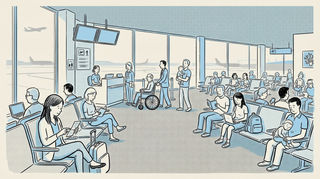
Airport security is a shared bottleneck. How to prep in the queue, what the 100ml liquids and cabin-only power bank rules require, and why you re-pack at the bench, not the scanner.
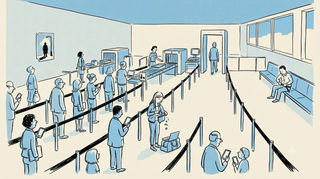
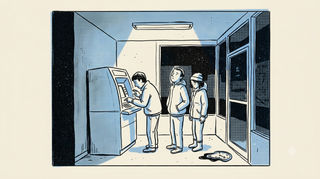
The one-metre rule for ATM queues: stand back to protect the user's privacy, wait a beat before stepping up, and shield your own PIN every time.
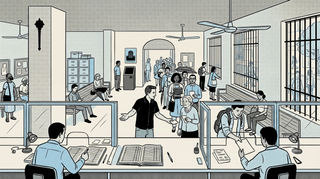
Government counters often lack an enforced queue, so the loudest person wins. How to hold a token, build a paper queue, and stop the shoulder-tap habit.
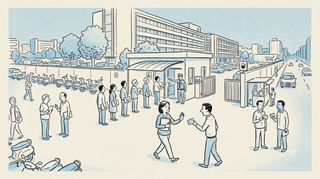
An agent economy grew around RTOs and passport offices selling speed and certainty. Why the official appointment queue now works, and how keeping your slot helps everyone.
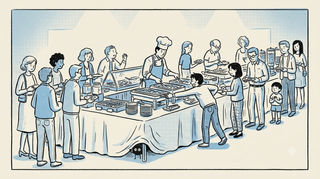
A buffet line is not a competition; the food is replenished. One plate per station per trip, no reaching across, and why a slow loop first saves chaos.
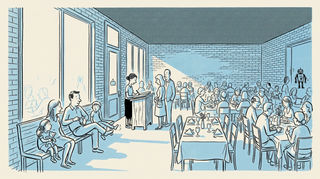
How a restaurant host stand actually works: why the empty table is not free, why honest party sizes matter, and why cancelling a booking you cannot keep is the civic move.
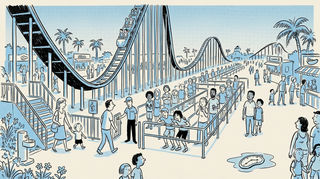
Theme-park queue etiquette explained: why group jumping steals time from everyone behind, how swap-pass and child-swap are meant to work, and how to wait fairly.
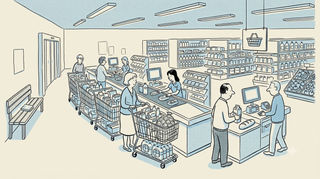
A full trolley in the supermarket express lane quietly breaks the deal. How to read the counter sign, and why a longer line of big trolleys often clears faster.
A virtual queue is still a queue. Why bots, auto-refresh and multiple tabs slow Tatkal and concert portals for everyone, plus the official IRCTC rules and timings.