The gurdwara visit: head cover, langar, the parikrama
TL;DR
- Gurdwaras are Sikh houses of worship AND one of India's clearest pluralist civic traditions. Anyone may enter; anyone may eat langar; head cover is the only condition.
- The Guru Granth Sahib is treated as a living Guru, not as a book. The most-misunderstood element by non-Sikh visitors. Bow before it; do not point feet at it; do not turn your back on it.
- The Harmandir Sahib langar serves 50,000-100,000 meals daily, 24/7/365. 12,000 kg flour, 200,000 chapatis, 1,000+ sevadars at any moment. The world's largest community kitchen.
- Wear modest clothes, bring or accept the kerchief at entry, wash hands and feet at pani-de-chaal. Non-Sikhs are not compelled to bow or donate. A discrete entry and respectful exit are completely acceptable.
Contents
The moment
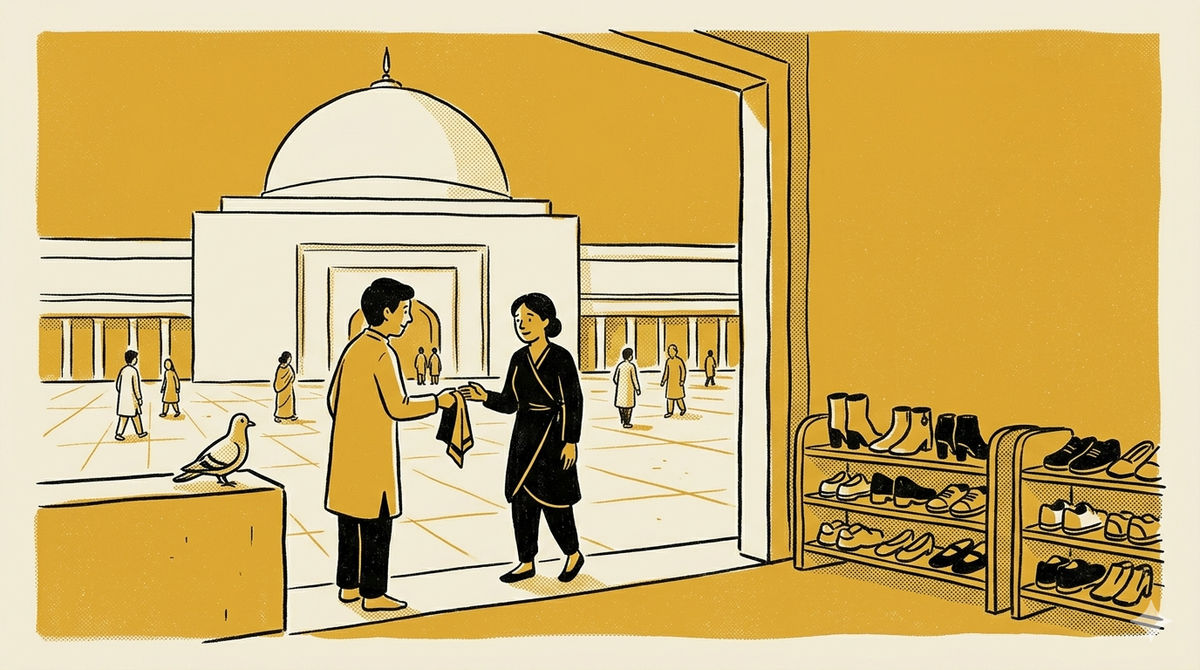
You enter Bangla Sahib at 6 pm. A young sevadar hands you a kerchief and points to the shoe rack. The pani-de-chaal at the entrance is cold; the marble floor inside is warm from a thousand bare feet. Devotional ragas drift from the darbar sahib. Inside, the Guru Granth Sahib sits beneath the canopy. Hindu families, Muslim families, foreign tourists move slowly. Langar volunteers stir cauldrons that will feed ten thousand people tonight. You tie the kerchief.
What's actually happening
Gurdwaras are Sikh houses of worship, and they are one of the most architecturally clear pluralist civic traditions in India. Anyone may enter; anyone may eat langar; head cover is the only condition. The tradition has been welcoming cross-faith visitors for 500+ years since Guru Nanak.
The Guru Granth Sahib is the central element. It is the Sikh scripture AND treated as a living Guru, not as a book. This is the most-misunderstood element by non-Sikh visitors. You bow before it; you do not point feet at it; you do not turn your back on it. Gestures of respect for the host community's living Guru.
Langar is the second pillar. The Harmandir Sahib in Amritsar serves 50,000 to 100,000 free meals every day, 24/7/365. 12,000 kg flour, 1,500 kg rice, 13,000 kg lentils, 200,000 chapatis. 1,000+ sevadars at any moment. The world's largest community kitchen. The same principle operates at every gurdwara in India and abroad: anyone, free, no questions.
The Sikh Gurdwaras Act 1925 brought gurdwaras under elected Sikh management via the SGPC. The visitor protocol is consistent.
What works better
Before you go. Modest clothes, shoulders and knees covered. No baseball caps; the kerchief (rumaal) at entry replaces them. Use the toilet before entry. No alcohol or drugs anywhere on premises.
At the entrance. Head covered. Shoes off at the rack. Wash hands and feet at the pani-de-chaal. The kerchief is provided by the sevadars at the gate if you forgot one. Free.
Inside the darbar sahib. Walk slowly. Small bow before the Guru Granth Sahib. Sit cross-legged. Do not point feet at the Granth Sahib. Do not turn your back; if you must leave, walk backwards a few steps before turning. Photography generally allowed; flash not.
The parikrama. Clockwise circumambulation around the inner sanctum. Slow. Quiet. The pace of the regulars is your guide.
At langar. Sit in pangat (the line on the floor). Receive food with both hands. Take what you will finish; return for more if you want. Karah prasad is received in cupped hands; eat it where you receive it.
As a non-Sikh visitor. You are not compelled to bow or to donate. A discreet entry and respectful exit are completely acceptable.
Why it matters
The Sikh principle of seva is what made the langar tradition. The 500-year-old practice of feeding anyone, anywhere, free, is one of the planet's most consistent acts of mass hospitality. The respectful visitor honours it; the disrespectful visitor weakens it.
Try this next time
If you have never visited a gurdwara, pick the closest major one. Bangla Sahib (Delhi), Harmandir Sahib (Amritsar), Patna Sahib (Bihar), Hazoor Sahib (Nanded), Sis Ganj Sahib (Delhi), Anandpur Sahib (Punjab). Weekday afternoon. Plan 30 minutes inside, 30 in the langar hall.
If you bring children, brief them before: "We are guests here. The Granth Sahib is the host. Quiet voice, head covered, no running, eat the langar."
Quick check
1. You are a Hindu family planning your first visit to Bangla Sahib in Delhi. Your kids are 7 and 12. What is the most useful preparation move?
Select an answer.
2. You are at the Harmandir Sahib langar. The pangat is moving; you are seated cross-legged on the floor with twenty strangers in your row. The sevadar offers you a second helping of dal. You are full. What is the right move?
Select an answer.