The ATM line: the one-meter rule
TL;DR
- ATM lines are queues with a privacy stake. Stand at least 1 meter behind the person at the machine.
- When the person finishes and walks away, wait 2 seconds before stepping forward.
- Shield the keypad with your hand or wallet when entering your PIN, even with nobody behind you.
- Small kiosks are single-occupant during use. Wait outside; the door is the boundary.
Contents
The moment
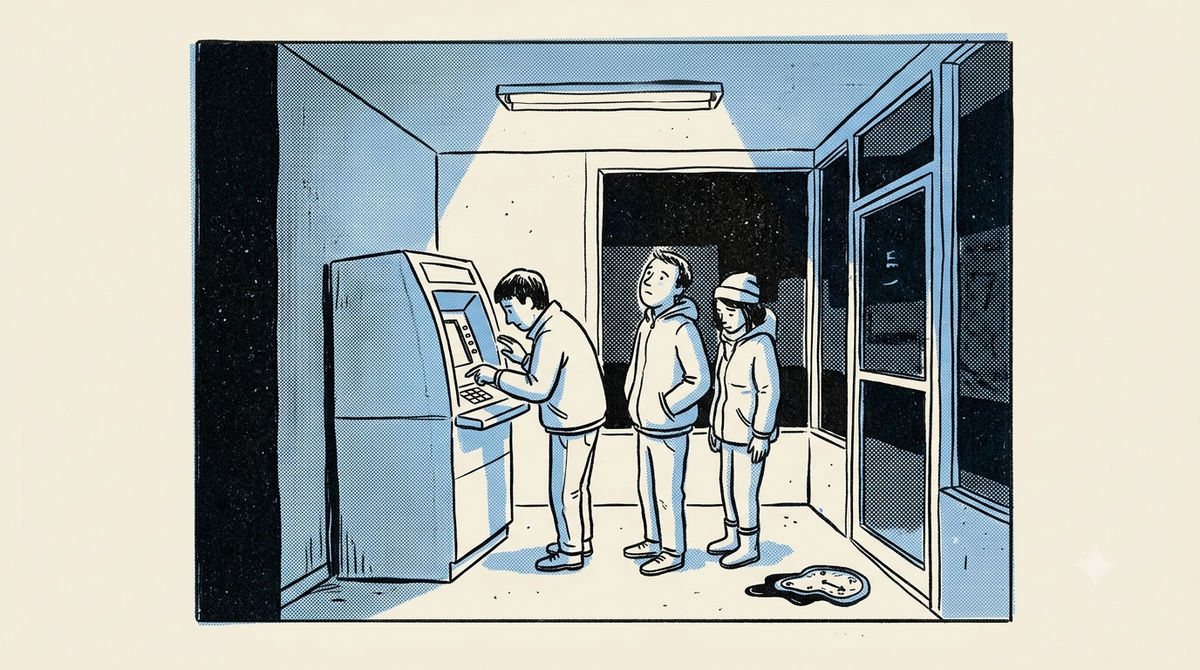
You're at an SBI ATM kiosk on Brigade Road, 7:45 pm, three people in line. The first person is at the machine. The second person is standing about 30 cm behind them. The third person is standing about 30 cm behind the second. The kiosk is quiet but tense. The man at the machine is shielding his PIN with his free hand. The woman behind him can see his entire screen if she wants to. The third person, who is you, is close enough to see the woman's screen when she gets her turn. None of this should be normal. All of it is.
What's actually happening
ATM lines are unusual queues. They are queues with a privacy stake. The person at the machine is entering a PIN, viewing an account balance, choosing an amount. None of these are things they want any of you to see. The closer you stand, the more they are being watched while doing something private.
In most places where ATM culture is mature, there's a painted "wait here" line about a meter back from the machine. The line exists for two reasons: privacy, and security (cards have been skimmed by close watchers observing the keypad pattern).
In India, most ATM kiosks don't have this line painted. So we improvise. The improvisation defaults to "as close as physically possible without touching." That improvisation is wrong.
This is not a moral failure. It's an absence of social training, plus a vague feeling that standing close prevents queue-jumping. (It doesn't. The person at the machine takes exactly as long whether you're 30 cm or 1.5 meters behind.)
What works better
Stand at least 1 meter behind the person at the machine. If a wait-here line is painted, use it. If not, eyeball it: arm's length, plus your forearm, plus a small buffer.
When the person finishes and walks away, wait 2 seconds before stepping forward. It's so they can put their card and cash away without you breathing down their neck.
When you're at the machine, shield the keypad with your hand or wallet while typing the PIN, even when nobody is behind you. Skimming cameras exist at major ATMs too.
When the kiosk is small and there's no clear "behind" position, wait outside. The kiosk is not a waiting room; during a transaction it belongs to the person using it.
If someone behind you is too close, a calm "would you mind giving me a bit of space" usually works. Most people will step back without taking offense. Don't escalate if they don't.
Why it matters
ATM card skimming and shoulder-surfing remain the leading sources of low-tech ATM fraud in India. RBI's customer service guidelines and most bank-issued ATM safety instructions specifically recommend single-customer-at-a-time inside the kiosk and visible privacy distancing.
Beyond fraud, the privacy is its own value. The person at the machine has a right to do their banking without you observing it. Occasionally, you will need to remember that.
Try this next time
For your next ATM visit, stand a meter back. Notice two things. First, how it changes nothing about your wait time. Second, how the person at the machine looks slightly more relaxed; their shoulders ease.
When you're at the machine, look behind you before entering your PIN. If the person behind is closer than a meter, ask them to step back. The first time is awkward. After that it's instinct.
Quick check
1. You arrive at an ATM kiosk. There's one person at the machine, no one else in line. The kiosk is small, with no real 'one meter back' position. What do you do?
Select an answer.