Group boarding numbers: read them, follow them
TL;DR
- Your boarding pass already says when to board. Look for the field labelled GROUP, ZONE, or SEQ.
- Zones load the plane in an order (often back rows first or by colour block) so the aisle doesn't jam.
- If your zone hasn't been called, stay seated. The plane boards at the same speed whether you hover or sit.
- Priority and pre-boarding lanes are for the tiers printed on the pass, not a head start you can ask for.
Contents
The moment
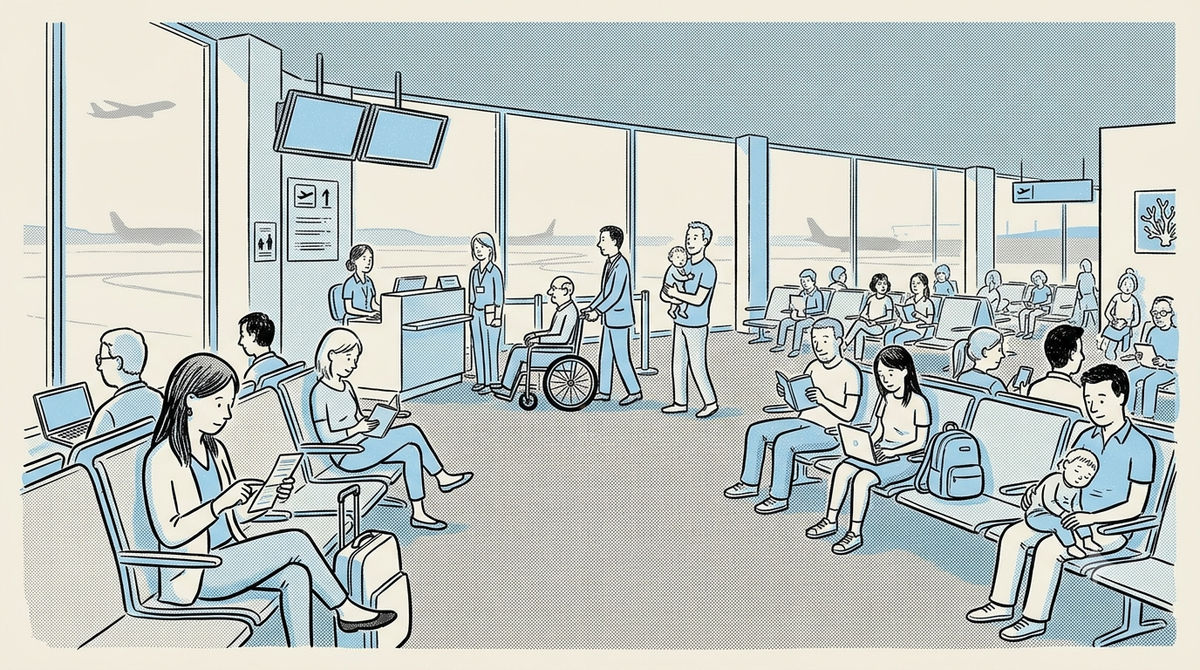
You collect your boarding pass at the counter, glance at the seat number, and pocket it. Two hours later at the gate, the announcement starts: "Now boarding Zone 2." You have no idea which zone you are. You pull the pass out, squint at it under the bad gate lighting, and join the moving crowd anyway, hoping someone will stop you if you are wrong. You are not alone. Half the gate is doing exactly this.
What's actually happening
Your boarding pass already told you when to walk up. It is printed right there, usually labelled GROUP, ZONE, or SEQ, often with a colour or a number. Most people never read it. They read the seat, the gate, and the time, and treat the boarding order as a mystery to be solved by watching the crowd.
The airline did not assign the zone at random. Boarding is usually loaded by seat position, back rows first, or in colour-coded blocks, so the aisle fills without everyone bottlenecking at row 10. Priority tiers (business class, frequent flyers, families, anyone needing assistance) board first by design, not by a privilege you can borrow. When forty people who are not in the called zone stand up, the staff has to filter them out. The smooth system becomes the scrum you have seen a hundred times.
What works better
Read your pass the moment you get it. Find the word GROUP or ZONE and the number or colour next to it. Now you know your slot before you reach the gate.
Listen for that number, not the general movement. If Zone 2 is called and you are Zone 4, stay seated. Nothing is gained by standing in a queue that is not yours yet. The plane boards at the same speed whether you hover or sit.
When your zone is called, walk up, join your zone's line, and have the pass open, or the QR on your phone bright and ready. If a separate priority lane exists, it is for the tiers printed on their passes. Use it only if yours says so.
If you are travelling with family and your passes show different zones, ask the gate staff once. Most airlines now seat and board families together and will sort it in seconds.
Why it matters
The boarding sequence is the one part of flying you can read in advance and get right with zero effort. Knowing your zone turns a tense guessing game into a forty-second walk at the right moment. It also keeps the priority lane clear for the wheelchair user and the parent with an infant, who actually need the head start.
There is no medal for boarding first. Your seat is yours. The bin above it is not going anywhere. Reading the pass is the whole skill.
Try this next time
At your next flight, do one thing the instant the pass is in your hand: find the GROUP or ZONE label and read the number. Say it to yourself. Then sit until you hear it. You will board calmly, in the right order, while the gate sorts itself out around you.
Quick check
1. Your boarding pass says ZONE 4. The announcement calls 'Zone 2,' and the crowd around you surges up toward the gate. What's the right move?
Select an answer.
2. You want to know when you'll board before you even reach the gate. Where on the boarding pass does that information live?
Select an answer.