Theme parks: queue holding, swap-pass, and group jumping
TL;DR
- A ride queue is a promise: time in line equals your place. Group jumping quietly breaks it for everyone behind you.
- One person holding a spot for one friend on a quick toilet break is normal. One person holding for six is line cutting.
- Swap-pass (child-swap) is for caregivers and guests who cannot ride, not a fast lane for the able and impatient. Use it as the park writes it.
- If you step out of a queue, rejoin at the back. Plan the wait with snacks and water so nobody needs to bail and squeeze back in.
Contents
The moment
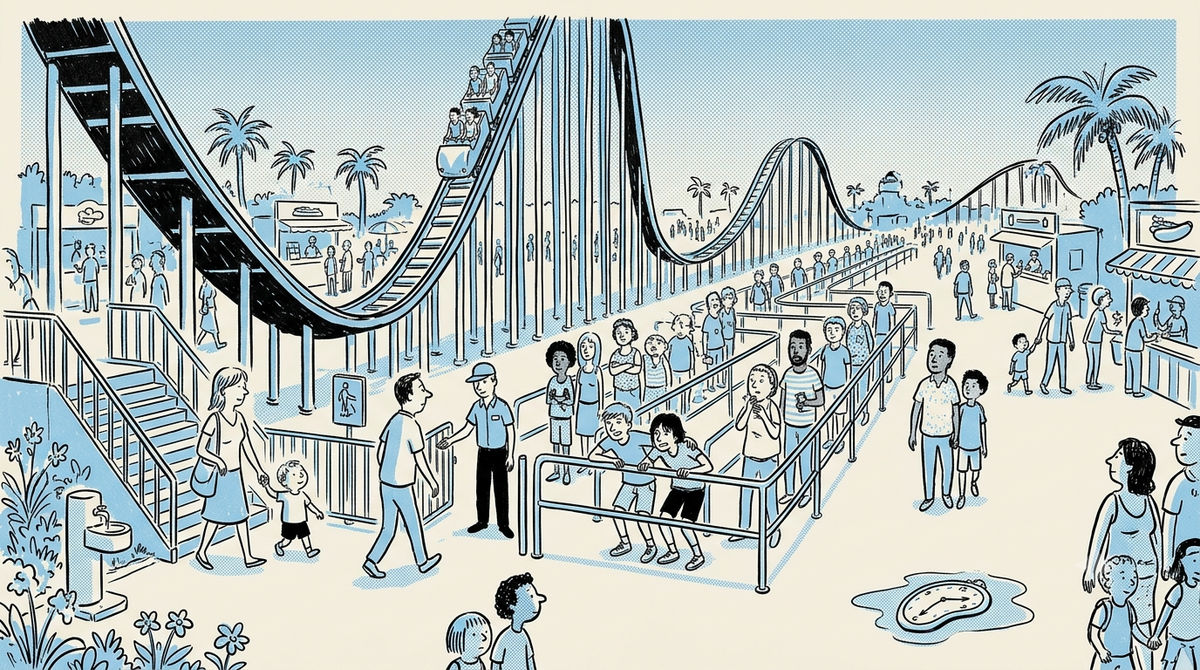
It's a hot afternoon at a theme park. The queue for the biggest ride is 70 minutes long and snaking through the railings. Near the front, one teenager stands alone. Over the next twenty minutes, six friends drift up and "join" him, one by one, until a group of seven is wedged in at a spot that one person earned. A few rows back, a mother and father take turns: one waits with their small child near the exit while the other rides, then they swap. Two things that look similar are happening. Only one of them is fair.
What's actually happening
A ride queue is a simple promise: the time you spend in line equals your place in it. Everyone in that 70-minute queue agreed to the same deal.
Group jumping breaks the deal quietly. When six people merge in near the front, every single person behind them just got six places further back, without being asked. To the person saving the spot it feels minor, almost invisible. To the forty people now waiting longer, it is very visible.
The parents doing the swap are not jumping. Swap-pass, often called child-swap or rider switch, is the published system for this. It lets a group take turns when someone cannot ride: a small child, an elderly relative, someone who is unwell. One adult waits with them, the other rides, then they swap without queueing twice. Parks write this rule down on purpose.
The difference is the whole lesson. One is a fair accommodation. The other is a quiet theft of everyone else's afternoon.
What works better
Queue as the group you actually are. If your friends are off getting food, they rejoin at the back when they return, or you all ride together later. One person holding a spot for one friend on a two-minute toilet break is the small human tolerance most queues extend. One person holding for six is cutting.
Use swap-pass as written. It is for caregivers and guests who genuinely cannot ride, not a fast lane for the able and impatient. Read the park's ride-access rules at the entrance. Most publish a child-swap and an accessibility queue with specific conditions.
If you have small kids, plan the wait itself. Carry water, snacks, and a phone game. A bearable wait means nobody needs to bail out and squeeze back in.
Why it matters
Theme parks run on trust. Single-rider lines, virtual queues, and swap passes only work if people use them honestly. The day you wave six friends to the front, you have not beaten the system, you have just taught the people behind you that the queue does not mean anything.
The math is unforgiving. A group of six jumping in adds roughly six ride-cycles of wait to everyone downstream. Across a long, hot day, that is real time taken from hundreds of strangers who waited the way you were supposed to.
Try this next time
When you leave a queue for any reason, rejoin at the back, even if your friends are near the front. If you must step out briefly, tell the person behind you "go ahead" so the line keeps moving. Use swap-pass for what it is, not as a shortcut. Be the group that leaves the queue fair for the family behind you.
Quick check
1. You're near the front of a 70-minute ride queue. Your five friends, who went to get food, message that they're coming to join you in line. What's the fair move?
Select an answer.
2. You're at a park with a small child who is too short for the big coaster. Both parents want to ride. What's the right way to do it?
Select an answer.