Yielding to pedestrians at right turns
TL;DR
- When turning right, look forward at the crossing first, then left at oncoming traffic.
- The pedestrian crossing ahead is in the exact blind spot of the standard right-turn look sequence.
- If someone is on the crossing as you start your turn, brake and wait. Their crossing takes 6-8 seconds.
- Right-turn pedestrian crashes are among the most severe: the driver is looking elsewhere when impact happens.
Contents
The moment
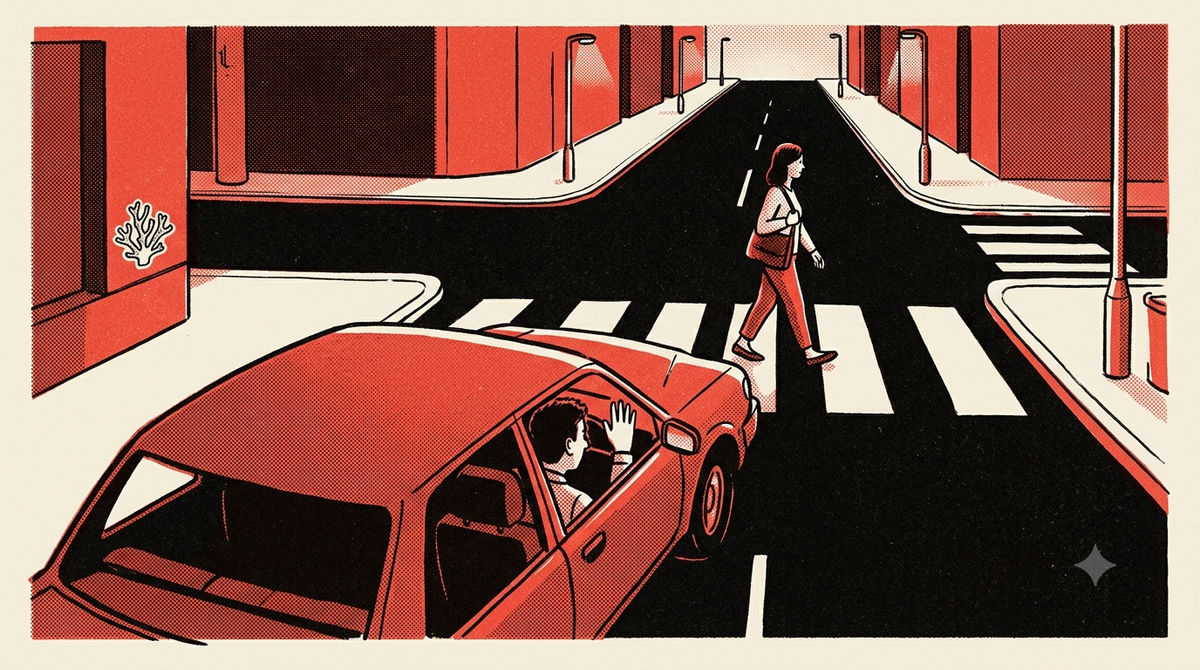
You are at the Residency Road junction in Bengaluru at 6:30 pm, turning right onto St. Mark's Road. The signal turns green. You glance left: traffic from the left is sparse. You begin the turn. Your front bumper is 30 centimeters from a woman crossing St. Mark's on the walk signal when you brake.
She was not in your mirrors. She was directly in front of you.
What's actually happening
The right turn has a built-in visual trap. Your attention during a right turn goes to the 9 o'clock position: oncoming traffic from the left. That scan takes 1-2 seconds and occupies your full attention. The pedestrian crossing the road you are turning into is at 12 o'clock. She is in the exact blind spot of the look sequence you are using.
This is not dramatic inattention. It is the wrong sequence for where you look. Most drivers use: check left, go right. The pedestrian is there before the "go."
The infrastructure adds to the problem. At most Indian intersections, the vehicle green and the pedestrian walk signal run at the same time. The pedestrian has every right to be on that crossing. You both got a simultaneous green.
What works better
Change the look sequence for every right turn: forward first, then left, then go.
Check the crossing ahead before you check for oncoming traffic. If someone is crossing: wait. Most pedestrians take 6-8 seconds to cross one lane. Your turn is still there when they clear.
Two specific moves:
At the green, pause one second. Look forward at the crossing before looking left. This takes one second and closes the visual gap.
When you have started the turn after checking left, glance forward once more. A pedestrian who stepped off the kerb 4 seconds ago may have reached your path.
If someone is on the crossing when you reach them: stop fully. Do not inch forward. Do not honk. Wait for them to clear the lane, then turn.
Why it matters
Right-turn pedestrian crashes are among the most severe. The driver's attention is on oncoming traffic, not the pedestrian. The pedestrian has no warning of the vehicle. There is no pre-crash brake tap, no horn. MoRTH's Road Accidents in India 2023 documents intersection pedestrian fatalities with turning vehicles as a recurring contributing factor.
IRC 103-2012 explicitly identifies the right-turn conflict zone as a space requiring driver yield behavior. The walk signal is the pedestrian's right to the crossing. The simultaneous vehicle green does not cancel it.
Try this next time
For one week, change your right-turn sequence to forward-left-go. Count how many times you see a pedestrian in that forward check who you would have missed with the standard left-go sequence. The count is usually higher than you expect.
Quick check
1. You're at an intersection, turning right. The signal just turned green. What should you do first before starting your turn?
Select an answer.
2. You've started your right turn after checking left. A pedestrian steps onto the crossing you're turning into. She has the walk signal. What's the right move?
Select an answer.