Yellow is not 'go faster'
TL;DR
- Yellow means stop if you safely can. It does not mean speed up to beat the red.
- Running a yellow that turns red mid-intersection is a Section 184 dangerous-driving violation.
- Right-angle collisions from yellow-running are among the most lethal crash types.
- Stopping early is never penalised. Running it is. Default to stopping.
Contents
The rule
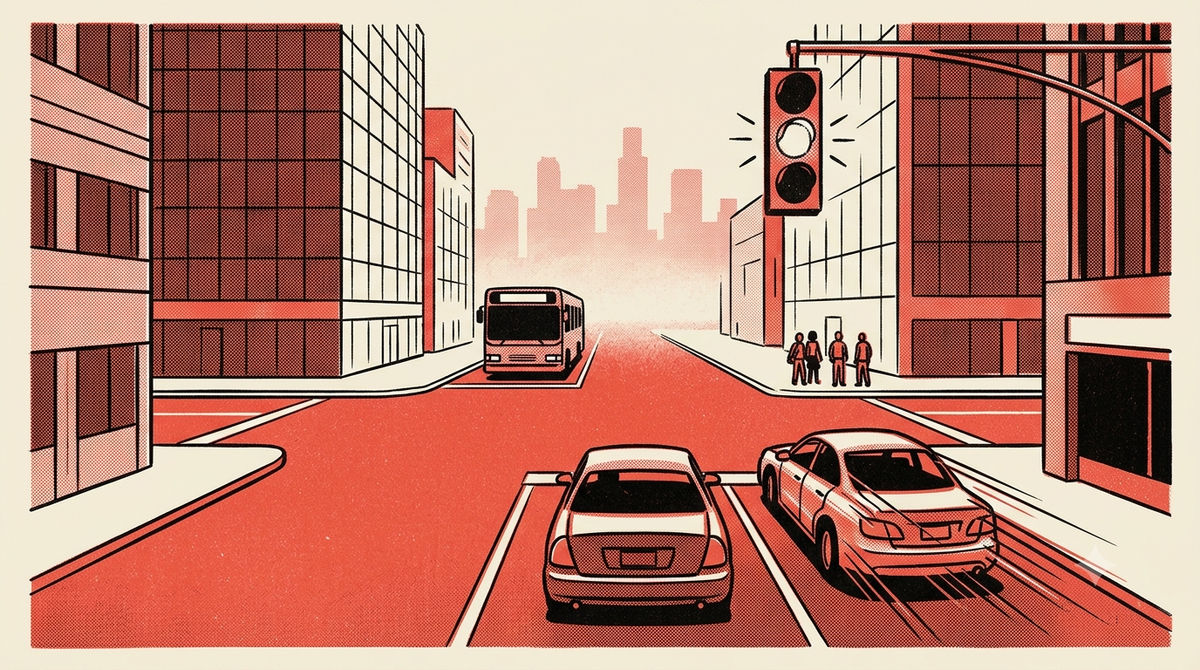
The yellow light means stop, if you can do so safely. It does not mean speed up to clear the intersection.
The Indian Central Motor Vehicles Rules, 1989, Rule 122, define yellow (amber) as a warning that the signal is about to turn red. Drivers must come to a stop unless they are already so close to the stop line that stopping safely is not possible.
Why this rule exists
Yellow exists for one reason: to give drivers physically inside or about to enter the intersection a safe window to clear it before cross-traffic gets a green. It does not exist to award a final 3 seconds of "free" passage to anyone who can floor it.
Treating yellow as "go faster" creates two specific failure modes:
The first is right-angle collisions. A driver running a yellow that turns red mid-intersection meets cross-traffic that has just got the green. These are among the most lethal collision types because the impact is on the driver's door.
The second is cascading violations. When yellow becomes "go" for one driver, the next driver assumes the same. The line of vehicles clearing the signal stretches into the cross-traffic's green. Pedestrians who started crossing on the white walk signal are now in the middle of accelerating cars.
What happens if you don't follow it
Legally, running a red light is a violation under Section 184 of the Motor Vehicles Act (dangerous driving). A yellow-runner usually crosses the stop line into the intersection while the light turns red, which counts as red-light running. The first-offence fine is ₹1,000-₹5,000 plus possible imprisonment up to 6 months. State-level rules add their own penalties on top.
Practically, you save 30-90 seconds at the cost of significantly higher crash risk. The Ministry of Road Transport's annual Road Accidents in India report tracks signal-jumping as a recurring contributory cause of urban intersection fatalities.
Socially, you teach the driver behind you that yellow means go. They teach the next driver. The signal degrades for the whole intersection.
Quick reference
- Green: Go, when path is clear.
- Yellow: Stop if you can do so safely. Already-in-intersection vehicles complete the crossing.
- Red: Stop. Do not turn left on red unless explicit signage permits.
- Flashing yellow: Slow, proceed with caution. Often used at low-traffic intersections at night.
- Flashing red: Treat as a stop sign. Stop fully, then proceed when safe.
- Red right arrow: No right turn even if main signal is green.
- Walk signal: Pedestrians have right of way. Yield even when turning.
The law is asymmetric: stopping early at a yellow is never penalized. Running it is. Default to stopping.
Quick check
1. The light turns yellow as you're approaching the intersection. You're 40 meters away, moving at 50 km/h. What do you do?
Select an answer.
2. You're at an intersection in Pune. The light just turned yellow. The driver behind you taps the horn and the SUV in the lane to your left accelerates to clear the signal. Cross-traffic still has 1-2 seconds of all-red before their green. What do you do?
Select an answer.