The walk signal at intersections
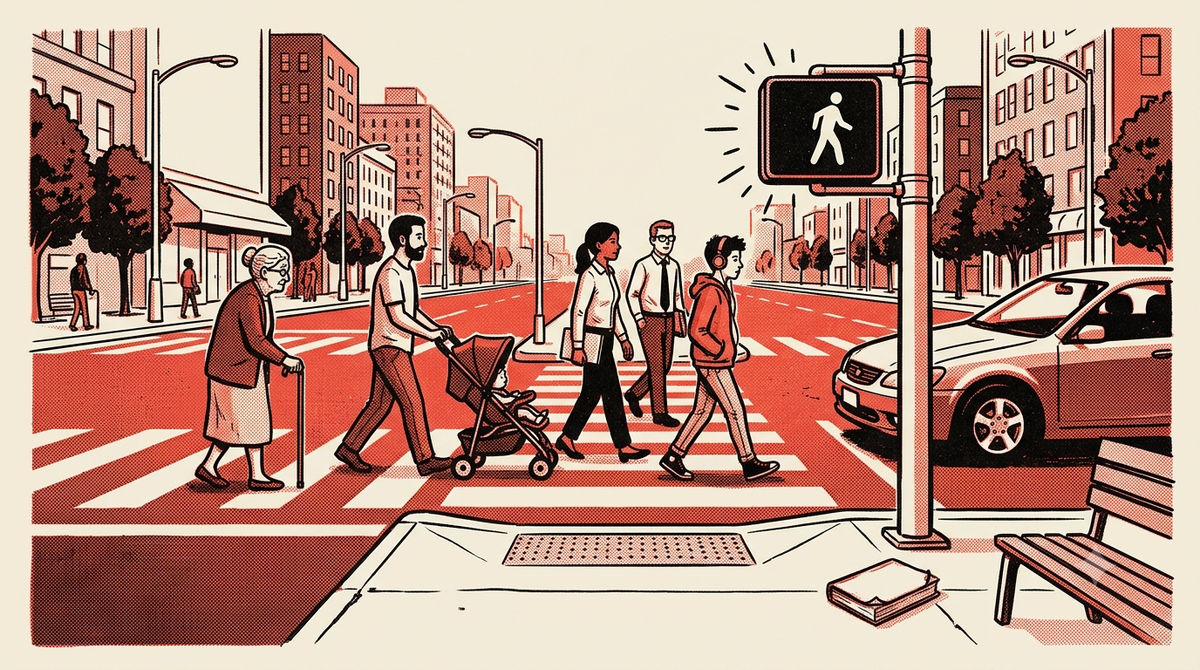
TL;DR
- White walking figure: you may cross. Red hand: wait, even if the road looks clear.
- Countdown below 5 seconds when you are still on the footpath: wait for the next cycle.
- Most Indian intersections run the walk signal at the same time as vehicle greens. Right of way is yours; the physical protection depends on drivers yielding.
- Drivers turning right or left on green must yield to pedestrians crossing under a live walk signal.
Contents
The rule
The white walking figure means you may cross. The red hand or standing figure means wait.
For pedestrians: step off the kerb only when the walking figure is live. For drivers: when pedestrians are crossing under a live walk signal, yield to them, including when you are turning on green.
Why this rule exists
A pedestrian signal is designed to coordinate with vehicle phases at the intersection. At a fully designed intersection, the walk signal runs while vehicle traffic in the crossing direction holds red. The pedestrian has the road, and the signal enforces it by stopping the cars.
Most Indian intersections, however, run the pedestrian walk signal simultaneously with some vehicle greens. This is a structural design limitation: dedicated pedestrian phases where all vehicle movement stops are rare in Indian urban signaling. The walk signal is live, your right of way is legally real, and right-turning or left-turning vehicles may have green at the same moment.
What this means: the signal gives you legal priority at the crossing. It does not give you a physical barrier. Whether you cross safely depends partly on drivers honoring the yield rule and partly on you watching the traffic before you step in.
What happens if you don't follow it
For pedestrians crossing on a red hand: vehicle traffic in one or more directions has a green phase. You are in the road while drivers are legally entitled to move. The risk transfers entirely to you.
Countdown timers, where present, show seconds remaining on the walk signal. If you have not yet stepped off the kerb when the count drops to 5 or below, wait for the next cycle. A full crossing of a standard city road takes 8-15 seconds depending on width. Starting on 4 seconds means you will be mid-road when the signal changes and vehicle greens begin.
For drivers: failing to yield to a pedestrian under a live walk signal is a violation of your duty at a signalized intersection. Around 35,000 pedestrians died on Indian roads in 2023, with a significant share at or near intersections (Road Accidents in India 2023, MoRTH). Turning vehicles on green are among the highest-risk movements for pedestrians, because the driver's attention is typically on oncoming traffic, not the crossing to the right or left.
Quick reference
- White walking figure: Cross. Move at a steady pace. Do not stop mid-road.
- Red hand / red standing figure: Wait on the footpath. Do not step off the kerb.
- Countdown above 5 seconds: Safe to begin crossing if not yet in the road.
- Countdown 5 seconds or below: Do not begin crossing. Wait for the next walk signal.
- No pedestrian signal present: Use the marked zebra crossing if available. Check traffic in both directions before stepping in. See lesson traffic-009.
- For drivers turning on green: Yield to any pedestrian on the crossing under a walk signal. Right turns and left turns both apply.
Quick check
1. The pedestrian countdown at the crossing shows 4 seconds. You are on the footpath, not yet in the road. What do you do?
Select an answer.
2. You are driving and turning right on a green light. A man is crossing the road on a live white walk signal. You have the green. He has the walk signal. Who yields?
Select an answer.