The case against honking, yes, even in Bengaluru
TL;DR
- Honking at a red light or a stuck jam moves no one. It only adds stress and noise.
- Use the horn for two things only: warning of real danger, and a quick thank-you tap.
- Bengaluru intersections hit 80-95 dB. The WHO comfort limit is 55 dB.
- For one commute, count your horn presses, then aim for half on the way back.
Contents
The moment
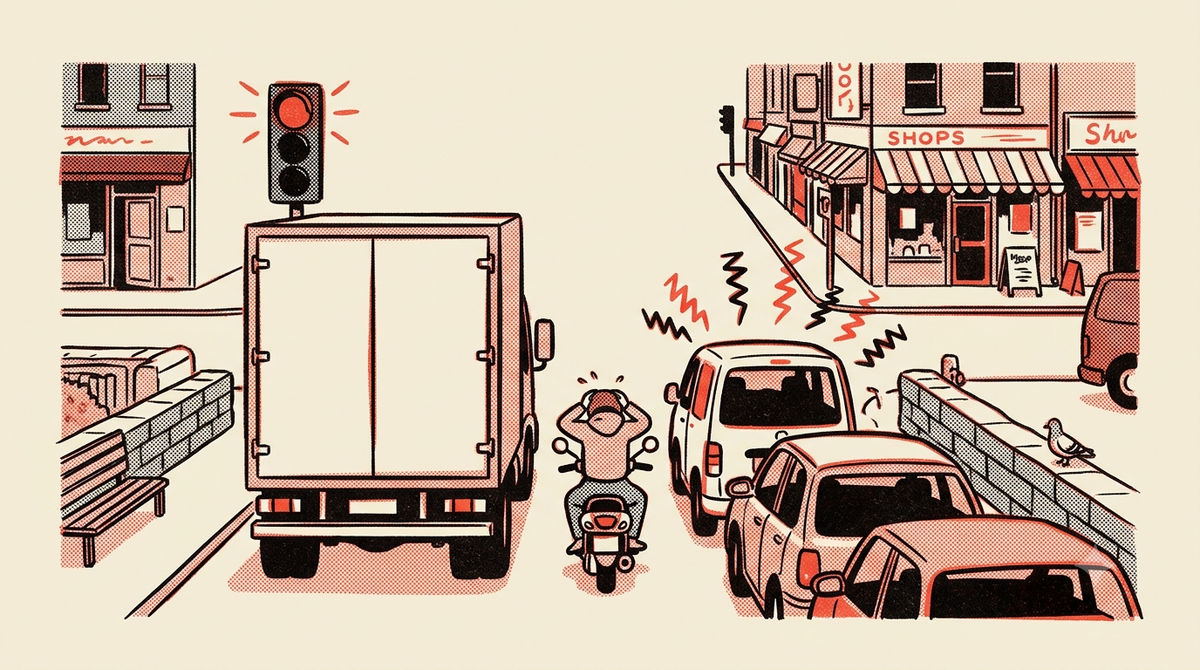
You're at the Marathahalli signal at 9:15 am. Light has been red for 12 seconds. The auto behind you taps its horn. Then another. Then the Innova two cars back goes for a long press. The light is still red. Your shoulders climb to your ears. You haven't moved a centimeter. Nobody has.
What's actually happening
The horn is not moving the line. The horn cannot move the line. The driver in front cannot teleport through the truck ahead. Everyone in this signal knows this. Yet the horn keeps going. So what is it actually doing?
It's stress dispersal. It's nervous energy with no place to go. It's the sound of someone who has not yet sat with the fact that they cannot personally accelerate the next 38 seconds. The honking driver is not attacking you. They're just exporting nervous energy into the air around 60 other drivers, all of whom now have a slightly worse morning.
The system is part of this. Indian traffic signals are long, infrastructure is choked, and most signals lack countdown timers. We grew up with the idea that the horn is a steering tool, like the wheel. Nobody told us it isn't.
What works better
Use the horn for two things. Warnings: a child running into the road, a vehicle drifting into your lane. Acknowledgments: a brief tap-tap to thank a driver who let you in. Stop using it for everything else.
Specifically, do not honk at:
A red light. A traffic jam where everyone can see the cause. A signal that just turned green and the car in front needs 1.5 seconds to react. A pedestrian crossing legally. A vehicle that has indicated and is changing lanes correctly. The auto driver doing the job at the speed the auto allows.
Most of your daily honking is in this list. Try noticing it for one week.
Why it matters
Bengaluru's average daytime traffic noise hits 80-95 decibels at major intersections. The WHO recommends below 55 dB to avoid measurable health impact. Sustained exposure above 70 dB is associated with elevated cortisol, sleep disturbance, and cardiovascular stress in urban populations.
Indian law caps horn use in silence zones (within 100 m of hospitals, schools, courts) and prohibits modified pressure horns. First offense draws ₹1,000. Repeat offenses ₹2,000. (Section 194F, Motor Vehicles Act, 1988, amended 2019.)
The civic argument is simpler than the legal one. Every horn you don't use is one fewer reason for the next driver to honk back.
Try this next time
For one full commute, count your horn presses. Set a target for the return commute that's half. Notice what changed: did you arrive any later? Did anything bad happen?
If your honest count is zero presses for the entire trip, you've already arrived. If it's high, the work is in noticing the press before it happens.
Quick check
1. You're stopped at a red light. The car in front of you is also stopped, with no room to move. The light has been red for 8 seconds. What's the right move?
Select an answer.
2. Which of these are legitimate uses of a car horn? (Select all that apply.)
Select all that apply.