Helmets: not a vibe choice
TL;DR
- A helmet with an unfastened strap is not protection. It is decoration that comes off on impact.
- Section 129 of the Motor Vehicles Act requires every rider and pillion to wear a BIS-marked helmet.
- A correctly worn helmet reduces the risk of death in a crash by more than six times (WHO).
- The short trip to the corner shop is the average crash scenario, not the safe one.
Contents
The moment
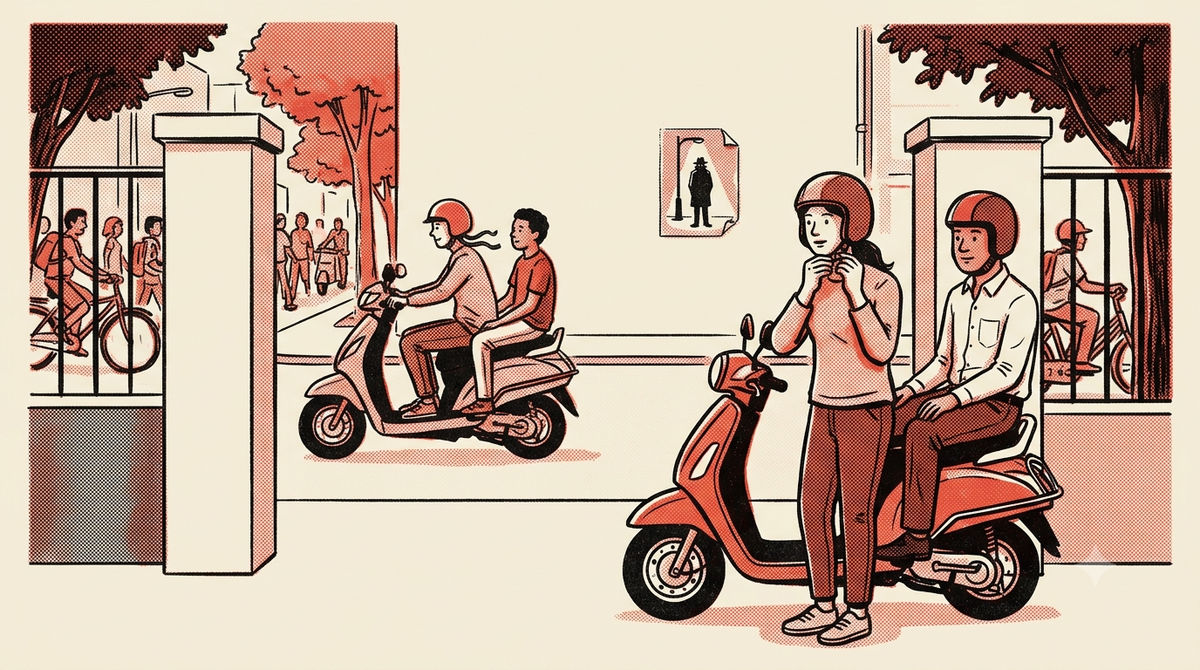
You're outside a housing society gate in Whitefield at 8:40 am. A scooter pulls out. The rider is helmeted. The strap dangles loose at his chin. His pillion, a woman in office clothes, holds the back rail. No helmet. They turn into traffic.
Twenty meters behind, another scooter. This rider's helmet sits at a jaunty angle, visor up, strap swinging. He is going three streets to the metro. He is not wrong about the distance. He is wrong about what the distance means.
What's actually happening
The loose strap is the story here. The helmet on the dangling-strap rider is not protecting him. In a fall, a helmet with an unfastened strap moves forward on impact, exposing the back of the skull, or rotates off entirely. A helmet works by staying in place. It stays in place when the chin strap is buckled and adjusted so exactly one finger fits between the strap and your chin.
The pillion without a helmet is a second problem. The pillion is the person most likely to be thrown clear in a crash. Thrown clear onto asphalt means head first onto asphalt.
The law does not distinguish between the corner-shop trip and a highway run. Section 129 of the Motor Vehicles Act, 1988, requires every person riding or riding pillion on a motorcycle or scooter to wear a protective headgear conforming to BIS standards. The first-offence fine is ₹1,000 for the rider. The pillion without a helmet draws a separate fine.
The distance rationalization deserves examination. Most two-wheeler crashes happen inside city limits, on low-speed roads, at junctions, not on highways. The corner-shop trip is the average case, not the safe case.
What works better
Buy a helmet with the ISI mark. Not a cosmetic "imported look" helmet from the footpath stall. An ISI-marked helmet has passed Bureau of Indian Standards testing for impact resistance and strap retention. They start at around ₹600.
Fasten it properly. Pull the chin strap through the D-ring or buckle, snug it so exactly one finger fits between strap and chin. Push the helmet forward with your palm: it should not shift. That is the fit test.
Your pillion needs their own helmet, fitted to their own head, fastened before the bike moves. Not your spare, handed back after you have started the engine.
Why it matters
Two-wheelers account for the single largest share of road fatalities in India, according to the Ministry of Road Transport's 2023 data. Head injury is the leading cause of death in these crashes.
The World Health Organization is specific. A correctly worn helmet reduces the risk of death in a crash by more than six times. It reduces the risk of brain injury by up to 74%.
The helmet does not change the crash. It changes what happens to your head during it.
Try this next time
Keep the helmet by the bike key, not inside the house. If the key lives by the door, the helmet lives there too. Make the grab automatic. Make the buckle click before the engine starts.
Check your pillion's strap before you pull out. Eight seconds. Every time. Be the rare rider whose pillion arrives with a fastened helmet and no story to tell.
Quick check
1. You are riding to the pharmacy two streets away. It is a 4-minute trip. You put on your helmet but leave the strap unfastened because you find it uncomfortable. A traffic officer stops you. What does the law say?
Select an answer.
2. You and a friend are heading out on your scooter for a 15-minute ride. You have one helmet. You give it to your friend because they are the pillion. What is wrong with this picture?
Select an answer.