Web check-in and why it's not optional anymore
TL;DR
- Web check-in opens 48 hours before departure and closes about 60 minutes before. Do it the night before.
- It picks your seat and puts a boarding pass on your phone, so a cabin-bag-only flyer can skip the counter entirely.
- Skip it and you join a counter queue that shuts 45 to 60 minutes before departure, a deadline you made for yourself.
- Screenshot the boarding pass in case the terminal network drops when you need it.
Contents
The moment
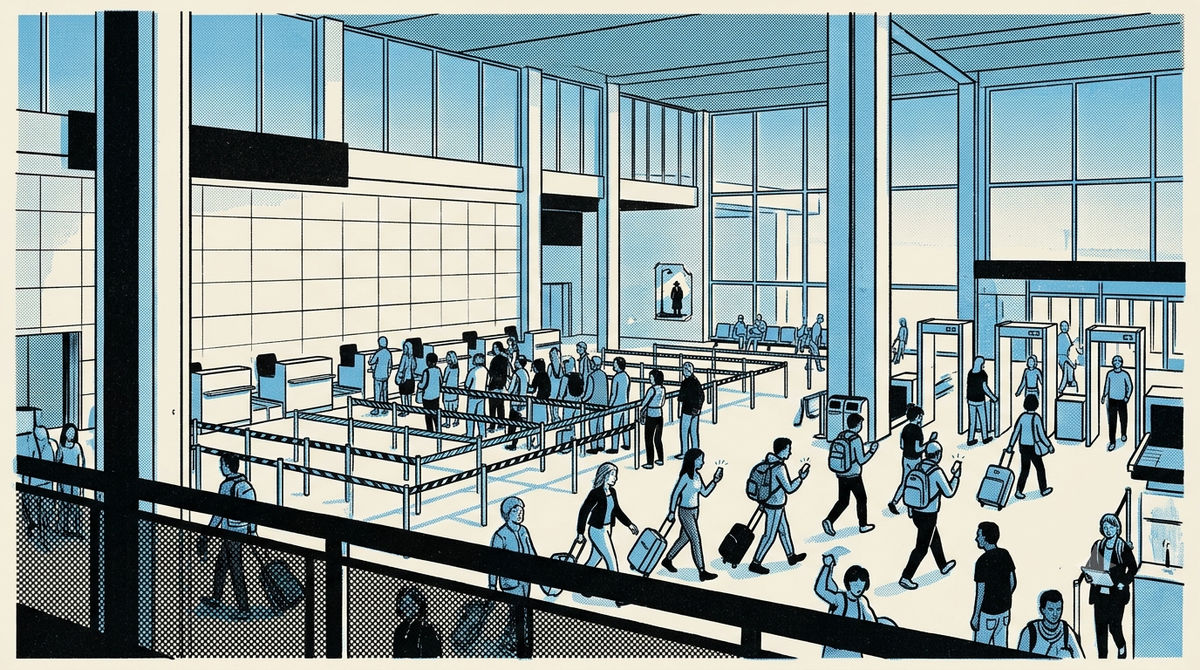
Your flight to Hyderabad is at 6:40 am. You did not web check-in; you will "just do it at the airport." You reach the terminal at 5:20, feeling early. The check-in counter for your airline has a queue twenty-five people deep, moving one traveller every ninety seconds. Most of them have a single cabin bag, same as you. While you inch forward, a steady stream of other flyers walks straight past the counter to security, boarding pass glowing on their phones. By the time you reach the desk, the good seats are gone and you are in a middle seat near the back.
What's actually happening
Web check-in opens 48 hours before a domestic departure and closes about 60 minutes before it. It does two things: it assigns your seat, and it issues a boarding pass to your phone.
If you skip it and carry only a cabin bag, you have volunteered for a queue you did not need. The counter is there for people who must use it: checked baggage, infants, special assistance, a booking the app could not process. For a cabin-bag-only flyer, the counter adds nothing except waiting time.
It also adds a deadline. The check-in counter shuts 45 to 60 minutes before departure. So skipping web check-in does not just cost you queue time, it stacks another hard cutoff onto your morning, one you created for yourself.
What works better
Do web check-in the night before, or the morning of, on the airline app or website. It takes about two minutes. Pick your seat, then save the boarding pass to your phone.
If you have only a cabin bag, walk straight to the security lane with the pass on your screen. You never touch the counter.
If you are checking a bag, you still visit the bag-drop counter. But a boarding pass already in hand makes that line move faster than the full check-in queue. See air-003 for the rest of the bag-drop prep.
One safety net: screenshot the boarding pass, or download it in the app, so it opens even if the terminal WiFi drops or the mobile network stalls inside the building.
Why it matters
The check-in counter is a throughput bottleneck, the same as a security belt or a boarding gate. Every cabin-only flyer who web checks in removes one body from that queue, which shortens it for the people who genuinely need a human at the desk.
The math is plain. On a 180-seat flight where 120 people web check-in, the counter serves 60, not 180. The queue for the family with three checked bags is a third as long. Standing in that line when you did not have to is the airport version of taking the express counter with a full trolley.
Try this next time
Set a phone reminder for the evening before your flight. When it pings, open the app, web check-in, pick your seat, and screenshot the boarding pass. The whole thing takes less time than reading this lesson did.
Then, in the morning, be the flyer who walks past the counter queue, not the one the queue is quietly waiting behind.
Quick check
1. Your domestic flight departs at 6:40 am. You have one cabin bag and no checked luggage. You reach the terminal at 5:20 am and see a long queue at your airline's check-in counter. What was the move that would have skipped that queue entirely?
Select an answer.
2. It's 40 minutes before your domestic departure and you have not web checked in or reached the counter yet. What is the specific risk you have walked into?
Select an answer.