The 90-minute rule: and why showing up at minus-30 is not a flex
TL;DR
- There are three deadlines before a flight: check-in counter (about 45 to 60 minutes before), web check-in (about 60 minutes before), and the boarding gate, which shuts 25 minutes before departure.
- A valid boarding pass is useless at a gate that has already closed. The gate cutoff is the one that ends your day.
- Reach a domestic terminal 90 minutes ahead with web check-in done and a cabin bag; make it 2 hours if you are checking a bag, 3 for international.
- Work backward from departure, not forward from your door. The early ninety minutes is the cheapest insurance of the trip.
Contents
The moment
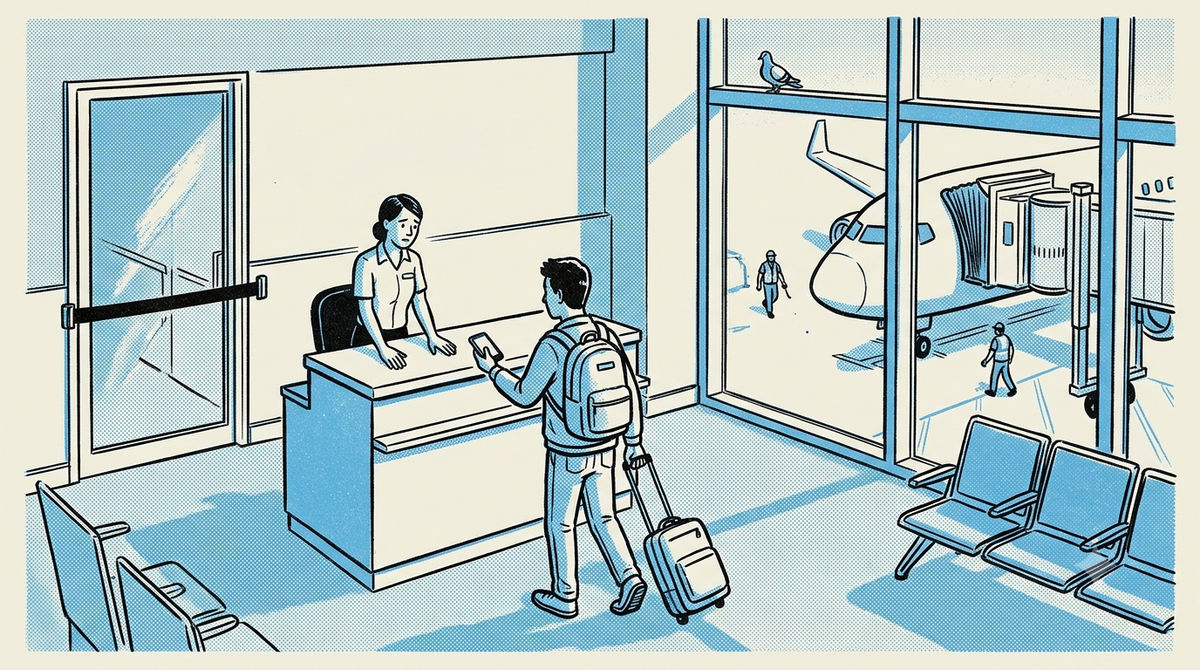
Your flight to Delhi is at 6:40 am. Your friend swears by the minus-30 arrival: cab at 5:50, terminal by 6:10, "just walk straight to the gate." You try it once. Web check-in is done, one cabin bag, no queue at entry. Then security has a forty-person line. You reach the gate at 6:18. It closed at 6:15. You watch your aircraft sit there, doors shut, for another twenty minutes. You are not on it.
What's actually happening
There are three separate deadlines before a flight, and the gate is the one that ends your day.
Airlines close domestic check-in counters around 45 to 60 minutes before departure. Web check-in closes about the same. And the boarding gate shuts 25 minutes before departure, at every major Indian airport. Not "boarding starts." Shuts. A valid boarding pass does not help you at a gate that has already closed.
The minus-30 arrival treats these as one soft deadline you can sprint through. They are three hard ones, stacked. Miss any of them and the ones after do not matter.
The "flex" is a survivorship story. Your friend cut it fine and made it, so they tell you it works. The forty times someone cut it fine and missed the flight never get retold.
What works better
Reach a domestic terminal 90 minutes before departure. That is the practical floor: web check-in done, cabin bag only, no counter needed. If you are checking a bag, or flying at a peak hour, or out of a big metro terminal, make it 2 hours. International, 3 hours.
Ninety minutes is not paranoia. It is the buffer that absorbs what you cannot control. The entry-gate ID check. A slow security queue. A terminal that is a fifteen-minute walk end to end. A gate change to the far pier.
Work backward from departure, not forward from your door. A 6:40 flight means gate by 6:15, security cleared with margin, terminal by 5:10. Set the alarm for that, not for when you would like to leave.
Why it matters
Cutting it fine is not only your risk. When you arrive at minus-30 and beg up the security queue, everyone behind you waits. When you sprint to a gate that is holding for you, the crew delays the pushback, and the knock-on ripples to the next flight using that aircraft. When you check a bag and then nearly miss the flight, the airline offloads your bag, and the whole plane sits while they find it.
The 25-minute gate cutoff exists so a full aircraft can board and push on time. It is the airport version of the metro rule: the system works when each person clears their step on time, and jams when one person treats the deadline as negotiable.
Try this next time
For your next domestic flight, set your terminal-arrival alarm at departure minus 90 minutes, or minus 2 hours if you are checking a bag. Do your web check-in the night before. Then you walk in calm, clear each deadline with margin, and never once see the inside of a closed-gate conversation.
The early ninety minutes is not lost time. It is the cheapest insurance you will buy all trip. Be the flyer the gate never has to wait for.
Quick check
1. Your domestic flight departs at 6:40 am. You have web check-in done and only a cabin bag. You reach the gate at 6:18. What's the problem?
Select an answer.
2. You're catching a 9 am domestic flight and plan to check in one suitcase at the counter. When should you aim to be inside the terminal?
Select an answer.