Power banks, lithium batteries, lighters: what's allowed where
TL;DR
- Power banks and spare lithium batteries fly cabin only, never in checked bags.
- Up to 100 Wh needs no permission. 100 to 160 Wh needs airline approval. Above 160 Wh stays home.
- The math is mAh times 3.7, divided by 1000. A 20,000 mAh power bank is 74 Wh. You're fine.
- Lighters and matches don't fly from Indian airports at all, cabin or checked.
Contents
The rule
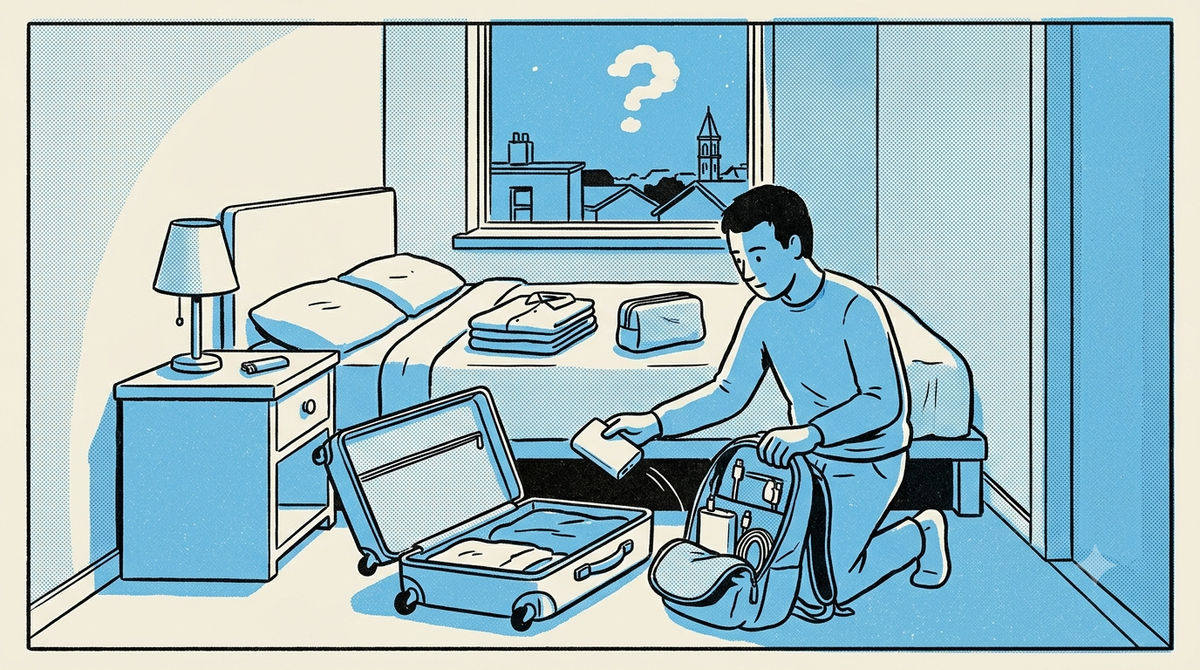
Power banks and spare lithium batteries travel in your cabin bag. Never in checked baggage. This is a worldwide standard, and Indian carriers follow it.
The size limit is measured in watt-hours (Wh), not mAh. Up to 100 Wh flies without permission. From 100 to 160 Wh, you need airline approval, and two spares maximum. Above 160 Wh does not board a passenger aircraft.
The math: Wh equals mAh times 3.7, divided by 1000. A 10,000 mAh power bank is 37 Wh. A 20,000 mAh is 74 Wh. Nearly every power bank sold in India clears the limit easily. The giant "charges your laptop six times" brick may not. Check its label before you fly.
Lighters and matches: banned from Indian airports entirely, cabin and checked. E-cigarettes and vapes: banned on Indian flights under the 2019 Act.
Why this rule exists
Lithium batteries fail by thermal runaway. A damaged or short-circuited cell overheats, ignites its neighbours, burns very hot, and can reignite after being put out. In the cabin, crew see smoke within seconds and are trained to contain it. In the cargo hold, nobody sees anything until it is far along.
That is the whole logic of cabin-only: a battery fire the crew can reach is a manageable incident. One they cannot reach is a serious emergency. The FAA's public log of lithium battery incidents on aircraft records dozens of smoke and fire events every year.
The lighter ban is the same idea applied earlier. Indian security rules treat any ignition source as not worth carrying at 30,000 feet. Other countries draw the line differently; the US allows one small lighter carried on your person. The rule of the airport you fly from is the one that applies.
What happens if you don't follow it
A power bank in your checked suitcase gets flagged during baggage screening. Your bag is pulled, you may be paged to open it, and your flight suddenly has a countdown attached. The power bank is removed either way.
At cabin screening, an over-limit or unmarked battery invites questions you cannot answer at the belt. And the tray of confiscated lighters at any CISF checkpoint is a small museum of people who found out at the airport.
Quick reference
- Cabin only, never checked: power banks, spare lithium batteries
- Up to 100 Wh: fine. 100 to 160 Wh: airline approval, two maximum. Above 160 Wh: no.
- Wh = mAh x 3.7 / 1000
- Loose spares: tape the terminals or keep them in original packaging
- Devices with built-in batteries: cabin preferred; if checked, switched fully off, not sleep
- Lighters and matches: not from Indian airports, cabin or checked
- E-cigarettes: banned on Indian flights
- Flying from abroad: check that country's rules; they differ on lighters, not on batteries
Default to cabin, default to under 100 Wh, and this rule never touches you.
Quick check
1. You're packing for a Delhi to Bengaluru flight: one checked suitcase, one cabin backpack. You have a 20,000 mAh power bank, a spare camera battery, and a laptop. Where does each go?
Select an answer.
2. Your power bank says 27,000 mAh and has no Wh marking. The security officer looks at it. What's the actual position?
Select an answer.