Flying with kids: the 9-step prep that saves you and everyone else
TL;DR
- Book seats together at booking time. The gate is the worst place to fix a split family.
- Pack one seat-level pouch: snacks, wipes, one change of clothes, one new small toy.
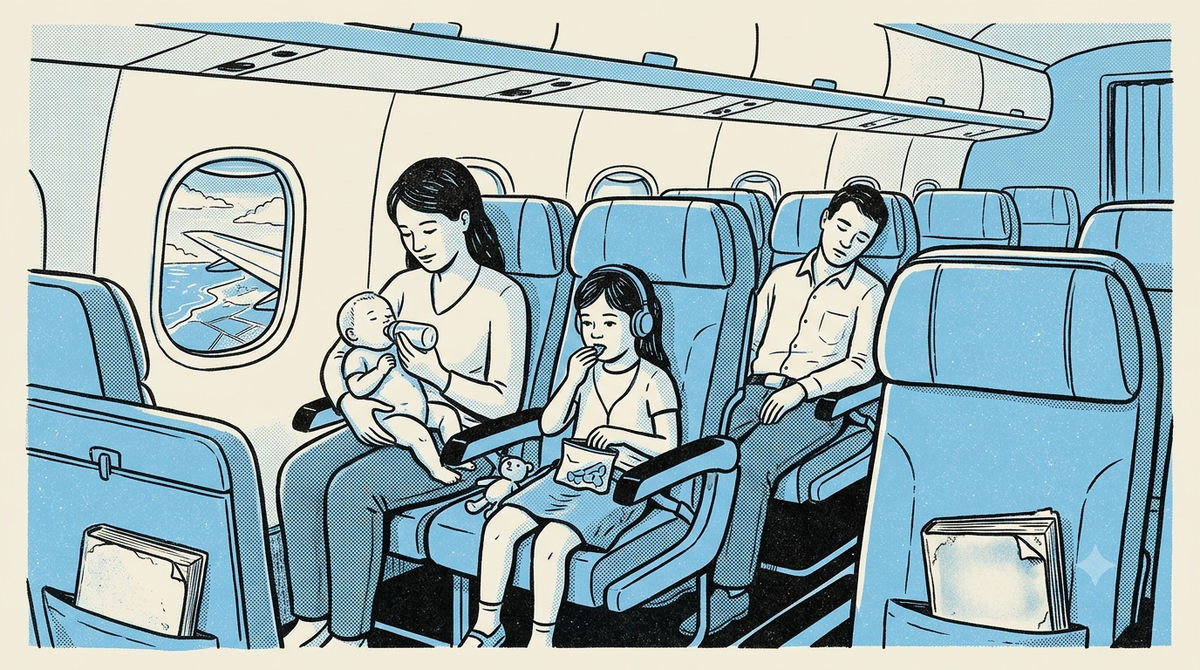
- Feed on descent. Sucking and swallowing open a child's ears; that's the crying you can prevent.
- Prep buys goodwill. A visibly prepared parent turns the cabin from audience into allies.
Contents
The moment
The 6:10 am flight to Kochi. You're carrying a 14-month-old, a backpack, and the sinking knowledge that the nappy bag is in the overhead bin, four rows behind your seat. Your six-year-old announces she's hungry the moment the seatbelt sign comes on. On descent, the baby starts crying, that sharp, ear-pain cry, and there's nothing in reach.
What's actually happening
A flight compresses everything small children find hard into one sealed tube. Sitting still, strange noises, no open space, and air pressure working on the smallest ear tubes on the aircraft. A child's eustachian tubes are narrower than an adult's, so descent hurts them more, and they can't fix it themselves (Source: Nemours KidsHealth).
Here's the honest split. Some of a flight with kids is genuinely out of your hands. A baby crying on descent is physiology, not parenting. But most of what makes these flights hard, the out-of-reach bag, the unfed toddler, the dead tablet, is logistics. And logistics can be prepped.
What works better
The 9-step prep, in order.
- Book seats together at booking, not at check-in. Paying for seat selection beats negotiating swaps at 30,000 feet.
- Pick flight times with naps, not against them. A flight that starts at nap time is a flight where someone sleeps.
- Web check-in the night before. The airport part is the kids' energy budget; don't spend it in queues.
- Pack one seat-level pouch: snacks they already like, wipes, a sealable bag, one change of clothes for the child and one shirt for you. This pouch goes under the seat, never overhead.
- One new small toy, unrevealed until mid-flight. Novelty buys 40 minutes that familiarity can't.
- Download entertainment offline and pack child headphones. The cabin doesn't need the rhymes at full volume.
- Burn energy before boarding. Walk the terminal. If there are two adults, one boards early with the bags; the other walks the child until final call.
- Feed on descent. Breastfeed, bottle, or pacifier for babies; a drink or chewy snack for older kids. Sucking and swallowing open the ear tubes and ease the pressure (Source: AAP, HealthyChildren.org).
- Change nappies at the lavatory changing table, not the seat. The used one goes into your sealable bag, then the lavatory bin.
Why it matters
Step 8 alone prevents the most predictable crying on the aircraft. The rest converts the cabin from an audience into allies. Passengers around a visibly prepared parent soften fast; most of them have been you.
And when the baby cries anyway, let it be what it is. You did the prep. That's flying with a small human, not a failure.
Try this next time
Pack the seat-level pouch tonight, before the airport. On board, set one alarm in your head: when the crew announces descent, the feed begins. That timing is the whole trick.
Quick check
1. Descent begins and your 10-month-old starts the sharp ear-pain cry. What actually helps?
Select an answer.
2. Two adults, one three-year-old, and boarding just opened for a full flight. What's the best split?
Select an answer.