Photography and consent abroad
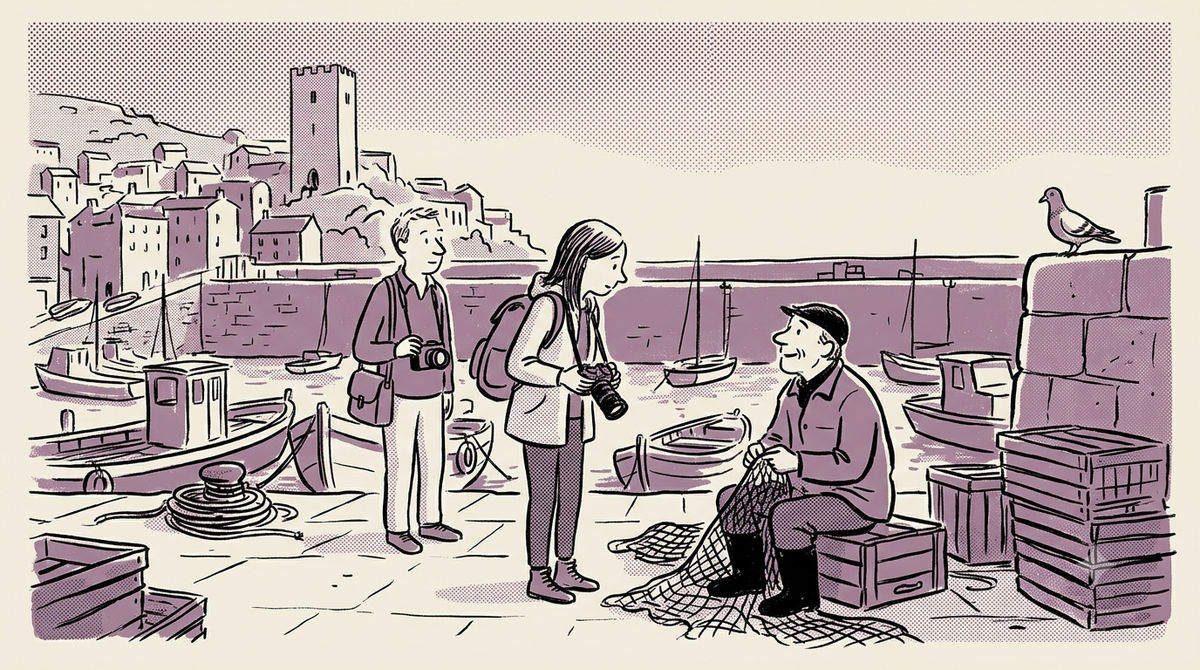
TL;DR
- Photograph places freely. Photograph a person only after they have agreed. That single split covers most of the world.
- In the UAE, taking photos of third parties without consent sits inside the cybercrimes law, with at least six months in jail and a fine from AED 150,000.
- The Louvre allows personal photos in the permanent collections, and bans selfie sticks, flash and lighting outright.
- Posting is a second act. The UAE article covers transferring, copying and keeping the image, not just the shutter.
Contents
The rule
Photograph places freely. Photograph a person only after they have agreed. Inside a museum or on a transport network, the sign at the door outranks whatever you had planned.
Why this rule exists
Three different systems protect three different things, and your camera cannot tell them apart.
Privacy, held up by law. The UAE's Federal Decree-Law No. 34 of 2021 lists, under "Revealing Secrets and Invasion of Privacy", the act of taking photos of third parties in any public or private place without consent. The floor is six months in jail and a fine of AED 150,000, rising to AED 500,000. At 2026 rates that floor is roughly ₹35 lakh. The stranger in your frame is not scenery there.
Conservation, held up by the venue. The Louvre allows photos and video in the permanent collections for personal use, and bans selfie sticks, flash and lighting. Some temporary exhibitions bar photography of particular works entirely. Flash is a pigment problem, not a mood problem.
Crowd safety, held up by the operator. Transport for London's Conditions of Carriage bar flash photographs, tripods and other camera supports across London buses, trams, trains and stations. Commercial filming there needs written permission.
One camera, three rules, none of them about you.
What happens if you don't follow it
Immediate. A staff member asks you to delete it, in front of everyone standing there.
Legal. In the strictest places this is a criminal matter and not a ticking off. The UAE penalty applies whether the photo was taken on a street or through a window.
Social. Pointing a lens at someone's child, someone's meal or someone's grief without asking reads the same way in every country. The reaction arrives faster than you expect.
Downstream. Posting is a second act. That same UAE article covers preparing, transferring, disclosing, copying and keeping the image, not just pressing the shutter.
Quick reference
- Ask first. A raised camera and a questioning look does the job in any language.
- A "no" ends it. Do not negotiate, and do not take the shot anyway from further back.
- Do not photograph children you do not know. Ask the parent or skip the frame.
- Flash off by default indoors. Assume the museum bans it, because most of them do.
- Leave the selfie stick and the tripod at the hotel. They are barred in more places than they are allowed.
- Treat airports, ports, military sites, border posts and courts as off-limits until a sign says otherwise.
- Personal use and commercial use are separate permissions. Monetised travel content is commercial.
- If someone objects after the fact, delete it while they watch. It costs you nothing.
Quick check
1. You are walking through a busy district in Dubai and film a two-minute clip of the street, with several people clearly recognisable in it. You post it that evening. Where do you stand?
Select an answer.
2. You are in the Louvre's permanent collections. Your phone is on auto-flash, and you have a selfie stick in your bag. What is actually permitted?
Select an answer.