Why hand-washing in public restrooms still matters in 2026
TL;DR
- Soap and clean running water for 20 seconds after the toilet. Sanitiser is the fallback for when there is no soap, not an upgrade on it.
- Drying is not the optional part. One study measured about 68,000 bacteria moving off wet hands on a single touch, against 140 off properly dried ones.
- Global hand-washing after toilet use is estimated at 19%. The habit is rarer than nearly everyone assumes theirs is.
- Empty dispenser, two seconds of water, a hand dryer dead since installation. That failure is real and it is not yours. A ₹60 kit in your bag routes around it.
Contents
The rule
Wash your hands with soap and clean running water for at least 20 seconds after using a public toilet, then dry them properly. If there is no soap or no water, use a sanitiser with at least 60% alcohol and treat it as the fallback it is.
Why this rule exists
The first reason is the obvious one. What is on your hands after the toilet goes to the door handle, then the lift button, then the shared serving spoon, in roughly that order. The CDC lists using the toilet among its key times to wash. It puts community hand-washing education at a 23 to 40% cut in diarrhoeal illness and 16 to 21% in respiratory illness. It also estimates the global rate of washing after toilet use at 19%. That last number is the interesting one. The habit is rarer than nearly everybody assumes theirs is.
The second reason is drying, which almost everyone drops. Wet hands move far more than dry ones. A 1997 study in Epidemiology and Infection measured roughly 68,000 bacteria transferring from wet, undried hands to skin on a single touch. After ten seconds with a cloth towel and twenty with air, the same touch moved 140. The shake-and-walk is not the end of the wash. It is most of the wash undone.
The 2026 part is sanitiser. It moved from the pharmacy shelf into every bag and onto every restaurant counter, and quietly became the default rather than the backup. The guidance has not moved with it. Soap and water first, sanitiser when soap and water are not readily available, at least 60% alcohol on the label.
What happens if you don't follow it
Immediately, the next several people through that door get your morning on their hands. Nobody sees it happen and nobody mentions it, which is precisely why it holds.
Legally, nothing at all. No section, no fine, no inspector, anywhere in India. Spitting has a penalty; this has none. Nothing enforces it except you.
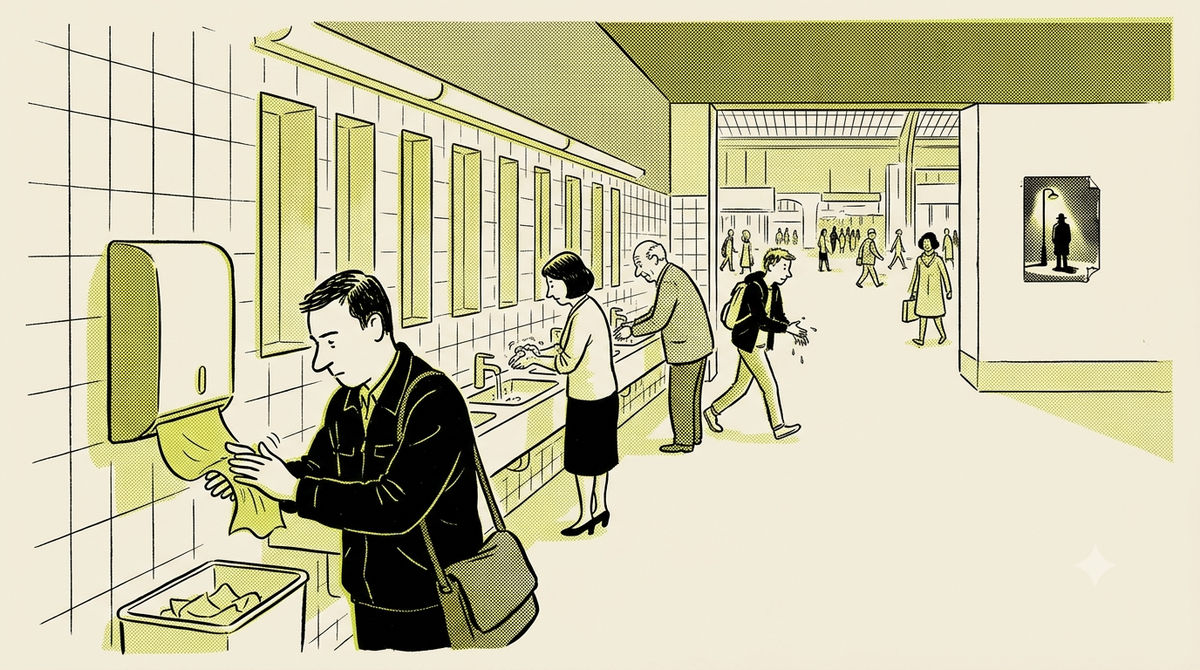
Practically, the restroom is often the problem. Empty dispenser, a tap that gives two seconds of water, a dryer dead since installation. That failure is real and not yours to fix at 9:40 in the morning. It is the argument for carrying your own answer, not for skipping the step.
Quick reference
- Soap, 20 seconds, backs of the hands, between the fingers, under the nails.
- Dry properly, with a clean towel or air. Wet hands undo the work.
- No soap or water: sanitiser at 60% alcohol or above, rubbed in until dry.
- Keep soap sheets or a small sanitiser in the bag you carry daily. Under ₹100, lasts weeks.
- Wash before you eat too, not only after the toilet. Same habit, other half.
- The civic upgrade is small. Default to being the person who leaves with dry hands.
Quick check
1. You have used the washroom at a busy railway station. The dispenser is empty and the tap works. You are meeting a friend for lunch in ten minutes. What is the best move with what you have?
Select an answer.
2. You wash your hands properly with soap for a full 20 seconds. The towel dispenser is empty and the hand dryer is out of order. You have four minutes to your meeting. Does the drying step actually matter?
Select an answer.