The Western-style cubicle: the seat is for sitting
TL;DR
- The hygiene worry is real but aimed wrong. Hands move germs; thigh skin does not. The latch, the flush and the tap matter more than the seat.
- Feet on a ceramic rim risk a slip, and shoe prints leave the seat unusable for the next person.
- The ten-second fix: wipe the seat with folded tissue (spray sanitiser on it if you like), sit, then give the tap 20 seconds of soap.
- Accessible toilets are designed around the seated WC. For arthritis, surgery, late pregnancy and disability, that seat is the only option there is.
Contents
The moment
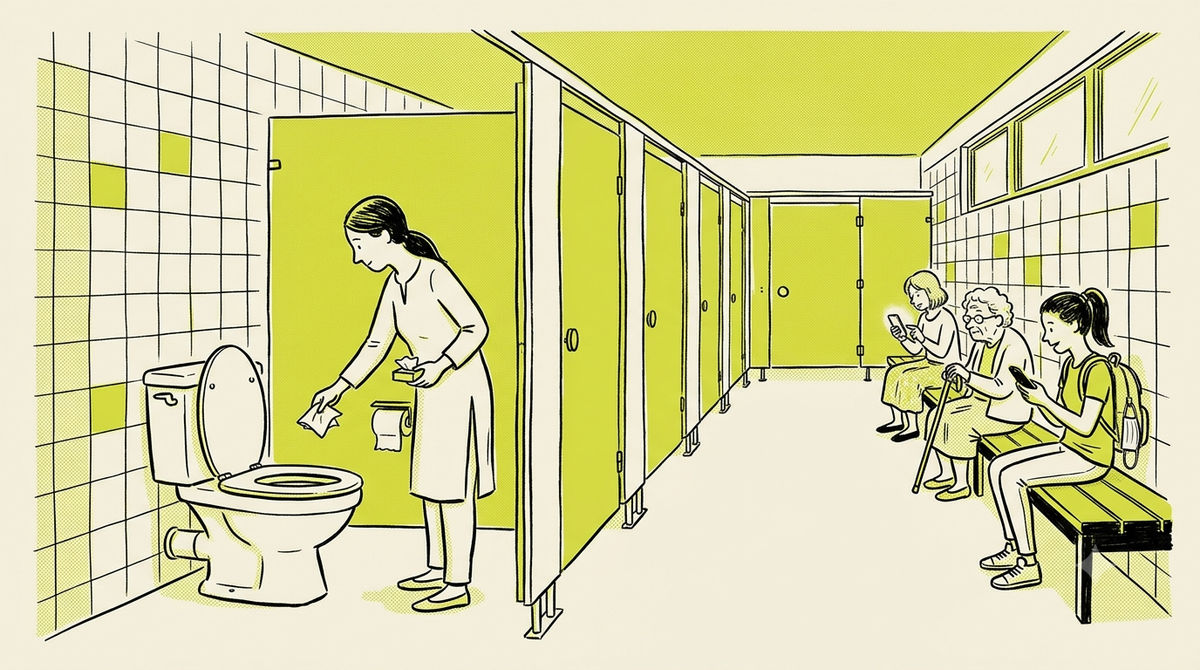
It is 2 pm at a highway food court on the Mumbai-Nashik route. Two cubicle doors. The Indian-style pan you have used all your life is occupied; the Western-style seat is free. Three people wait behind you. You push the door open. The seat looks dry, clean enough, and it has held a few hundred strangers today. Somewhere in your head a familiar suggestion forms: climb up, plant your feet on the rim, squat, touch nothing.
What's actually happening
Two reasonable instincts are colliding. The first is habit. A body trained on the squat pan finds sitting on a shared seat genuinely strange, and no lecture changes that. The second is the hygiene worry: your skin on a surface a stranger's skin just left.
Here is what the worry gets backwards. Fear ranks the seat first. Transmission research keeps pointing at hands. Microbes sit on every surface of the hand (CDC), and the surfaces that move them into your body are the latch, the flush, the tap, and your own fingers afterwards. The skin of your thighs is not the doorway; your hands are. That is why handwashing with soap cuts diarrhoeal disease in the community by about 47% (Curtis and Cairncross, 2003). No seat-avoidance acrobatics can match a 20-second wash.
The climb has costs of its own. A ceramic pan and a plastic seat are built to hold a seated body, not shoe soles on a wet rim. One slip is an emergency-room evening. And shoe prints do not wash themselves off; they sit on the seat, waiting for the next person.
What works better
If both doors exist, take the one that matches your habit. The two doors exist because preferences differ. Preferring the squat pan needs no defence and no explanation. Check for its door first.
If the seat is the only option, do the ten-second prep. Fold toilet paper or your own tissue, wipe the seat once, sit. If wiping alone does not settle your mind, a pocket sanitiser sprayed on the tissue upgrades the wipe. Feet stay on the floor.
Do not hover. The half-squat above the seat sprays it, and a sprayed seat is exactly what convinces the next person to climb. Hovering feels like a compromise. It is actually the loop.
Leave it dry. If you used the jet spray and the seat caught water, one pass of paper before you unlatch the door. Then the 20-second soap wash at the basin (WHO protocol).
Why it matters
The seat you leave is the seat someone inherits, and for some people it is the only door that works. India's accessibility standards design the accessible toilet around a seated WC with grab bars beside it (Harmonised Guidelines, 2021). Knees with arthritis, hips after surgery, late pregnancy and many disabilities cannot manage a squat. A footprinted or soaked seat quietly takes away the one option those users have.
Nobody sees this cost being paid. It is paid anyway, several times a day, by the people with the fewest alternatives in the room.
Try this next time
A pocket tissue pack costs ₹10 and a small sanitiser ₹50. Together they end the climb-or-suffer dilemma permanently: ten seconds of prep, twenty at the tap.
And if you prefer the squat pan, honour the preference properly. Look for its door before you default to the seat you were planning to stand on.
Quick check
1. The Western-style cubicle is the only one free, the queue is building behind you, and every instinct says climb onto the rim and squat. What actually works?
Select an answer.
2. You used the jet spray and the seat caught some water. You are late, and nobody saw you. Why bother with the one pass of paper before you leave?
Select an answer.