Hotel hallways and the 11pm rule
TL;DR
- At 11pm in a sleeping corridor, your dinner-table volume is loud. Drop to a low voice the moment you step out of the lift.
- Finish the conversation in your room, not the hallway, and close the door with your hand on the latch instead of letting it slam.
- Take calls inside your room, off speaker. A corridor carries every word past a dozen doors.
- Most hotels set quiet hours from 10 or 11pm. Even where they don't, the night belongs to the people trying to sleep.
Contents
The moment
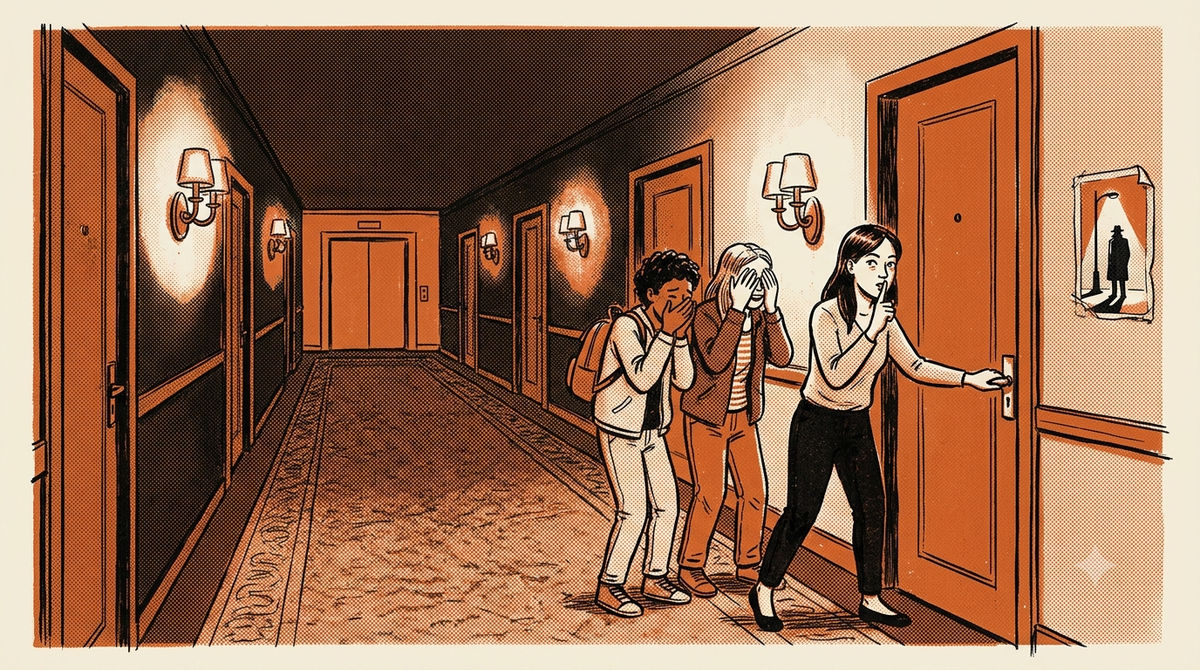
It is a quarter past eleven. You are back on your hotel floor after a late dinner, three of you, still mid-conversation, still laughing at the thing someone said at the table. Your room is at the far end, so you walk the whole corridor at dinner-table volume. A door opens. A man looks out, says nothing, closes it. Behind the other doors on this floor, people are asleep, or trying to be.
What's actually happening
A hotel corridor is a hard tube. Stone or tiled floor, bare walls, a long straight run, and doors that are thinner than you think. Sound does not die in that space. It travels. The three of you are not loud by lunchtime standards. At a quarter past eleven, in a corridor full of sleeping strangers, lunchtime volume is loud.
Most hotels post quiet hours from ten or eleven at night. Where they do not, the rule still holds, because the night belongs to rest. You are not being rude on purpose. You have just carried the restaurant's volume into a place built for sleep.
What works better
Switch to night volume the moment you step out of the lift. Keep the walk to your door low and brief.
Finish the conversation in your room or back down in the lobby, not standing in the hallway. The corridor is a passage, not a lounge.
Close your door with your hand on the latch. A door left to swing shut on its own is a bang that wakes both neighbours.
Take phone calls inside your room, off speaker. Pacing the hallway on a call sends your whole conversation past a dozen doors.
If you are travelling with children, the corridor is not a play area after dark. Keep the television and music at a level that stays inside your four walls, and wheel the suitcase instead of dragging it.
Why it matters
Night noise is not a small thing. The WHO notes that night-time sound disturbs sleep and carries real health effects over time. Bedrooms, it says, should stay very quiet at night for good rest (Source: WHO, Noise). India's own Noise Pollution (Regulation and Control) Rules, 2000 treat 10 pm to 6 am as night. They set the lowest limits then and bar loudspeakers in that window (Source: CPCB, Noise Pollution Rules 2000). A corridor is not a courtroom for those numbers, but the principle is the same. After eleven, the person on the other side of the wall has a fair claim on quiet.
The arithmetic is unkind to the careless. One door banged at midnight can stir ten rooms. Ten people lose sleep so you could save the two seconds it takes to guide the latch home.
Try this next time
Step out of the lift and drop to night volume. Save the conversation for your room, close the door with your hand on the latch, and take any call inside, off speaker. Be the guest the corridor never hears.
Quick check
1. It is 11:30 pm. You are back on your hotel floor with two friends, still mid-conversation, and your room is at the far end of the corridor. What is the move that respects the sleeping floor?
Select an answer.
2. It is past midnight and you need to take a phone call. Your roommate is asleep. Where do you take it?
Select an answer.