The bus rush, the line solution
TL;DR
- The door is the bottleneck, not the bus. A scrum at the door slows everyone, including you.
- Let people get off first, then board single-file through the front door.
- Keep your pass, card, or exact change ready before the bus arrives.
- Orderly boarding can serve a passenger in about a second; a fumbled, jammed one takes many times that.
Contents
The moment
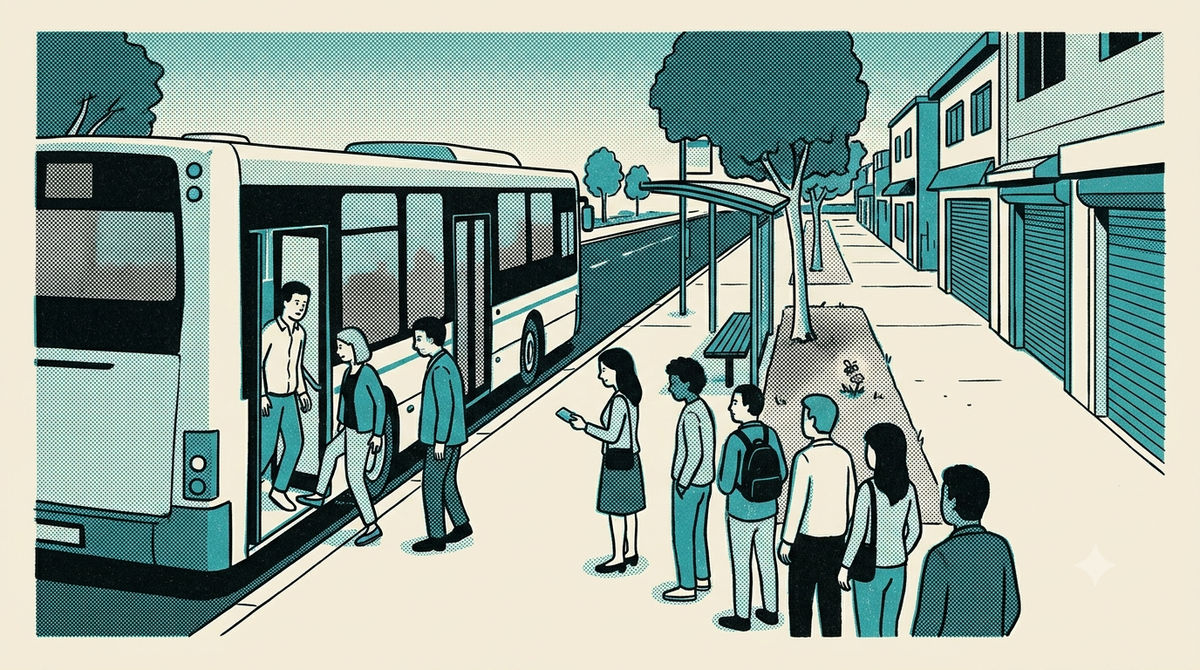
It's 6:10 pm at the Marathahalli bus stop. The 500D pulls in. Before it has fully stopped, the crowd folds into a tight wedge around the front door. People trying to step off have to shove sideways through people climbing on. A student with a backpack gets pinned against the railing. A bag strap catches the door. The conductor shouts "peeche se, peeche se." Forty seconds later the bus pulls away, and the three people who wanted to get down are still inside, past their stop.
What's actually happening
The bus is not the bottleneck. The door is.
A bus door is about one person wide. Everyone at the stop knows there is room for most of them, but nobody trusts that, so they press. The press blocks the door for people getting off, which blocks it for people getting on, which keeps the bus standing longer, which makes everyone, including the pressers, wait longer.
The scrum feels like speed. It is the opposite of speed.
What works better
Three moves, in order.
Let alighting passengers get off first. The door cannot do both directions at once. Five people step off in five seconds if you give them the doorway. They take twenty if you fight them for it.
Form a single file. One line, front door, in turn. A queue looks slower than a wedge but is roughly twice as fast, because one clear channel beats two people jammed shoulder to shoulder.
Have your fare ready before the bus arrives. Pass out, card in hand, or exact change ready. Searching for a ten-rupee note at the door holds up every person behind you.
Why it matters
Transit engineers have a name for the time a bus spends at a stop: dwell time. The global reference manual, the TCQSM, calls it "the most important component" of how much a route can carry. The same manual notes that serving one boarding passenger takes anywhere from one to ten seconds, and that fare payment is one of the biggest swing factors.
One second versus ten, per person, across forty people, is the gap between a bus that keeps its schedule and one that bunches and runs late. DTC's own passenger charter asks commuters not to crowd the gates and to give way to women, senior citizens, and persons with disabilities.
You are not slowing down to be polite. You are speeding the bus up.
Try this next time
At your next bus stop, do two small things. Have your pass or card in your hand before the bus arrives. Then stand a step back from the door until everyone has stepped off. You will board within a few seconds of the doorway clearing, you will not lose your seat, and the person behind you will copy the calm.
Quick check
1. Your bus is pulling into a crowded stop. Through the window you can see empty seats near the back. The crowd around you starts pressing toward the front door before the bus has even stopped. What is the best move?
Select an answer.
2. Two friends board the same bus. One has her pass in her hand as the bus arrives. The other starts hunting for change only once she reaches the conductor. Why does the second friend's habit matter to the forty people behind her?
Select an answer.