The elevator: the 4 unspoken rules
TL;DR
- Let people exit the lift before you step in. Same rule as the metro.
- Move to the back, face the doors, and fill the corners so more people fit.
- If you are next to the panel, you are on button duty. Ask the floor and press it.
- The overload buzzer is the lift refusing to move, not an insult. Last one in steps off.
Contents
The moment
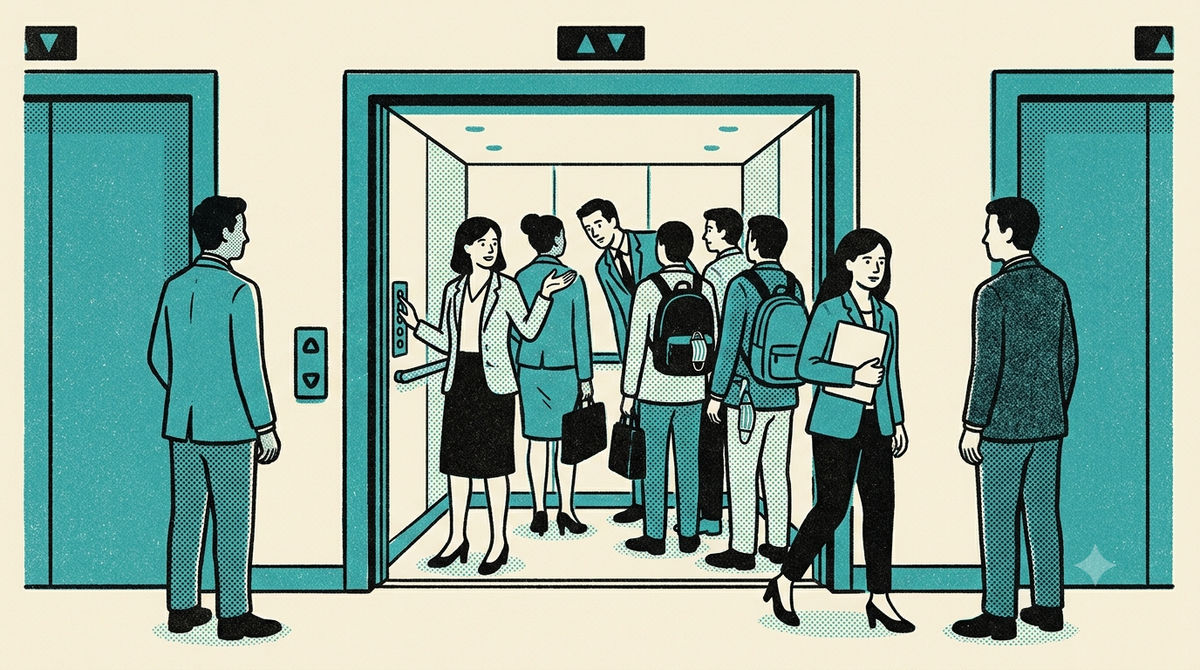
It is 9:25 am in an office tower. The lift arrives already two-thirds full. The doors open and four people press in before the two trying to leave can step out. Someone wedges into the front corner, faces the crowd, and goes back to their phone, standing squarely over the button panel. A man at the back says "seventh, please" twice. No hand can reach the buttons. The doors try to close, catch a shoulder, and re-open. The lift just sits there.
What's actually happening
None of this is rudeness. A lift is a tiny shared room with no signage, no marshal, and no painted floor markings like a metro platform has. Everyone is improvising at once, in a box the size of a bathroom. The result is a daily, low-grade scramble that costs each person a few seconds and a little dignity.
What works better
Four rules carry almost all of it:
One: let people exit before you step in. Same logic as the metro. Stand to the side, let the box empty, then board. It is faster, not slower.
Two: move in and make space. Walk to the back, fill the corners, face the doors. One person standing dead-centre can cost the lift two passengers per trip.
Three: if you are next to the panel, you are on button duty. Ask "which floor?" once and press it for people. You are the closest hand, so use it.
Four: keep the volume down and clear the doorway at your floor. No speakerphone in a sealed box. When your floor comes, step out fully so the people behind you can move.
Underneath all four sits one more: respect the load. When the overload buzzer sounds, the last person in steps off. It is not a verdict on you.
Why it matters
That buzzer is not the lift being fussy. Under IS 14665, every passenger lift carries an overload device that stops the car from starting once weight crosses 110 percent of rated capacity. The car stays put, doors open, alarm on, until weight comes off. The same standard matches the rated load and the number of people allowed to the car's floor area. The National Building Code 2016 sets how these lifts are installed and run.
So when nobody steps off, the whole car is frozen, and so is everyone waiting on the other nineteen floors.
Try this next time
Next crowded lift you enter, if you land beside the panel, say "floor, please?" once and press for whoever answers. It takes three seconds and it quietly fixes the worst of the scramble. Be the person on button duty.
Quick check
1. The lift is full, you have just squeezed in, and the overload buzzer starts. The doors stay open and the car does not move. What is the right move?
Select an answer.
2. You step into a crowded lift and end up right in front of the button panel. A few people behind you need different floors. What do you do?
Select an answer.