Let people exit before you enter: the rule that fixes everything
TL;DR
- Let passengers exit before you board. It is faster for everyone, not slower.
- Stand to the side of the doors, not in the middle exit lane.
- Pushing in the last half-second triggers door re-opens and delays the whole train.
- Every major Indian metro's official guidelines say: alight before boarding.
Contents
The moment
You're at Rajiv Chowk metro station, 6:45 pm, the Yellow Line pulling in. The crowd around you presses into a tight half-circle around the door. The doors open and everyone surges in. People trying to exit get pushed sideways, then shoulder through. A woman's backpack catches on someone's elbow and she stumbles. You squeeze in just as the door beeps. Behind you, two people who wanted to get off are still stuck inside. They'll exit at the next station, late. The next train was 2 minutes away.
What's actually happening
This is the most fixable civic friction in Indian transit. The fix is one sentence long: let people exit before you enter.
The friction comes from one bad incentive: everyone believes "first in" gets a seat, so they press forward. The pressing blocks the people trying to exit. That blockage costs everyone, including the pressers, 6-15 seconds of door-time and sometimes closes the door on the last person.
If everyone stepped back, let exiters leave, then walked in, the same boarding would happen 5-8 seconds faster with no friction.
Most metros worldwide solved this with painted platform markings: arrows for exit lanes, positions for entry. Indian metros are adding them (Delhi, Namma, Mumbai in major stations). The lines work; they just don't enforce themselves.
What works better
Three rules:
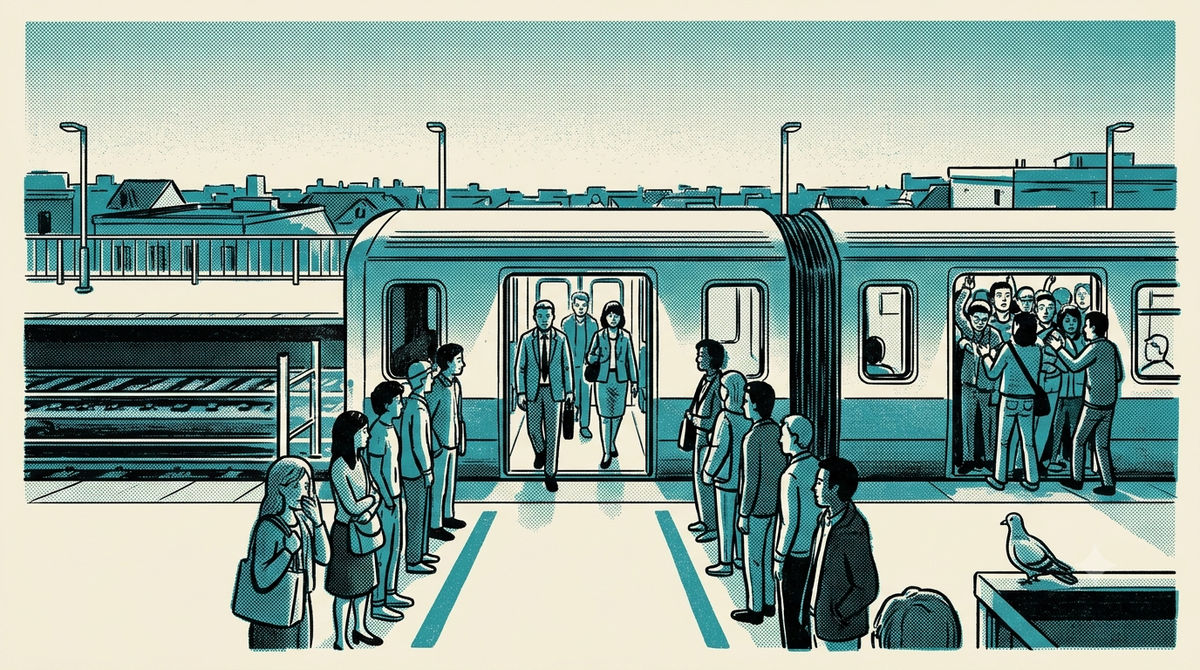
Rule 1: Stand to the side of the door, not directly in front of it. Two queues form: one on the left of the door, one on the right. The middle is the exit lane. Painted markings show this. If unpainted, eyeball it.
Rule 2: When the doors open, let exiting passengers fully exit before stepping in. Even if you're nearest, even if the train is crowded. The 4-7 seconds of waiting is not a delay; it's the boarding sequence working as designed.
Rule 3: Once exit is complete, board calmly. The train will not depart until the doors close cleanly. Pushing in at the last half-second is the surest way to trigger a door re-open. That re-open is a 30-second platform delay for the whole train.
What does NOT work: telling yourself "if I don't push, I won't get a seat." At peak, the seat was decided 20 stations earlier. Pushing here doesn't change that. It just creates the platform brawl.
Why it matters
The official DMRC handout on boarding and alighting opens with one rule: "Allow passengers from train to alight first." Every major Indian metro publishes the same instruction.
The rule isn't a Western import or a polite suggestion. It's how train doors are engineered to work. The TCRP's Transit Capacity manual is the global reference for transit planners. It documents the same finding: dwell time stays predictable only when alighting and boarding don't fight for door space.
The exit-first rule isn't about being nice. It's about how the system functions when you let it.
Try this next time
For your next metro ride, deliberately stand to the side of the door, let everyone exit, then enter. You'll notice three things. You lose no meaningful time, since entry happens within 3-5 seconds of the last exit. The door cycle is calmer. You're contagious: the person beside you will copy you.
If your regular station has no painted markings, request them from the metro operator. Most respond to user feedback.
Quick check
1. You're at Indiranagar metro, 7 pm, waiting for the Purple Line. The platform has painted exit/entry markings: a 'Do Not Stand' triangle in front of the door, and 'Wait Here' rectangles to either side. Most people are ignoring the markings and standing on the triangle. The train is arriving. What do you do?
Select an answer.
2. You're already on the platform. The doors are closing. The 'door closing' chime has started. Two people behind you start pushing forward to squeeze in. The next train is 2 minutes away. What's the right move?
Select an answer.