The auto driver as fellow human
TL;DR
- Settle the meter or a fair price in ten seconds before you sit, not mid-ride.
- A fair price is not the lowest possible price; grinding a tired driver down isn't a win.
- Refusing the meter and overcharging are both against the rules, on both sides of the deal.
- Greet, agree, thank. Treating the driver as an equal costs you nothing.
Contents
The moment
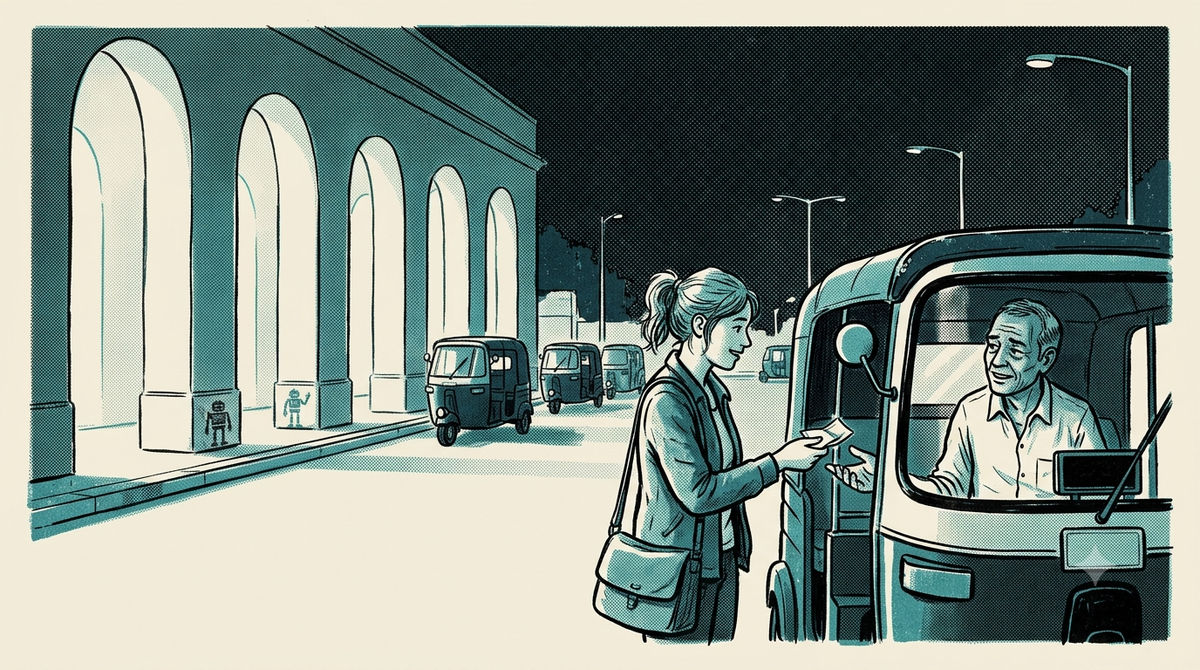
It's 11 pm and you flag an auto outside the station. The driver has been on the road since morning. You ask the fare, he names a number, you scoff and counter, and the haggle runs thirty seconds over twenty rupees. You climb in irritated. The ride is silent. You hand over the money without a word and walk off. Nobody was rude, exactly. Nobody was kind either.
What's actually happening
Two things sit inside that thirty-second haggle. For you, twenty rupees is a principle. You don't want to be taken for a ride, literally. For him, twenty rupees is a slice of a day's earning. He makes it over a twelve-hour shift, after fuel and the daily rent on a vehicle he may not own. You are arguing from very different sides of the same twenty rupees.
There is a quieter thing too. In that moment, the driver is the most invisible person in your evening. You looked at the meter, the route, the fare. You did not quite look at him.
What works better
Settle the terms before you sit. Meter, or a fixed price you both accept, agreed in ten seconds and not reopened mid-ride. A clear deal upfront removes the argument later.
Hold two ideas at once. Overcharging is not okay, and you can decline it calmly. But a fair price is not the lowest possible price, and grinding a tired man down to his last rupee is not a victory. If the meter runs, it is not a favour to you. It is how the system is meant to work, so ask for it as a normal thing, not an accusation.
Then the small human layer. Greet him. Say where you're going. Thank him at the end. Don't slam the door. It's someone's livelihood, not a prop in your commute.
Why it matters
Autorickshaw fares are not freelance. State transport authorities fix them, and both refusing to run on the meter and overcharging are offences under the rules framed under the Motor Vehicles Act, 1988. Fairness here is not charity. It is the system working as designed, in both directions.
The deeper point is older than any law. The person driving you is doing a hard, low-margin job that your late evening quietly depends on. Most drivers work long days for modest, unpredictable take-home pay. Treating the exchange as one between equals changes the texture of the city by one interaction, and it costs you nothing.
Try this next time
Do three things on your next ride. Agree the meter or a fair price before you get in. Stop haggling the moment the price is fair. Say a clear thank you when you step out.
If the ride was smooth and the fare was fair, round up rather than down. The driver remembers the rare passenger who treated the whole thing as a deal between two adults. Be that passenger.
Quick check
1. It's late, you flag an auto, and the driver refuses to run the meter and quotes a flat fare well above the usual. You're tired and want to get home. What's the right move?
Select an answer.
2. The meter reads a fair fare, but out of habit you start bargaining to knock off ten rupees. The driver looks worn out at the end of a long shift. What's the better call?
Select an answer.