Priority seats: who, when, how to give it up
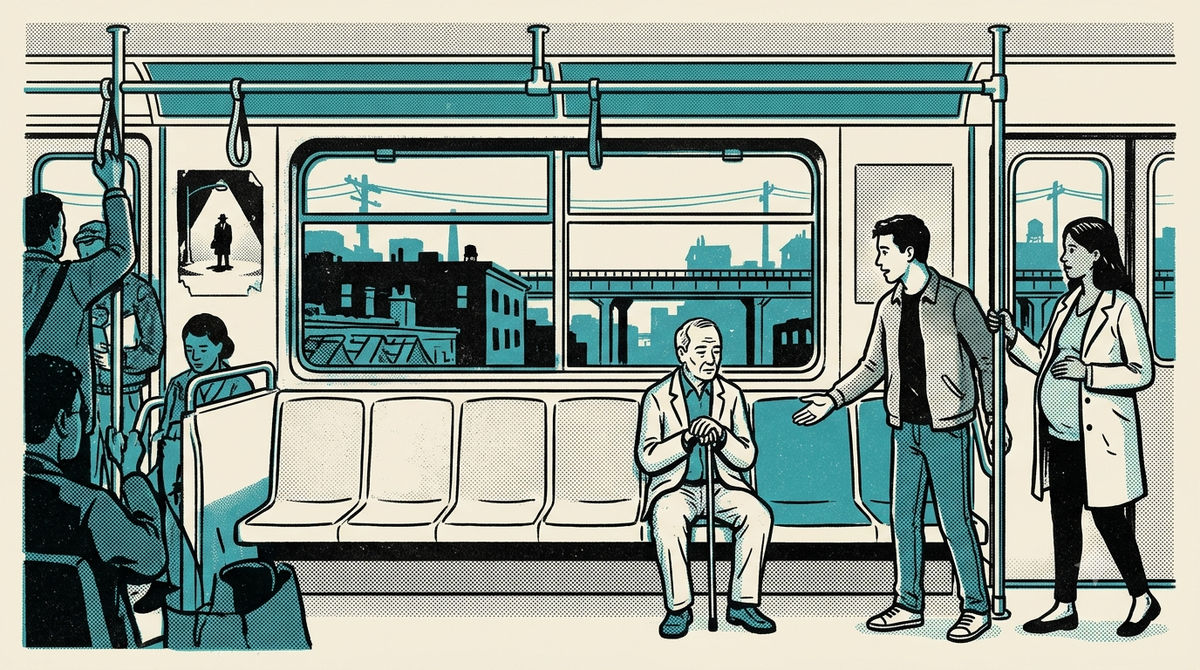
TL;DR
- Priority seats are for whoever needs them more than you do, not whoever sat first.
- If you're able-bodied, you may use a free priority seat, but you vacate it the moment someone who needs it boards.
- Stand up before they ask. Don't demand proof of pregnancy or disability; many are invisible.
- Offer once, plainly. If they decline, sit back down without fuss.
Contents
The rule
Priority seats are marked in every metro coach and near the front of most buses. They are for the people who need them more than you do: senior citizens, pregnant women, persons with disabilities, and anyone carrying an infant or visibly unwell.
If you're able-bodied, you may sit in a free one. You give it up the moment someone who needs it boards.
Why this rule exists
Standing on a moving bus or train is not equally hard for everyone. For a 75-year-old, a sudden brake is a fall risk. For someone in late pregnancy, a ten-minute stand is a strain. For a person on crutches, it isn't safe at all.
The priority seat is not a prize for boarding first. It's a small piece of shared infrastructure that goes to whoever needs it most at that moment. The Rights of Persons with Disabilities Act, 2016 puts accessible public transport on a legal footing in India. Every Indian metro marks a set of these seats in each coach. The priority seat is where that principle meets your daily commute.
What happens if you don't follow it
The immediate cost lands on a real person. Someone who can't safely stand, stands. On the next hard brake, that is the fall the seat existed to prevent.
The social cost is yours. A coach full of people watching you study your phone while a pregnant woman holds the rail is its own slow penalty. Metro staff and fellow passengers can and do ask you to move, and that ask is a worse moment than simply standing up first.
There's usually no fine attached. This one runs on courtesy, not enforcement. That's exactly why it's a test of yours.
Quick reference
Who gets the seat: senior citizens, pregnant women, persons with disabilities, people carrying infants, the visibly unwell.
How to offer: stand up first, then a short "please, take this seat." Standing before they ask removes the awkwardness for both of you.
Don't: ask anyone to prove a pregnancy or a disability. Many disabilities are invisible. If someone takes a priority seat and looks fine to you, that is not your call to audit.
If they decline: sit back down without a fuss. The offer was the civic act; the seat is theirs to refuse.
Women's reserved coach and seats: a separate provision on most metros. Respect both, they don't cancel each other out.
The civic upgrade is simple: read the seat as theirs the moment they board, not after they ask.
Quick check
1. You're seated in a marked priority seat on the Namma Metro, tired after a long day. At the next station, a man with a walking stick boards and stands near you, holding the pole. No staff are around and he hasn't said anything. What's the right move?
Select an answer.
2. You give up your seat to an older woman who waves you off and says she's getting off in one stop. The seat is now empty and the coach is crowded. What do you do?
Select an answer.