Encroachment, and the small daily choice
TL;DR
- Footpath parking gets all the attention. Shop encroachment (A-boards, display racks, customer chairs) is bigger because there are more shopkeepers than parkers per kilometre. Every morning is a setup decision.
- Street vendors with licences in designated vending zones are doing their job under the Street Vendors Act 2014. Fixed shops extending beyond their property line are encroachment. The two get conflated; they are not the same.
- The Supreme Court in October 2025 (Rajaseekaran v Union of India) declared footpath use a fundamental right. The Delhi PWD audit found 84% of footpaths fail IRC standards. Only 25% are usable.
- If you own a shop, keep stuff inside your property line. If you walk past encroachment, a polite 'boss, your rack is on the footpath' works more often than people assume. Shopkeepers care about regulars.
Contents
The moment
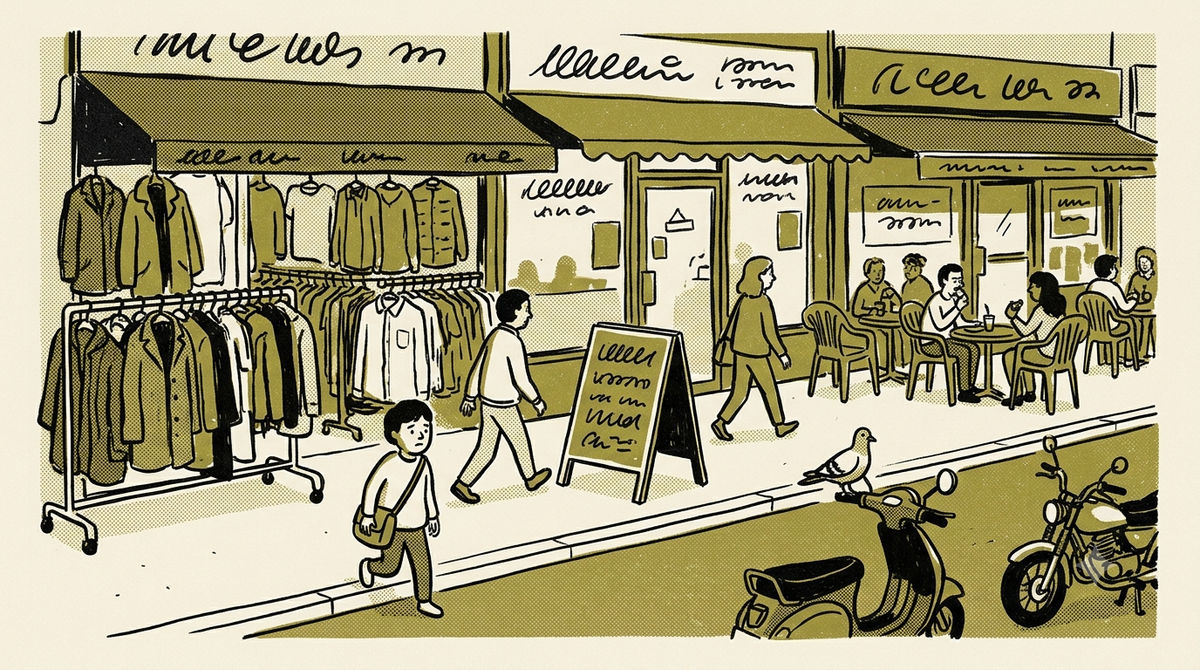
You are walking down Linking Road in Bandra at 7 pm. A clothing shop has rolled its display rack two feet beyond the shopfront. The next shop's A-board sits in the middle of the footpath. A paan shop has a glass case extruding. A mobile-accessories shop has three plastic chairs on the path, customers seated, scrolling. In 50 metres you have stepped onto the road three times. Two scooters cut past. You give up and walk in the gutter.
What's actually happening
The footpath is shared infrastructure that everyone agrees they want, until they are the shopkeeper making the morning's setup decision. The A-board where? The rack out, or stays in? The customer chair, where does it live?
The Street Vendors (Protection of Livelihood and Regulation of Street Vending) Act, 2014 made licensed vendors LEGAL in designated zones. It did NOT make permanent shops legal beyond their property line. The two get conflated in popular complaint and in municipal action; they are different things. The vendor with a licence in a vending zone is doing her job. The fixed shop extending two feet onto the footpath is encroachment.
A Supreme Court Committee audit of Delhi's 1,400 km of PWD roads in 2023 found 84% of footpaths fail Indian Roads Congress standards. Only 25% are usable. Commercial encroachment is a large share of that gap.
The structural failure is real. Many older shop buildings predate any usable footpath norm. But structural failure does not absolve the daily choice.
What works better
If you own a shop: keep merchandise, signage, A-boards, and customer seating within your property line. The footpath outside is not your overflow. Most paying customers care less about the "more is more" display than shopkeepers assume; some actively prefer the walkway being usable.
If you manage a shop: the morning A-board placement is the entire lesson. Train staff once. The default move shapes the rest of the day.
If you walk by encroachment: the shop response is often faster than a car owner's. A polite "boss, ek minute, your rack is on the footpath" gets results most of the time. Shopkeepers care about regulars; they will fold the rack back in.
If you eat at a shop with chairs on the footpath: sit inside. Your seat is the demand signal.
If you organise something around the shop: same rule. Tents, decorations, queues, none belong on the footpath.
Why it matters
The Supreme Court in October 2025 (S. Rajaseekaran v. Union of India) declared footpath use a fundamental right of every citizen and ordered road-safety rule-framing in six months. The Rights of Persons with Disabilities Act 2016, Section 44, makes accessibility for outdoor public spaces mandatory; A-boards and racks at variable heights are typical obstacles in accessibility audits.
Indian pedestrians die at one of the highest per-capita rates in the world. The walkable footpath is a public-good multiplier: streets where walking is safe attract small business, kids, older walkers. The small daily choice (the A-board out, the rack out, the chair on the footpath) is the choice that compounds, every morning, across every commercial street in India.
Try this next time
For your next walk on a commercial street, count shop encroachments on a 200-metre stretch. Note the type (A-board, rack, chair, glass case). The number will surprise you.
If you are a regular customer of a shop that encroaches, mention it as a friendly aside. Daily customers have more leverage than they think.
Quick check
1. You are walking down M.G. Road in Pune. The mobile-phone shop you buy from every other week has put three plastic chairs on the footpath for customers waiting in line. The owner is at the counter. What is the right move?
Select an answer.
2. You manage a small clothing shop in a busy market. The standing instruction to your staff is: put the A-board sign on the footpath at opening, take it in at closing. A new staff member asks why you keep both options open. What is the right answer to give?
Select an answer.
Sources
- Street Vendors (Protection of Livelihood and Regulation of Street Vending) Act, 2014
- Rights of Persons with Disabilities Act, 2016, Section 44 (Mandatory Accessibility for Buildings)
- S. Rajaseekaran v. Union of India: Supreme Court order on pedestrian safety and footpath audit (October 2025)
- Supreme Court Committee on Road Safety: audit of Delhi PWD roads (footpath condition findings)