The bus-stop crush, and how a single line solves it
TL;DR
- The bus-stop crush feels faster to you but is slower for the whole bus. Two streams jam one door.
- A bus door boards one person at a time, so boarding time is what keeps the bus sitting there. A single line is the fastest way in.
- Stand to the side of the door and let people get off first. The bus cannot fill until it empties.
- If there is no marked queue, be the person who starts one. Others almost always fall in behind.
Contents
The moment
It is 9 am at a busy bus stop. Twenty people wait, loosely scattered, checking phones. The bus rounds the corner. In one motion, everyone stands and surges toward where the door will open, folding into a tight semicircle. People push from behind. A man who arrived thirty seconds ago is now at the front. An older woman who has waited ten minutes gets edged to the back. The door opens, and a passenger trying to get off is trapped against the wall of people trying to get on. Nobody is moving.
What's actually happening
The crush feels faster. Getting to the door first feels like getting on first. But a bus door lets one person board at a time. The real clock is boarding time, how long the bus sits with its door open (Transit Capacity and Quality of Service Manual, 2013).
When two streams shove through one door at once, they jam each other. Transit researchers call it friction, and it slows both streams (Journal of Public Transportation, 2011). The mob does not beat the queue. It loses to it. The structural failure is real too. Many Indian bus stops have no marked queue, no shelter, and the bus does not always halt at the same spot (WRI India, Bus Karo). But a single line is one thing the crowd can build without waiting for the city.
What works better
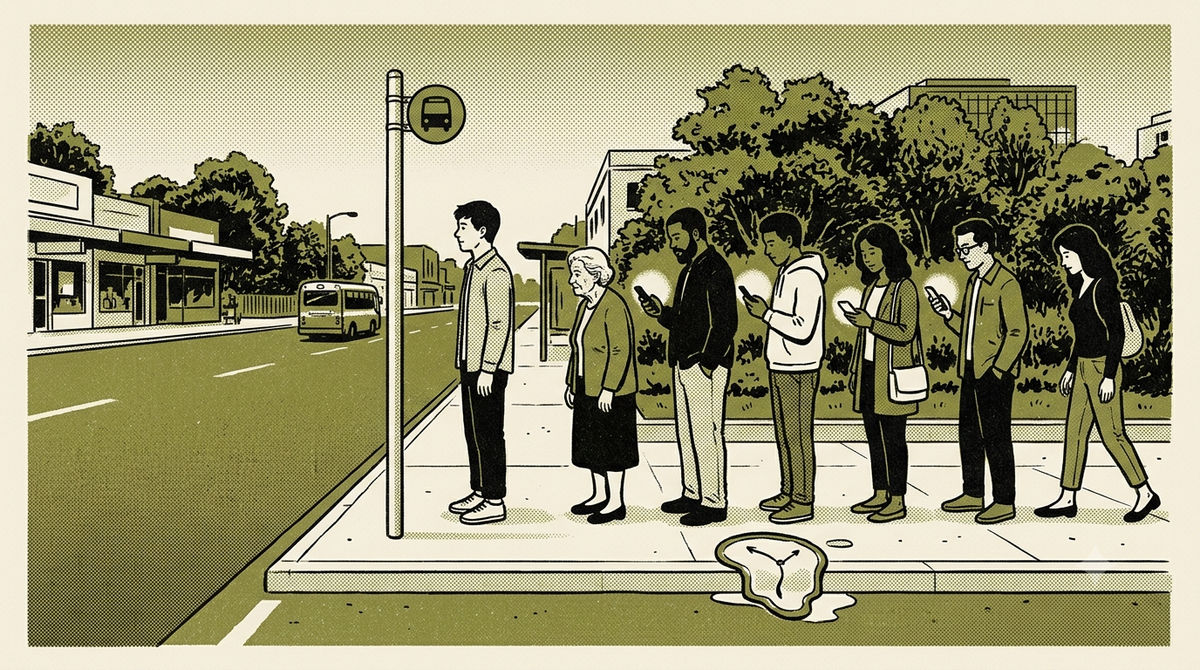
Form one line in the order people arrived. First to reach the stop, first on the bus. It is fair, and it is genuinely faster to load.
Stand a step to the side of where the door opens and let people get off before you get on. This is not politeness for its own sake. The bus cannot take new passengers until it clears the ones leaving. Blocking the exit blocks yourself.
Let people who need it board first: the elderly, a pregnant passenger, someone with a disability or a small child. And do not push. The person you shove has nowhere to go, and the door does not open faster for pressure.
Why it matters
Do the math. If a crush adds even ten to fifteen seconds of boarding chaos at each stop, and a route has thirty stops, that is several minutes added to every single trip. Multiply that by every passenger, every bus, every day. The queue you form saves time you will personally lose tomorrow.
The single line also quietly protects the person who cannot win a shoving match, the older woman, the kid, the tired worker at the end of a shift. A fair stop is a stop where waiting your turn actually means something.
Try this next time
At your next bus stop, stand slightly to the side of where the door will open, not dead centre. When the bus arrives, hold for two seconds and let people step off first. If no queue has formed, take the first spot calmly and stand in clear arrival order. You will feel exposed doing it once. After that, watch how often the rest of the stop quietly lines up behind you.
Quick check
1. Your bus pulls in and the whole stop surges at the door. You actually want the bus to load as fast as possible. What helps most?
Select an answer.
2. The stop has no painted queue line and no shelter, just a pole and a scattered crowd. What is the useful civic move?
Select an answer.