Eating, lingering, and claiming the bench
TL;DR
- A bench at a bus stop or station is shared waiting infrastructure, not your private lounge. Take one seat, not two.
- Keep your bag on your lap, not on the next seat. One person across two seats halves a shelter meant for a crowd.
- Offer the seat to whoever needs it more: an older person, a pregnant commuter, someone tired at the end of a shift.
- Eating while you wait is fine. Carry the wrapper and the cup until you find a bin. The bench is not a table.
Contents
The moment
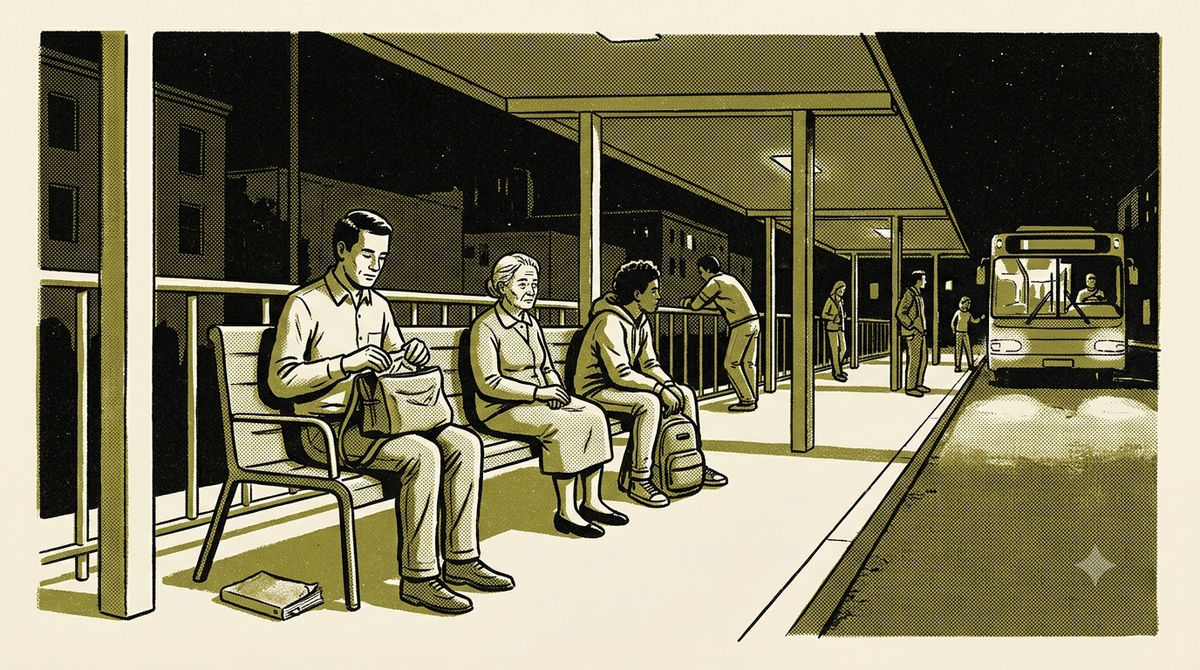
It is 8:40 pm at a busy station bench. Three seats. One man is stretched across two of them, his bag holding down the third, a foil packet of dinner open on his knee, earphones in. He has watched two buses come and go without moving. An older woman stands at the pole, shifting her weight from one foot to the other. A student with a heavy bag leans against the railing. The bench is full, and only one person is using it.
What's actually happening
The bench at a stop is transient infrastructure. It exists so people can rest while they wait for a bus or a train. It exists most of all for the people who cannot stand comfortably for fifteen minutes. When one person spreads across it, eats on it, and stays long after their bus has come, the bench quietly stops being a shared seat and becomes a private room.
The structural failure is real. Indian bus stops and stations are chronically short of seating. Many benches are broken, taken over by vendors, or were never built (WRI India, Bus Karo). But scarcity is the argument for rotating the seat, not for holding it. The Harmonised Guidelines for Universal Accessibility, and the Rights of Persons with Disabilities Act, 2016, both treat seating and rest as access infrastructure, not a luxury.
What works better
Take one seat, not two. Your bag rides on your lap or between your feet, never on the seat beside you. A bag has never once needed to sit down.
Sit to wait, not to linger. If your bus has already come and you are only resting, and the shelter is filling up, give the seat back to someone who is still waiting.
Watch for who needs it more. An older person, a pregnant passenger, someone with a small child or a disability, a worker at the end of a long shift. Offering the seat costs you a few minutes on your feet. It saves them real discomfort.
If you eat while you wait, keep it contained and carry the waste. The bench is a seat, not a table. Fold the wrapper into your bag and drop it at the next bin (see spaces-009).
Why it matters
Do the math. A shelter has three seats, and twenty people cycle through it in an hour. One person lying across two of them has cut the shelter's capacity by a third, for the whole length of their wait. Multiply that across every stop on the route.
The bench also protects exactly the people the transport system already serves worst. The passenger who cannot win a standing contest. The pregnant commuter. The tired parent. The older person with a bad knee. A stop where the seat rotates fairly is a stop where waiting your turn actually means something.
Try this next time
At your next bus stop or station, take a single seat with your bag on your lap. When someone arrives who clearly needs it more than you do, stand and offer it before they have to ask. The first time feels awkward. After that, it is just what you do.
Quick check
1. You're on a three-seat station bench, your bag on the seat beside you, dinner open on your knee, and you've let one bus go by to finish eating. An older woman is standing nearby with nowhere to sit. What's the right move?
Select an answer.
2. The shelter is packed, you've finished your snack, and there is no bin in sight. What do you do with the foil packet and the paper cup?
Select an answer.