Public bins: how to use, how to lobby for more
TL;DR
- Public twin-bins follow your kitchen's logic: green for wet (food), blue for dry (clean paper, bottles, cans).
- Oily or soaked paper is the trick question. Grease makes paper non-recyclable, so it goes green, not blue.
- If a bin is overflowing, carry your waste to the next one or home. Balancing it on the pile scatters it across the road within the hour.
- The bin shortage is a system failure, and system failures are lobby-able. The Swachhata app routes a photographed report to your ward.
Contents
The moment
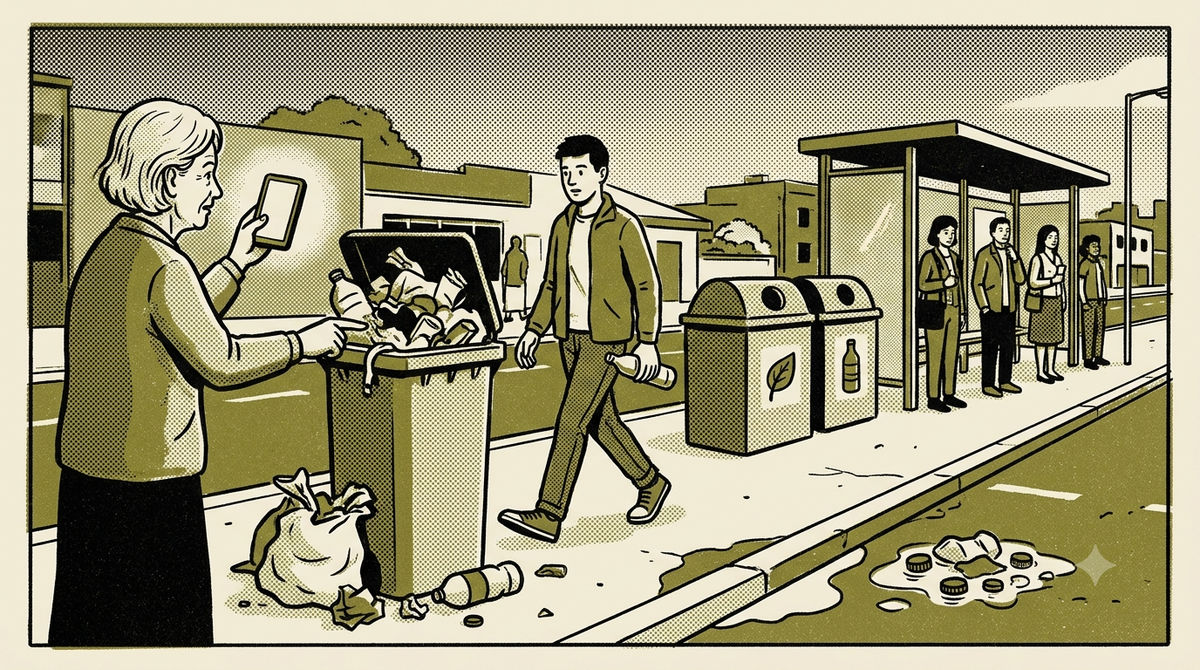
You are at a bus stop with an empty samosa plate and an oily paper. There is a bin, finally. Actually there are two, side by side, one green and one blue, both with lids half open. You hover. Which one?
The oily paper feels like it could go either way. The person before you clearly did not hover: the green bin has a plastic bottle sitting on top of the food scraps. You have five seconds and a small decision.
What's actually happening
Public twin-bins follow the same logic as your kitchen. Green is for wet: food, the samosa scraps. Blue is for dry: the paper if it is clean, the bottle, the can. The oily paper is the trick question. Grease makes paper non-recyclable, so heavily soaked paper goes with wet. A lightly used napkin can go dry.
Most public bins in India fail not because people cannot read colours but because one wrong deposit contaminates the whole bin. That bottle on top of the food scraps just turned a recoverable bottle into landfill and made the green bin's compost load dirtier. A bin is only as segregated as the last careless hand.
There is also a real shortage. India has far fewer public bins per person than waste planners recommend, and the Solid Waste Management Rules, 2026 place the duty to provide segregated collection on the local body. So you face two problems at once: use the bins right, and get more of them installed.
What works better
Green for wet, blue for dry. When unsure, ask one question: would a recycler pay for this if it were clean and dry? Bottle, can, clean paper, carton go blue. Food, peels, soggy paper go green. Batteries and bulbs belong in neither. They are special-care waste for a collection point, not a street bin.
If the bin is overflowing, do not balance your waste on top of the pile. Carry it to the next bin, or home. A toppling pile scatters across the road within the hour.
Why it matters
A correctly used bin keeps the recycling stream clean and a downstream worker's job safer. A contaminated bin quietly undoes the effort of everyone who used it right before you. One wrong deposit is louder than ten right ones.
The shortage, though, is not your fault, and it is fixable. Municipalities respond to documented, repeated requests more often than people expect. Silence they can ignore. A paper trail is harder to.
Try this next time
Two moves. First, this week, get the colour right every time, and when a bin is full, carry rather than balance.
Second, pick one route you walk often, count the bins, and file one civic request. The Swachhata app, run by the Ministry of Housing and Urban Affairs, lets you report a missing or overflowing bin with a photo and a location pin. It routes straight to your ward. One report rarely moves anything. Ten reports on the same stretch, from ten neighbours, often does.
Quick check
1. You are holding an oily samosa paper at a twin-bin. Green (wet) or blue (dry)?
Select an answer.
2. The bin on your street is always overflowing. What is the most effective civic move?
Select an answer.