Bargaining without being rude
TL;DR
- Bargaining is price discovery, not combat. The quoted price was never the real price, and both of you know it.
- Decide your fair price before you speak, make one clear counter-offer, and hold it calmly.
- Haggle the price, not the person. Insulting the product or grinding a small vendor for sport is where it turns rude.
- Know where bargaining belongs: street stalls yes, MRP counters and small kiranas no.
Contents
The moment
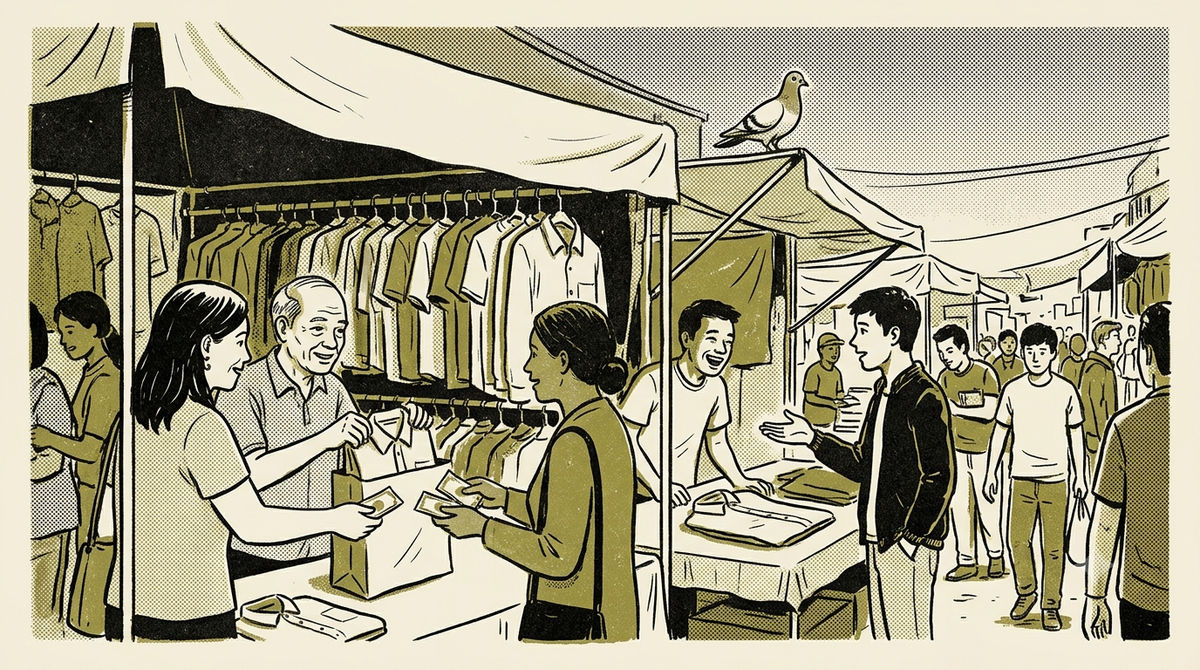
Saturday morning at a street market. You pick up a cotton kurta. The vendor says ₹600. You reckon it is worth ₹400. So far, normal. Then the negotiation tips. You scoff, call it overpriced rubbish, walk off mid-sentence, come back, offer ₹150 "final," and act offended when he won't take it. He sells it to you at ₹350. Nobody enjoyed the last four minutes.
What's actually happening
Bargaining in an Indian bazaar is not a fight. It is a price-discovery ritual both sides have done a thousand times. The vendor quotes high. You counter low. You meet somewhere sensible. The quoted price was never the real price, and both of you knew it.
The friction comes when one side treats it as combat instead of choreography. Insulting the product, faking outrage, grinding a small vendor down for sport: that turns a normal trade into a small humiliation. The vendor is running a livelihood, not a charity, and not a casino.
India has an estimated 10 million street vendors. For most, the margin on a single kurta is the difference between a good day and an ordinary one. Bargaining hard is fair. Bargaining cruel is not.
What works better
Decide your fair price before you open your mouth. If ₹400 is fair, anchor a little below it, settle around it, and stop.
Bargain the price, not the person. "Can you do ₹400?" works. "This is garbage, ₹150" does not. You can be firm and warm at the same time.
Know where bargaining belongs. Street stalls, weekly markets, tourist shops: yes. Malls, supermarkets, MRP-printed goods, and small kirana stores on thin fixed margins: no. Haggling at a fixed-price counter just slows the queue.
If you are not going to buy, do not open a long negotiation. Pulling a vendor through five rounds and walking is a waste of the one thing they cannot restock: time.
When you land a price, close it cleanly. Pay, take the bag, say thanks. No re-bargaining after the handshake.
Why it matters
Street vending is a recognised livelihood, protected under the Street Vendors (Protection of Livelihood and Regulation of Street Vending) Act, 2014. These are not people you are outsmarting. They are people you are trading with.
A market runs on repeat trust. The vendor you treat well today gives you the real price next month, holds the good stock back for you, and throws in the small extra. The buyer who bargains like a decent human gets the better deal across a year, not just across one kurta.
Try this next time
At your next market stop, set your fair number first, make one clear counter-offer, and hold it calmly. If the vendor agrees, buy it and move on. If not, thank them and leave without theatre. You spend less energy, get fair prices, and become the customer a vendor actually wants back.
Quick check
1. You're at a small neighbourhood kirana store. The shopkeeper charges the printed MRP on a packet of biscuits, and you start haggling for a discount. What's the better read of this situation?
Select an answer.
2. Which of these is true about street vendors in India?
Select an answer.