The boarding-zone system: how it works, why it works
TL;DR
- Your boarding zone is printed on your boarding pass. The plane boards you when the aisle can absorb you.
- The gate is never the bottleneck. The single aisle inside the aircraft is.
- Boarding research shows crowding the gate saves nothing; slow bag-stowing is what burns the minutes.
- Sit until your zone is called, then board ready: pass out, jacket off, bag wheels-in.
Contents
The moment
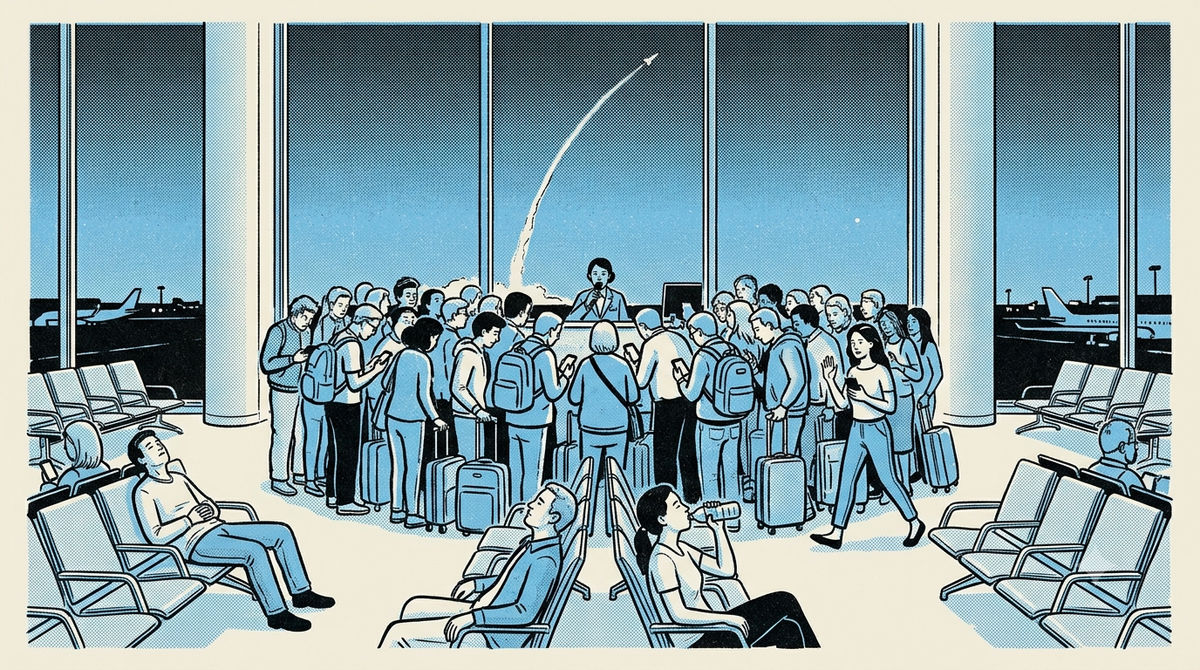
Gate 23B, 6:40 pm, a full flight to Hyderabad. The screen changes to "Boarding shortly" and forty people rise as one, forming a thick crescent around the gate. The agent announces Zone 2. Between the Zone 2 passengers and the gate now stands a wall of Zone 3, holding cabin bags, checking phones, moving for nobody. A woman with a Zone 2 pass excuses her way through a crowd that is queueing for a queue that doesn't exist yet.
What's actually happening
Two things are true at once, and both matter.
First, the crowd is not entirely irrational. Bins are scarce, and frequent flyers have learned that boarding late can mean gate-checking a bag. The crescent is a scarcity response.
Second, the crescent doesn't work. The gate is never the bottleneck. Everyone passes the same scanner and walks the same aerobridge into an aircraft with one aisle and about 180 seats. You board when the aisle ahead of you clears, not when you reach the gate desk. Boarding research bears this out: physicist Jason Steffen found that total boarding time is driven by people standing in the aisle stowing bags while everyone behind them waits. His field experiment ranked strict back-to-front blocks among the slowest methods, slower than random boarding.
So yes, the zone system is a compromise, and airlines know it. It exists to meter how many people hit the aisle at once. You cannot fix the algorithm from seat 24C. Ignoring the zone doesn't produce the clever alternative; it produces the worst one: everyone in the aisle together.
What works better
Stay seated until your zone is called. Your seat is assigned. Nobody on this flight is leaving without you.
Use the waiting minutes for aisle prep: boarding pass open on your phone, ID out, jacket off, water bottle inside the bag. When your zone is called, join the end of the queue, not the side of it.
At your row, you have one job: clear the aisle in twenty seconds. Bag up, wheels facing in, second bag under the seat in front, sit. The zone system's entire promise rests on that twenty seconds.
If bin space genuinely worries you, the fix is not boarding out of zone. It is a smaller bag, or a free gate-check that arrives on the belt.
Why it matters
The math is unforgiving. One aisle, about 180 passengers. Every passenger who blocks the aisle for an extra twenty seconds adds it to the flight's critical path. Thirty slow stowers cost the aircraft ten minutes. That aircraft flies five or six sectors today, and your 6:40 pm delay is someone's 10:55 pm missed connection.
Boarding order is one of the few civic systems where the research is done and the answer is known. The whole thing runs on passengers doing a twenty-second task well.
Try this next time
When boarding is announced, look at your pass, find your zone, and stay in your seat until it's called. Do the aisle prep while you wait. Then be the rare passenger who walks on, stows in twenty seconds, and sits.
The crescent at the gate will still form. It always does. You'll board two minutes after it, breathing normally, and land at the same time.
Quick check
1. Boarding opens. You're Zone 3 with a standard cabin roller, seat 21C. Zone 1 has just been called and the gate crowd is thick. What's the move that actually gets you and your bag on board fastest?
Select an answer.
2. If back-to-front zone boarding is genuinely one of the slower methods (research says it is), why follow the zones at all?
Select an answer.