The flags at Indian beaches and what they actually mean
TL;DR
- Red over yellow means lifeguard-protected water. Flown as a spaced pair it marks a swim zone, so swim between the two.
- One red flag means high hazard. Two red flags mean the water is closed.
- Yellow is not a green light. The international standard calls it medium hazard; Goa's lifesaving agency reads it as knee-deep only.
- A flag cannot rescue anybody. It works only when enough people stay inside it for the patrol to stay concentrated.
Contents
The moment
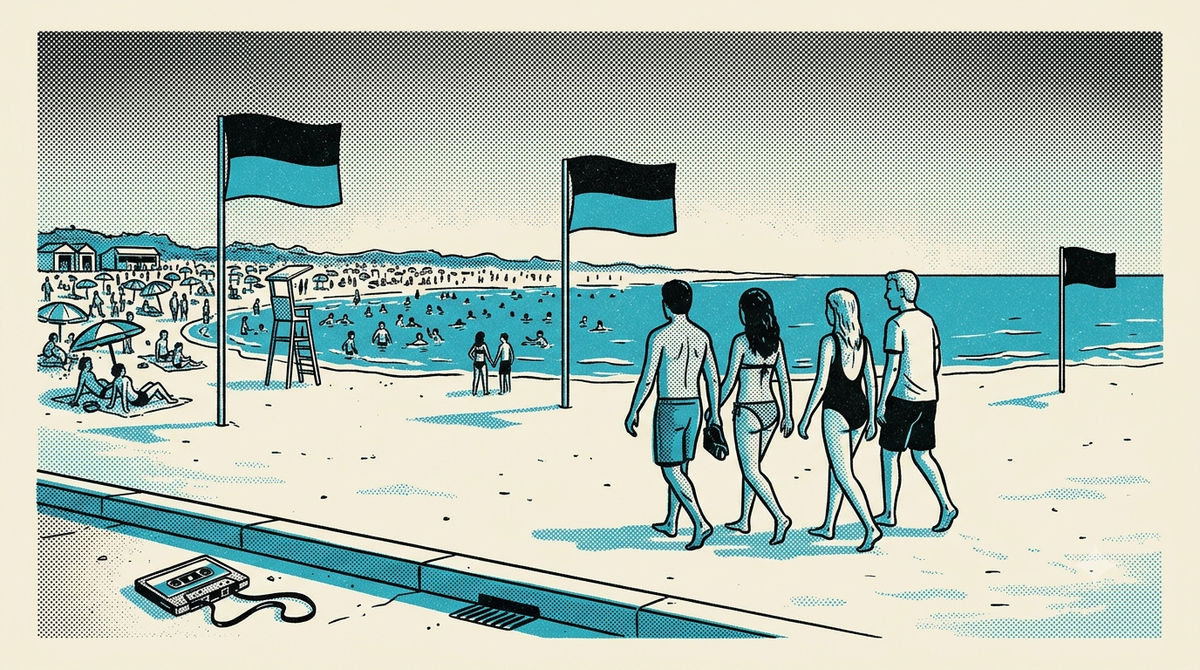
Calangute, late December, half past four. The sand is full. Two red-over-yellow flags stand about a hundred metres apart with a lookout chair between them, and inside that stretch forty-odd people are in the water.
Everybody else is somewhere else. A group in their twenties has walked two hundred metres down, past a single red flag, because the water there is empty and the light is better. One of them is waist-deep with a phone held over his head. Nobody has told him not to be there. The flag has.
What's actually happening
He does not feel reckless. The sea in front of him looks exactly like the sea inside the flags. No wave, no rope, no shouting.
The flags are not decoration and they are not permanent. Under the international standard, zoning flags get moved as conditions change. Somebody read that beach this morning and put the swim zone where the water lets you back out. In Goa that reading is done by Drishti, which patrols the beaches under a state contract.
Many of us were never taught the code, so the flags read as scenery. They are closer to a weather report that somebody walked the beach to write.
What works better
Learn six flags. It takes a minute.
Red over yellow. Lifeguard-protected water. Flown as a spaced pair it marks a swim zone, so swim between the two, not beside them. Drishti sets its pair about 100 metres apart and asks swimmers to stay within 50 metres of shore. A single one means swimming is permitted in front of it, supervised.
Red. High hazard. Strong surf or currents, all swimmers discouraged. In the standard it rates the whole beach. Indian agencies often plant one against a particular stretch instead, so read it as: at minimum, not here.
Two red flags. The water is closed. Not a rating, a closure.
Yellow. Not a green light, and the flag people misread most. The standard calls it medium hazard, weak swimmers discouraged. Drishti's own key calls it a safe zone but tells you to go in only to knee level because of undercurrents. Both mean caution. Neither means swim.
Black and white, quartered. Watercraft zone. Surfboards, kayaks and other non-powered craft, not swimmers.
Red and white, quartered. Emergency. Get out of the water now.
One more thing. A plain red and a plain yellow are never flown together, the double red aside, because each rates the whole beach. Red over yellow is a different object. It marks a zone.
Why it matters
More than 30 people drown every hour worldwide, and 9 in 10 of those deaths are in low- and middle-income countries. A flagged beach is one where somebody has already done the reading for you. Ignoring that is not bravery, it is discarding free information.
There is a shared cost too. The standard is blunt about what a flag can do: it cannot help anybody in distress, and it is no substitute for a trained rescuer. A flag only concentrates the crowd so a small patrol can cover it. Every swimmer who spreads out spreads the patrol with them, and the people inside the flags pay for it.
Try this next time
Before you get in, find the flag board at the beach entrance and read the agency's key, because it will not always match the international one. Then walk towards the red-over-yellow rather than away from it. The dull, crowded stretch of sea is the one somebody is watching.
Quick check
1. You reach a patrolled beach. A single yellow flag is flying and there is no red-over-yellow anywhere along the sand, singly or in a pair. What does that tell you?
Select an answer.
2. Your group wants to swim. The red-over-yellow zone is crowded, and a quiet, empty stretch sits three hundred metres away with a red flag at the near end of it. What is the honest reading of that empty water?
Select an answer.