The UK round: how the round-buying system works
TL;DR
- If you're invited to a UK pub with a group, the round-buying system is in play. Everyone takes turns buying drinks for the whole group.
- Not drinking alcohol does not exempt you from buying a round. You buy when it's your turn; your drink is sparkling water or alcohol-free, theirs is whatever they ordered.
- Opting out is fine but declare it on the first round, not the third. 'I'll just buy my own drinks tonight' is universally accepted at the start.
- Skipping your round without explanation is universally noticed. Mentally budget £25-50 for one round in a 4-6 person London group.
Contents
The moment
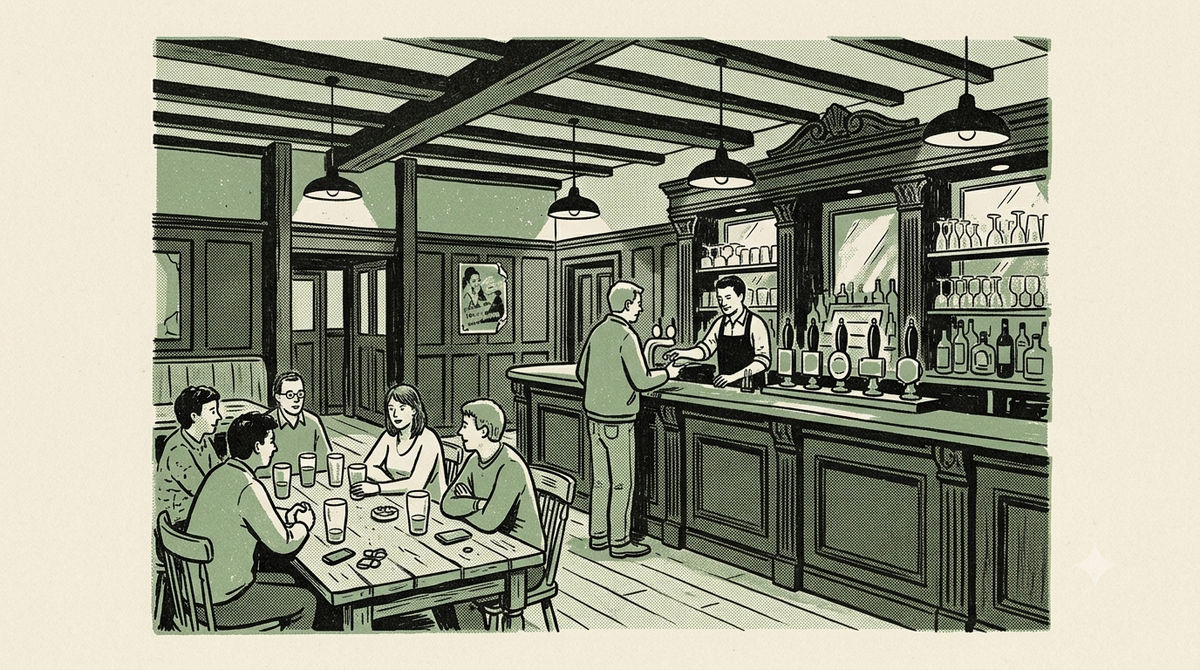
You're in London for a 4-day work trip. Your colleague Tom invites you to "the pub after work." You go to the Crown and Sceptre near the office. You're a group of five: you, Tom, Sarah, James, Priyanka (Tom's other colleague, also Indian). Tom orders a round at the bar: five pints. He pays. Drinks come. You sit, talk for 45 minutes. The pints are nearly done. Sarah goes to the bar and orders the next round, also pays. Another 45 minutes. The pints are nearly done. James gets up. Then it's your turn. You don't drink alcohol, you've been having sparkling water. You hesitate. What do you do?
What's actually happening
You're inside the British round. It is one of the most universal pub conventions in the UK and Ireland, and one of the most easily fumbled by visitors.
The system. When a group drinks at a pub, they take turns buying drinks for the whole group. One person orders for everyone, pays. Next round, someone else goes. The cycle continues until people leave.
The implicit math is fairness over time, not per-drink. Cost evens out by the third or fourth round. The visible problem is only one person never buying.
You can be in a round and order water or alcohol-free for yourself; the group still expects you to buy when it's your turn. Rounds for 5 people in central London run £30-50.
What works better
You don't drink alcohol. When it's your turn, go to the bar, order the group's drinks plus your soda or sparkling water, pay the full round. The round is about turn-taking, not about matching every drink.
You can't afford a round. Opt out gracefully at the start. "Hey, can I just buy my own drinks tonight? Keeping the budget tight." Most groups accept this readily when declared on the first round, less so by the third.
You drink less than the group. Pace yourself. The group will adapt. When it's your turn, buy the round.
The round is too big or too long. Leave politely. "Right, I'm calling it after this one, cheers." Universally accepted. You don't have to stay through six rounds because the round started.
You're hosting a visiting friend or relative. Brief them before the pub. "When it's your turn, go to the bar, buy a round for the group, sodas count for you. Roughly £30." Saves them the awkwardness.
What does not work. Sitting through four rounds without buying one (people notice). Offering to split the bill at the end (the round doesn't work retroactively). Forgetting your turn and waiting to be reminded (people remember).
Why it matters
The round is a social ritual, not just a money convention. It signals participation in the group. The British workplace uses the pub as a low-stakes integration ritual. For an Indian working in the UK, skipping or fumbling the round carries a small but real relationship cost.
The good news: it's a learnable convention. ₹2,500 spent on one round in London buys you a lot of social goodwill.
Try this next time
If you're going to a UK pub with a group, expect to buy a round. Mentally budget £25-50, have your card ready. If you don't drink alcohol, buy yourself non-alcoholic and pay the round price. If the group is too large for your budget, opt out on the first drink, not the third.
Quick check
1. You're at a London pub with 4 colleagues. You're 2 rounds in (Tom and Sarah have bought). You're not drinking alcohol, just sparkling water and soda. The group is winding down to one more round. What do you do?
Select an answer.
2. You're on a 3-month UK assignment. Your team invites you to the pub after a Friday meeting. The group is 8 people, central London, so a round will cost about £60. That's more than you can spend in your first month. What's the right move?
Select an answer.