Gutka, oral cancer, and the math you weren't told
TL;DR
- The pouch prints its smallest number. Six pouches a day at ₹10 is about ₹22,000 a year, and that is still the cheap part.
- Tobacco-related cancers are an estimated 27.1% of India's cancer burden, per ICMR-NCDIR's 2020 registry report. Mouth cancer is among the most common cancers in Indian men.
- Tobacco-free pan masala is not the safe version. IARC classifies areca nut itself as carcinogenic to humans.
- None of this requires quitting today. Do your own math, book a ten-minute mouth check, and save 1800-112-356 for the day you want it.
Contents
The moment
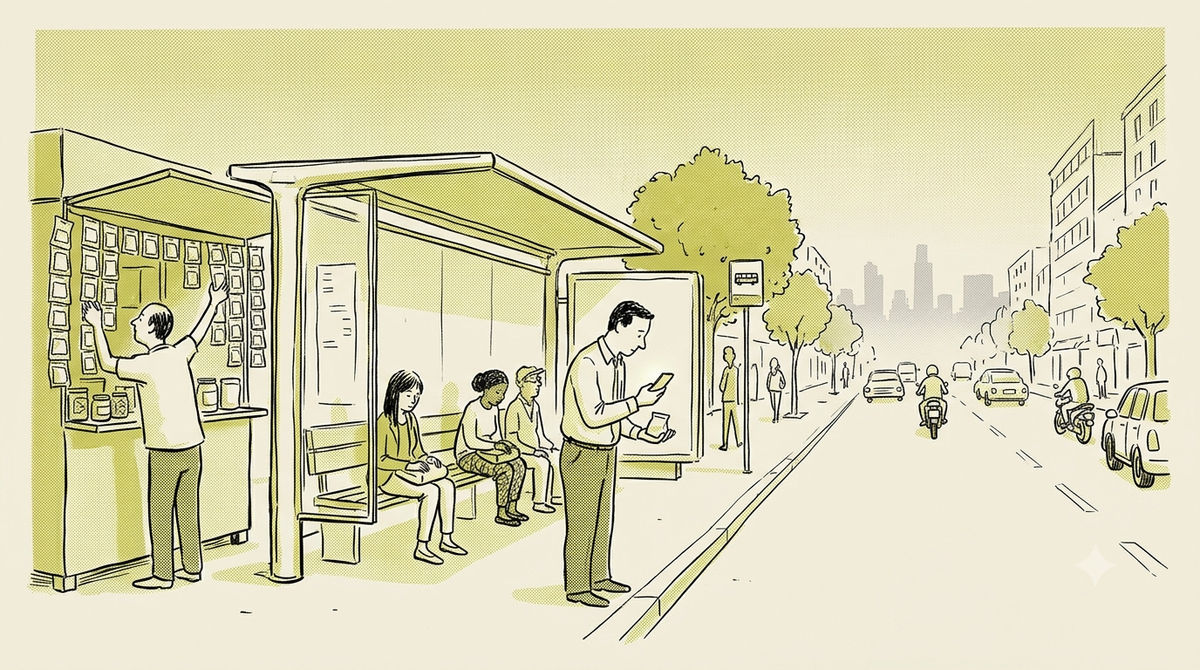
The shop near your bus stop keeps your brand where the owner's hand can reach it without looking. Ten rupees, the coin you never miss. It has been six pouches a day for nine years, which you know, and some other numbers, which you don't. Nothing about this morning is a crisis. That is exactly why the math never gets done.
What's actually happening
You are not an exception. About 21.4 percent of Indian adults use some form of smokeless tobacco, per the Global Adult Tobacco Survey 2016-17. The pouch works the way it was designed to work: nicotine on a schedule, priced below the threshold where anyone stops to count.
So count. Six pouches at ₹10 is ₹60 a day. That is about ₹22,000 a year, ₹2.2 lakh a decade, and the pouch never shows you anything except the ₹10.
The second number is bigger. ICMR's National Cancer Registry Programme estimated 13.9 lakh new cancer cases in India in 2020. It put tobacco-related cancers at 3.7 lakh of them, 27.1 percent of the country's entire cancer burden. Cancer of the mouth sits among the most common cancers in Indian men, alongside lung, stomach and oesophagus.
The third number is the one almost nobody has been told. The tobacco-free pouch is not the safe version. IARC, the WHO's cancer research agency, classifies areca nut itself, the base of every gutka and pan masala mix, as carcinogenic to humans. Years of chewing can also stiffen the lining of the mouth, a condition called oral submucous fibrosis that arrives quietly and rarely reverses.
What works better
Three moves. None of them requires quitting today.
Do your own math. Your pouches per day, times your price, times 365. Write the yearly number where you'll see it. Not as punishment; as information you paid for and never received.
Book the ten-minute mouth check. A dentist can spot the early signs years before they become anything worse. Watch for white or red patches, a burning feel with spicy food, or a mouth that opens less than it used to. Once a year, like a haircut.
Save the number before you need it. The national tobacco quitline is 1800-112-356, toll-free, with counselling in regional languages. Saving it costs nothing and commits you to nothing. The day you want it, it should not require a search.
Why it matters
Addiction is not a character flaw; it is a well-engineered product doing its job. The counterweight is information the product never provides. The shop shows you ₹10. It does not show you ₹22,000 a year, or the 27.1 percent in the national cancer registry's report, or IARC's verdict on the "safe" pouch.
This platform mostly talks about where the spit lands. This lesson is about the person it lands hardest on, which is you. You are allowed to know your own numbers.
Try this next time
Tomorrow, buy the pouch as usual. Then open your phone's calculator and run your yearly figure while the taste is still in your mouth. Save 1800-112-356 under "Quitline" while you're there. Two minutes, no promises made. The math belongs to you now.
Quick check
1. A friend who chews six pouches a day says ₹10 a pouch is too small to bother counting. What does the actual arithmetic say?
Select an answer.
2. A colleague switched from gutka to tobacco-free pan masala and calls it the safe option. What's the accurate picture?
Select an answer.
Sources
- Global Adult Tobacco Survey (GATS) India 2016-17, Second Round Report
- ICMR-NCDIR National Cancer Registry Programme estimates 12% increase in cancer cases in the country by 2025 (Press Release, 18 August 2020)
- Betel-quid and Areca-nut Chewing and Some Areca-nut-derived Nitrosamines (IARC Monographs on the Evaluation of Carcinogenic Risks to Humans, Volume 85)
- National Tobacco Quit Line Services (NTQLS), toll-free 1800-112-356