Vietnam etiquette: chopsticks, drinking, formal greetings
TL;DR
- Never stand your chopsticks upright in rice. In Vietnam that is the shape of a funeral offering, not a parking spot.
- Greet the oldest person in the room first, and pass or receive anything with your right hand or both hands.
- Toasts are collective. Wait for 'một, hai, ba, dô' and sip when the table sips.
- Vietnam's drink-driving law allows zero alcohol, motorbikes included. One toast means Grab, not the rented Honda.
Contents
The moment
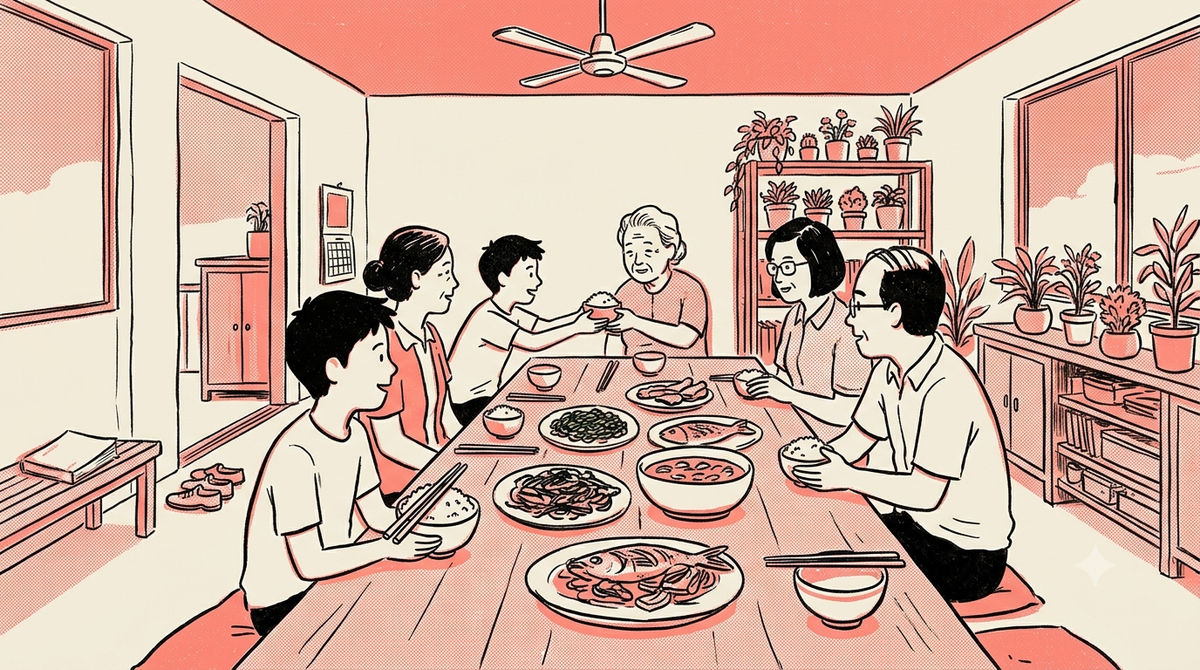
It is 7:40 pm in Da Nang and your college friend has brought you home for dinner. His grandmother sits nearest the kitchen. The table is a ring of shared plates: greens, caramelised fish, soup, rice. You finish your first bowl, reach for the water jug, and park your chopsticks upright in the rice. Nobody says anything. The table pauses for half a beat, the way a room pauses when a glass cracks.
What's actually happening
Chopsticks standing in rice look exactly like incense sticks standing in an incense bowl, and in Vietnam that arrangement belongs to ceremonies for the dead. A rice bowl with chopsticks planted upright is what gets offered to someone who has passed. You have not insulted anyone. You have set a funeral image down in the middle of a family dinner, which is different and somehow worse.
The rest of the table runs on the same quiet choreography. The oldest person is greeted first and served first. Dishes travel with the right hand or both hands. Nobody drinks alone; glasses rise together. None of it is announced, which is exactly why visitors miss it. Vietnamese culture also runs on saving face, so nobody at that table will correct you out loud. The pause is the only feedback you get.
What works better
Rest your chopsticks flat across the rim of your bowl whenever they are not in your hand. Never upright, and never pointed at anyone.
When you arrive, find the oldest person in the room and greet them first. A smile, a slight nod, a xin chào, a right-handed handshake. The national tourism board's own etiquette guide puts elders first. It adds the smaller print: pass and receive everything with your right hand or both hands, and leave your shoes at the door.
At the toast, wait for the table. You will hear "một, hai, ba, dô", one, two, three, drink, and everyone sips together. Match the rhythm, not the volume. Declining is fine; Law 44/2019 on alcohol harms literally prohibits pressuring anyone into drinking (Article 5).
And if you rented a motorbike, this is the evening's most important rule. The same law makes it illegal to drive with any alcohol concentration in your blood or breath. Not a limit to stay under, zero, and motorbikes count. It has been in force since January 2020. One toast means the Honda stays parked.
Why it matters
You already know this system. At a family dinner in Lucknow or Coimbatore you would greet the eldest uncle first without being told. Some gestures at an Indian table also belong to mourning rather than meals. Vietnam is not asking you to learn a foreign code. It is asking you to notice that its version of your code sits closer to the surface, and a guest who notices is treated like family.
Try this next time
When the food lands, do three things in order. Greet the oldest person first. Lay your chopsticks flat across the bowl rim every single time you put them down. Drink only when the table drinks, on the "dô", with a Grab booked if you drank at all. Be the guest who saw the quiet rules and kept them.
Quick check
1. Dinner at a friend's family home in Hanoi. Your phone buzzes and you need both hands for a minute. Where do your chopsticks go?
Select an answer.
2. You rode a rented motorbike to dinner in Da Nang. The host pours beer and the table counts 'một, hai, ba, dô'. Two more toasts are clearly coming. What is the right move?
Select an answer.