Singapore MRT: no eating, no drinking, no durian
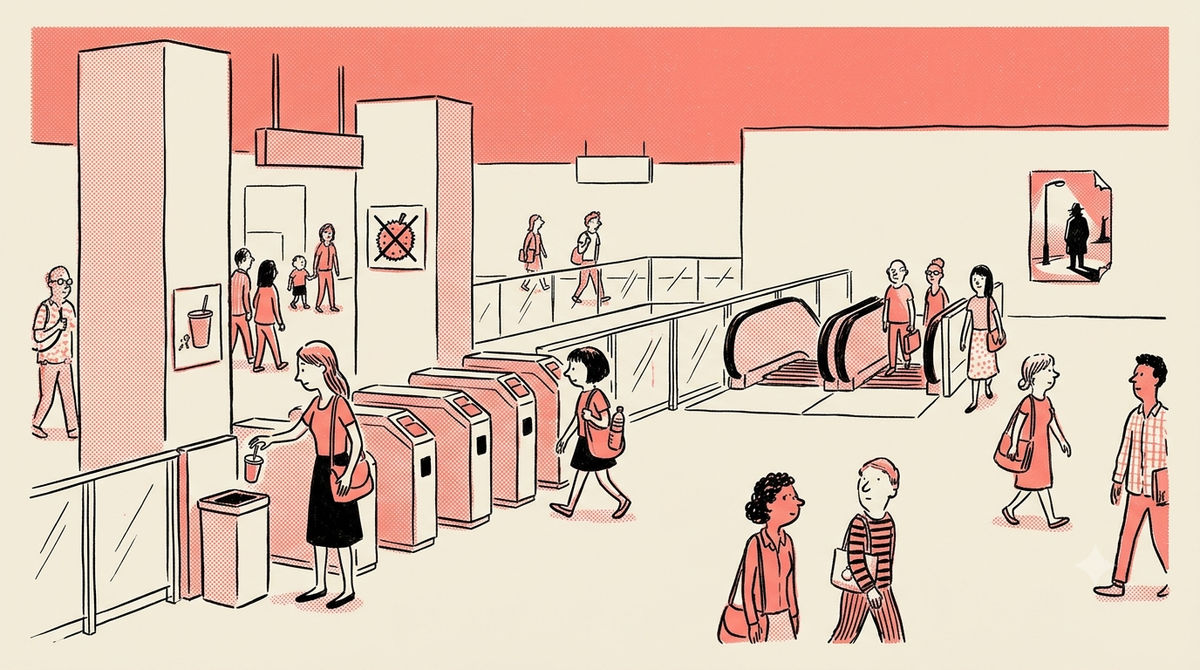
TL;DR
- Eating and drinking anywhere past the MRT fare gates is a fineable offence, and water is not an exception. Finish it or cap it before you tap in.
- The ban sits in regulation 14 of the Rapid Transit Systems Regulations, and a Notification of Offence can cost up to S$500 per prohibited act.
- Durians are banned across the system, a rule dating to 1988. The famous sign carries no fine amount; staff simply will not let the fruit ride.
- Station cafes and shops in the unpaid area are the designated exception. Eat there, then travel.
Contents
The rule
On Singapore's MRT, nothing gets eaten or drunk from tap-in to tap-out, and that includes water. Durians do not enter the system at all, in any form, in any bag.
Why this rule exists
The text is regulation 14 of the Rapid Transit Systems Regulations: no consuming or attempting to consume food or drinks anywhere on railway premises, except in places designated for it. Chewing gum gets its own clause.
The logic is the system itself. The MRT is sealed and air-conditioned. Every spill slicks a floor someone will slip on, every crumb feeds pests the tunnels would otherwise starve, and every smell stays in the carriage for stops. The rule does not trust luck with any of this, so the line is drawn at the fare gate, not at "be careful."
The durian ban is the famous special case. It dates to 1988, when the operator started fining the fruit off its trains for one reason: the smell. As its spokesperson put it then, the odour lingers long after the durian is gone, especially in air-conditioned space. Today's version of the sign carries no dollar figure. It does not need one. Staff will simply not let the fruit ride.
If you already keep your vada pav outside the metro at home, you have the habit. Singapore adds a number to it.
What happens if you don't follow it
Legal. Prohibited acts on trains draw a Notification of Offence under the regulations. LTA's current figure is a maximum of S$500 per prohibited act, north of ₹30,000. Soiling railway premises runs up to S$5,000.
Enforced. Uniformed and plain-clothes officers both check. As the fines briefing in this pack (seaa-001) lays out, posted rules in Singapore are levied rules.
Social. The carriage is full of people who kept their kopi outside the gates. Opening yours mid-ride is very visible.
Quick reference
- Finish food and drink before the fare gates. The bin beside the gates exists for exactly this pause.
- Water counts. Cap the bottle, stow it, drink after tap-out.
- Sweets and chewing gum count. The gum clause is written into the regulation itself.
- Station cafes and shops in the unpaid area are the designated exception. Eat there, then travel.
- A durian goes home by private transport with a driver who agreed to it, never by train. Buses ask the same.
- Since December 2024, new signage also nudges the quieter courtesies: keep the volume down, take one seat, leave the floor for feet.
- The S$500 never comes due if the bottle stays capped. Small compliance, immediate reward.
Quick check
1. You're at Bugis station with a half-finished iced kopi. The fare gates are ahead, your train leaves in four minutes. What's the right move?
Select an answer.
2. You've bought a boxed Mao Shan Wang durian at a market and your hotel is four MRT stops away. The box is sealed and double-bagged. What's the realistic read?
Select an answer.