Who you tip in India and why
TL;DR
- Tip people who serve you in private transactions, in cash, handed to the person. Cash reaches them; app tips often don't.
- Restaurants without service charge: 5-10%. Housekeeping: ₹100-200 at end of stay. Riders and valets: small notes.
- Cabs, petrol pumps, and takeaway counters: no tip expected. Rounding up is kindness, not obligation.
- Never 'tip' a public servant. Under the Prevention of Corruption Act, that is a bribe, and giving one is an offence.
Contents
The rule
Tipping in India runs on a two-part rule. You tip people who serve you in private transactions: restaurants, hotels, salons, deliveries. You never tip a public servant. Money offered to a government official to do their job, or to do it faster, is not a tip. It is a bribe under the Prevention of Corruption Act, 1988, and since the 2018 amendment the giver is directly liable, not just the taker.
The private half is entirely discretionary. No restaurant, hotel, or app can make it mandatory. The service charge printed on a bill is voluntary and removable on request, per the CCPA's 2022 guidelines.
Why this rule exists
The private half exists because of how service pay works. Base pay in much of Indian hospitality is modest, and the people most likely to serve you (the server, the housekeeper, the valet, the rider) keep tips as real income. A cash tip handed to the person is the one transfer that reliably arrives. Tips added on UPI or a card often route to the company account and its distribution policy.
The public half exists because a public servant's work is already paid for, by you, through taxes. "Speed money" at a counter buys a priority that was never theirs to sell, and it quietly taxes everyone who didn't pay. The Prevention of Corruption Act draws this line; Section 8 covers the person who pays.
What happens if you don't follow it
Skip a tip in a private transaction and nothing happens. That is what voluntary means. The only cost is a kindness not passed on.
"Tip" a public servant and you have committed an offence. Section 8 of the Prevention of Corruption Act, as amended in 2018, covers giving or promising an undue advantage to a public servant. The penalty: imprisonment up to seven years, or a fine, or both. "Everyone does it" is not a defence, and a UPI trail makes the case easy to build.
Quick reference
Tips in cash, handed to the person:
- Sit-down restaurant, no service charge on the bill: 5-10%.
- Dhabas and casual eateries: ₹10-50.
- Hotel housekeeping and room service: ₹50-100 per service, or ₹100-200 at the end of the stay.
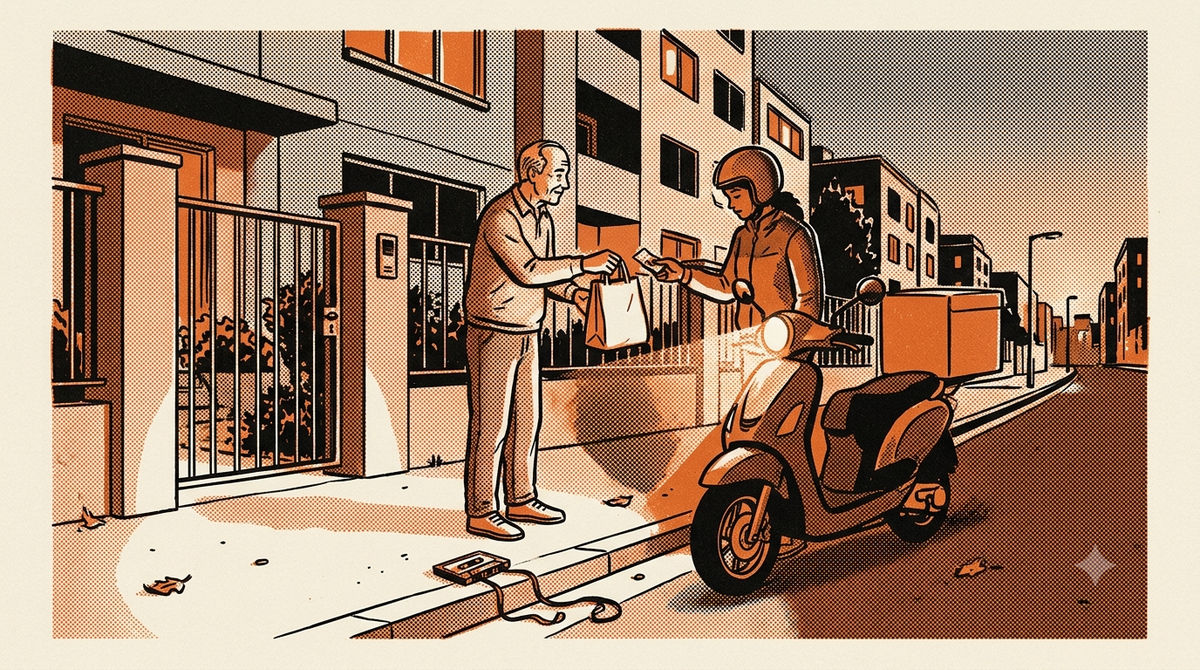
- Delivery riders: ₹10-50 in cash; in-app tips route via the platform.
- Barbers and salon staff: ₹20-100, by the level of the place.
- Valet: ₹20-50.
No tip expected:
- Cabs and autos. Rounding up the fare is a kind default.
- Petrol pumps, supermarket counters, coffee shops, takeaway.
Never:
- Government counters, police, RTO agents, anyone exercising public authority. This money has a different name and a criminal section attached.
The civic default: tip in cash, hand it over yourself, and keep the two halves of the rule separate. Generosity belongs in private service. It has no place at a government counter.
Quick check
1. You're at the RTO for a licence renewal. A tout offers to 'speed things up' for ₹500, calling it a tip for his help navigating the counters. The queue is long and you're tempted. What's actually on offer?
Select an answer.
2. Checking out after three nights at a hotel. Housekeeping was quietly excellent all stay. The bill settles on UPI at the desk. You want your thanks to actually reach the person who cleaned your room. What works?
Select an answer.
Sources
- Guidelines on prevention of unfair trade practices and protection of consumer interest with regard to levy of service charge in hotels and restaurants (F.No. J-25/57/2022-CCPA, dated 04.07.2022)
- The Prevention of Corruption Act, 1988 (Act 49 of 1988), as amended by the Prevention of Corruption (Amendment) Act, 2018
- Consumer Protection Act, 2019, Section 18: Powers and Functions of the Central Authority