The 'we'll wait outside' question
TL;DR
- The waitlist seats people in order. Standing where the host can see you does not move your name up the list.
- Give your name and number, ask how the call works, then leave the doorway. A walked wait feels half as long.
- Don't hover near tables that are finishing. Nobody eats faster under an audience.
- Leaving before your table comes up? Tell the host. Five seconds, and your slot goes to the party behind you.
Contents
The moment
Saturday, 8:10 pm. The restaurant you didn't book is full, and the host has just said the number: 25 minutes. Your name and phone number go on the list. Behind you, another party of four squeezes through the door. Your group drifts two steps inside and settles against the host stand, between the door and the first row of tables. Someone asks the evening's real question: "Should we just wait outside?"
What's actually happening
The doorway hover feels like strategy. Visible means remembered, remembered means seated sooner. Except the list does the seating, not the eye contact. Your name moves up when a table clears, and no amount of standing in the host's sightline clears one faster.
Meanwhile, the entryway fills. Three waiting parties is twelve standing people in a space built for two walking ones. Every server carrying a tray now threads twelve elbows. The couple at the corner table, lingering over the bill, eats under an audience that wants their chairs. Nobody lingers less under surveillance. They just enjoy it less.
Under the hover sits a fear: step outside and you'll be forgotten. Waiting research has an answer. David Maister's The Psychology of Waiting Lines observes that uncertain waits feel longer than known ones, and unoccupied waits feel longer than occupied ones. The doorway maximises both. You're not walking, not eating, not sure of your place. It is the worst seat in the house, and it isn't even a seat.
What works better
Give your name, your number, and an honest headcount. Then ask the host two questions. "How does the call work?" And "is 25 minutes realistic tonight?" A known, explained wait shrinks. That is Maister again.
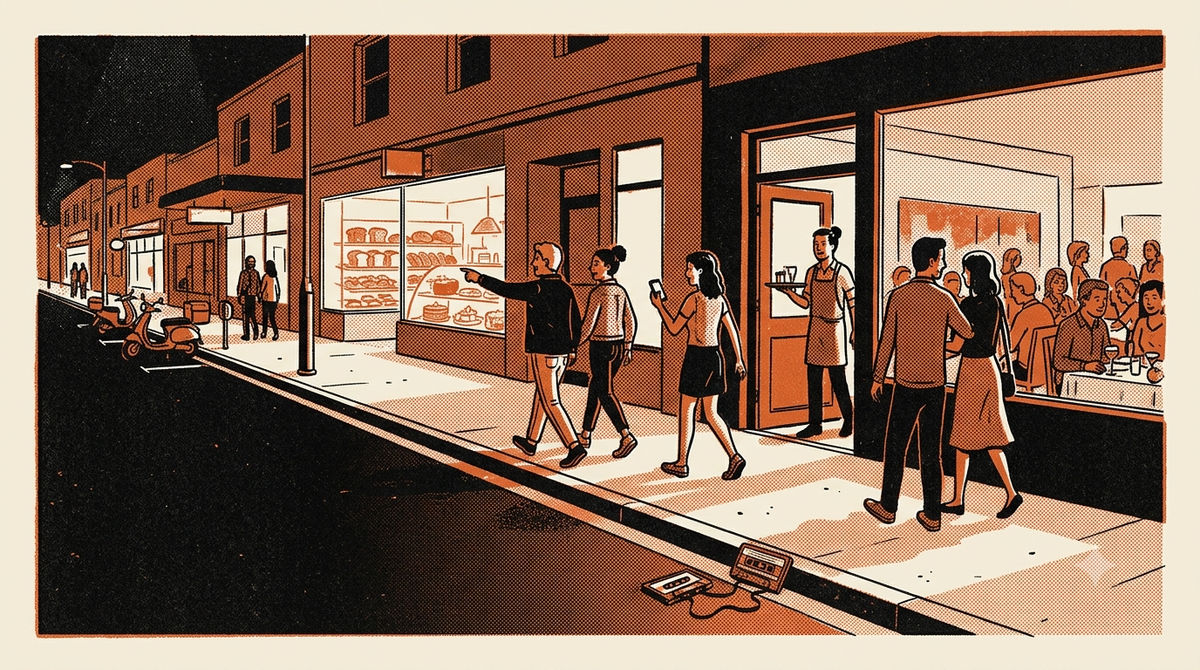
Then actually leave the doorway. Walk the block. Find the paan shop, window-shop the bakery, argue about the next plan. Stay inside a two-minute walk and keep the phone off silent. The wait you spend doing something is half the wait.
One calm check-in at the 25-minute mark is fair. A check-in every three minutes adds a fourth party to the host's queue: you.
Why it matters
The list is the fairest thing in the room. It seats people in the order they arrived, which is exactly what you would want if another party were hovering and you were the one outside. Pressuring the host to seat visibility over sequence is queue-jumping performed standing still.
The doorway also isn't neutral ground. It is the staff's working entrance and, on a bad night, the exit. India's Model Building Bye-Laws, 2016 tie public buildings to the National Building Code's fire and life safety chapter. The logic is plain: exits stay clear because clear exits save lives. A doorway packed with waiting parties is friction on a good night and a hazard on a bad one.
Try this next time
Told 25 minutes? Give your number, confirm how the call works, and walk one full block in any direction. Set a 20-minute timer. If plans change and you decide to leave, tell the host on your way past. Five seconds, and your slot goes to the family behind you instead of dying on the list.
Quick check
1. Saturday night, no booking. The host says 25 minutes and takes your phone number. Where do you wait?
Select an answer.
2. It's 8:40. The 25-minute estimate has passed and there's been no call. What's the right move?
Select an answer.