Leaving the table: plates, the waiter, and the bill
TL;DR
- Get a server's attention with a raised hand and eye contact, never a snap, a whistle, or a shout across the room.
- In a casual place, a light stack of plates toward the edge helps. In fine dining, leave it; they clear in a sequence.
- Agree the payment split before the bill arrives, so settling takes seconds instead of a ten-minute negotiation.
- Scan the bill as you pay: the service charge is voluntary and can be removed. Then free the table for the people waiting.
Contents
The moment
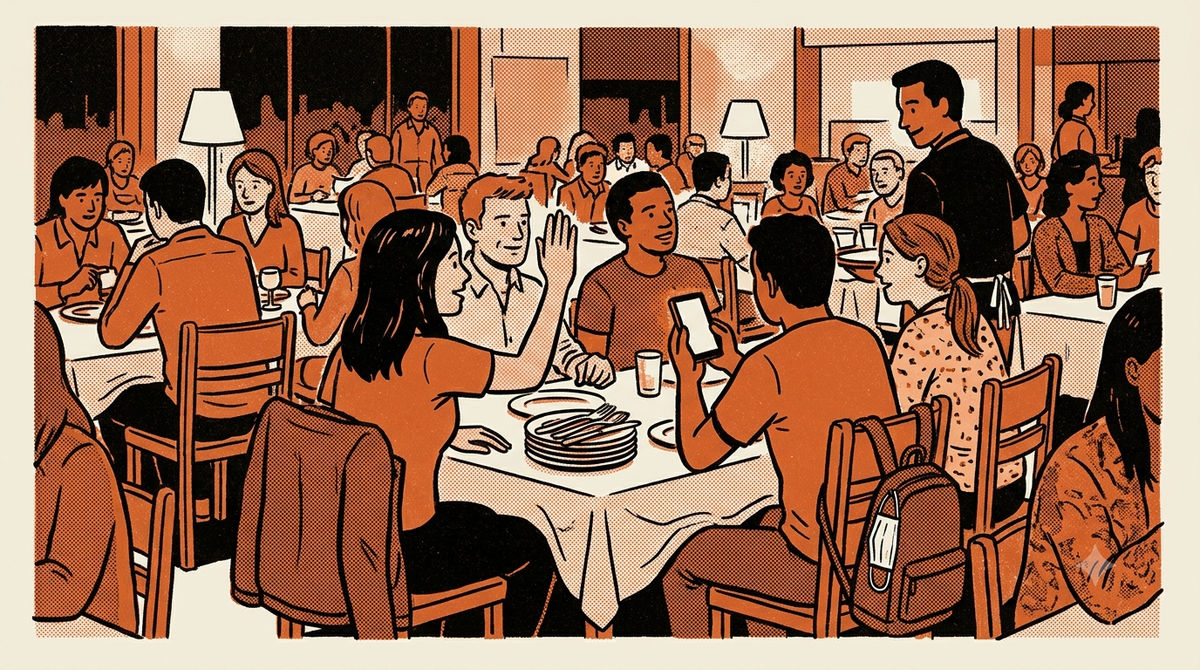
Nine-thirty on a Saturday, a full restaurant. Your table of six has finished. Plates sit where they landed. Someone raises two fingers and snaps at a passing server, then calls "boss" across three tables. The bill arrives and six phones come out. For the next ten minutes the table becomes a UPI negotiation. Who had the extra naan, who owes whom, while a family of four waits by the door.
What's actually happening
The meal is over, but the table is still working. Two small things decide how the ending lands: how you get the server's attention, and how fast you settle and stand.
A snap, a whistle, or "boss" turns a person into a summons. The server heard it; they also heard the tone. It does not make the food come faster. It just tells the room how you see the person carrying it.
The bill delay is the other half. A group that starts the split only when the bill lands holds two things hostage. The server cannot close the table, and the people at the door cannot sit at it.
What works better
Get attention like a person, not a bell. Catch the server's eye, raise a hand, a small nod. If they are turned away, a quiet "excuse me" as they pass. That is all it takes; you are not in a stadium.
Stack lightly, if the place is casual. A neat push of plates toward the table edge, cutlery gathered on top, saves the person clearing a trip. In a fine-dining room, leave it; they clear in a sequence and a tower gets in the way. When unsure, do nothing dramatic and let them work.
Settle the split before the bill lands. Somewhere over dessert, agree the plan: one person pays, everyone UPIs them; or split evenly and skip the forensics over who had the second coffee. Scan the printed bill once as you pay. The service charge on it is voluntary and can be removed on request (see the service-charge lesson). Then stand.
Why it matters
UPI is now India's default payment rail, running well over twenty billion transactions a month (Source: NPCI). The transfer itself takes seconds; the negotiation is what eats the table. Sorting it early turns ten minutes into thirty.
There is a courtesy underneath the math. A restaurant lives on turning tables. A table of six sitting fifteen minutes past the last bite, mid-argument over eighty rupees, is one fewer table the room can seat. That is a longer wait for everyone at the door. You are not being rushed out. You are just not the only table.
Try this next time
Do three things as you finish. Agree the payment plan before you ask for the bill. Get the server's attention with a raised hand, never a snap. And once you have paid, gather your things and free the table. The next guests, and the person who has to reset it, will feel the difference.
Quick check
1. Your table needs the bill. The server is across the room, facing away, and two friends are getting impatient. What actually works and keeps the room civil?
Select an answer.
2. Dinner for six comes to a bill that already has a 10% service charge added. A queue is building at the door. What settles this fastest and fairest?
Select an answer.