Ordering at the counter: pace, group, decisions
TL;DR
- Decide in the queue, not at the till. Every minute at the front is added, whole, to everyone behind you.
- One person orders for the group, payment open. The committee meeting is a queue activity.
- Paid? Step aside to the pickup end so the next order can start.
- Reach the front undecided? Wave the person behind you through. One sentence, zero cost.
Contents
The moment
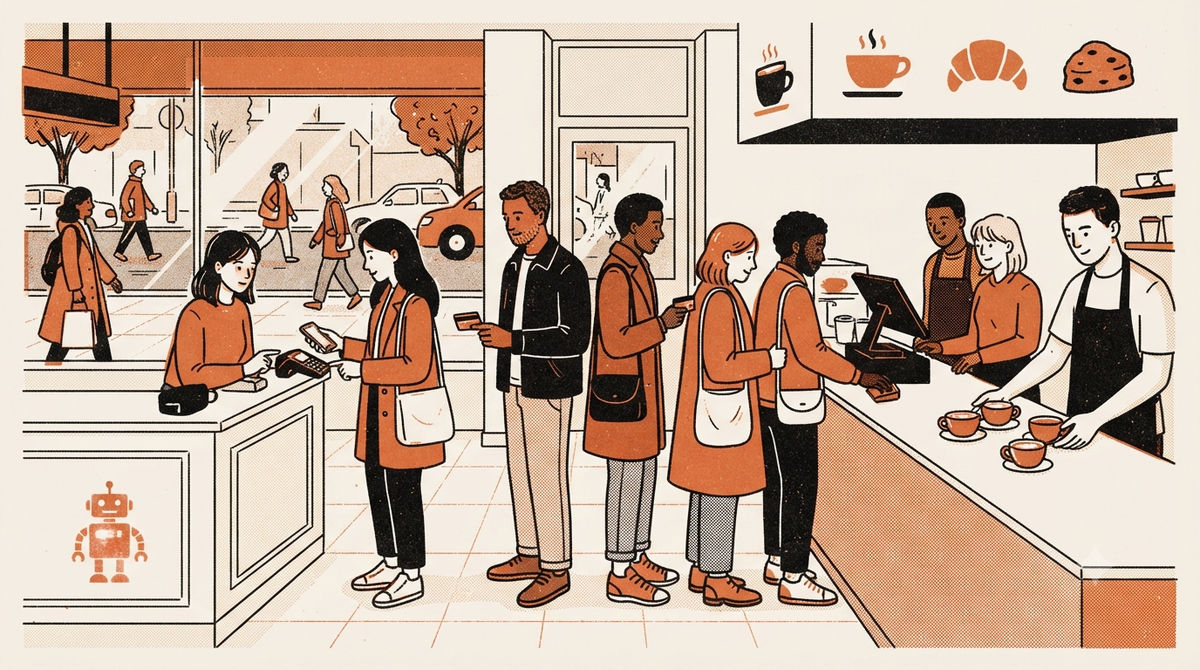
8:45 on a weekday morning, the coffee counter below your office. Nine people queue behind you. You and two colleagues arrive at the till and open the day's first meeting. What is everyone having. Whether the sandwich is big. Whether to share. The barista waits. The card machine waits. Nine people, coffee-less, wait.
What's actually happening
A counter has one till, and the till is the narrowest point of everyone's morning. The queue is where deciding is free. The front is where deciding is expensive, because every minute spent choosing there is added, whole, to every person behind you. Forty extra seconds with nine people behind you manufactures six minutes of collective waiting out of nothing.
None of this is malicious. The menu board hangs behind the counter, so it feels like something you read on arrival. Groups defer the decision because the till is where the decision falls due. And nobody thinks of themselves as the slow order; the slow order is always the person ahead.
The stakes compound yearly. The NRAI's India Food Services Report 2024 projects India's food services sector at ₹7.76 lakh crore by 2028. That would make it the world's third largest. More cafes, more counters, more 8:45 queues. The two-minute order is turning into a daily civic skill, like merging lanes.
What works better
Decide in the queue. The board is readable from three places back; read it there, not at the till.
Send one person to order for the group, with the full order settled and payment open. The committee meeting is a queue activity, not a till activity.
Batch your questions. "What's in the grilled sandwich" is a fair question. A guided tour of the pastry case at peak hour is not; come back at 11 for that.
Pay, then step aside to the pickup end of the counter. The till's job is the next person. Your coffee will find you.
And the rare move, the one baristas remember: reach the front undecided, and say one sentence. "Go ahead, I need a minute." The queue keeps moving, and you've lost nothing except a turn you weren't ready to use.
Why it matters
A counter queue moves at the speed of its slowest order, and on a nine-person morning every saved half-minute is collective time handed back. Waiting research backs the feel of it. David Maister's The Psychology of Waiting Lines observes that unoccupied, unmoving waits feel longer than they are. A queue that keeps moving is kinder than its clock time suggests. The barista is running triage at 8:45. Being a fast, ready order is the easiest assist in the building.
Try this next time
On your next group coffee run, do three things while you're third from the front: settle the group's order, open UPI, end the phone call. If you reach the till still undecided, wave the person behind you through. One sentence, and nine mornings behind you go slightly better.
Quick check
1. Three of you reach the till at a busy counter at 8:45 am. Which version does the queue behind you deserve?
Select an answer.
2. You reach the front and realise you haven't decided. The board has forty items. What now?
Select an answer.