Visiting a mosque as a non-Muslim guest
TL;DR
- Many of India's great mosques welcome respectful visitors of every faith outside prayer times; Jama Masjid's visitor windows sit around the midday prayer.
- The protocol is a close cousin of the temple and gurdwara visit: shoes off at the prayer hall, modest dress, voice low. A scarf is often optional, always worth carrying.
- If the azaan sounds while you are inside, step to the courtyard's edge and watch quietly from the back. Prayer lasts minutes; everything resumes after.
- Architecture photos are usually fine; people at prayer are not scenery. Ask first, never use flash, and a caretaker's no ends it.
Contents
The moment
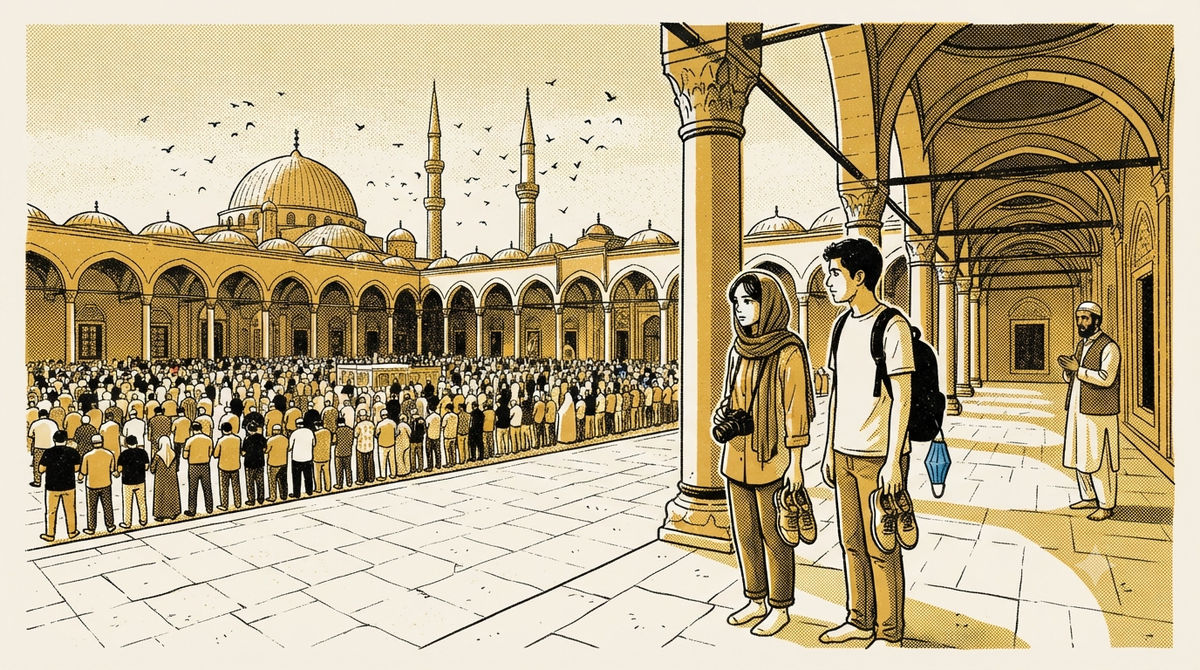
Saturday morning in Old Delhi, 10 am. Your friend wants to see Jama Masjid before the lanes fill up. At the gate you slow down: shoes in hand, scarf in bag, and one question you feel silly asking out loud. Can I even go in, or is this only for Muslims? Beyond the steps, the courtyard is vast and calm, and kites are circling the minarets.
What's actually happening
The hesitation is unfamiliarity, not unwelcome. A mosque is a house of congregational prayer, and many of India's great mosques receive respectful visitors of every faith outside prayer times. Jama Masjid's visitor windows (7 am to noon, then 1:30 to 6:30 pm) are built around the midday prayer. Its courtyard has held 25,000 worshippers since Shah Jahan built it in the 1650s.
The guest protocol is a close cousin of what you already do at a temple or a gurdwara: shoes off at the prayer hall, modest dress, voice low. The Muslim Council of Britain's Visit My Mosque campaign has hundreds of UK mosques host open days for neighbours of all faiths. Its visitor guide publishes the same short list for first-timers, and adds that a headscarf is usually optional for visitors, though welcome. Some famous mosques set stricter codes: Abu Dhabi's Sheikh Zayed Grand Mosque requires ankle-length clothing for everyone and a headscarf for women, and says so before you arrive.
What works better
Timing. Visit between prayers, and skip Friday early afternoon entirely; the weekly congregational prayer is the mosque's fullest hour and not visiting time. If the azaan sounds while you are inside, step to the edge of the courtyard and wait quietly. Rows will form; watching respectfully from the back is fine.
Dress and entry. Shoulders and knees covered; carry a scarf. Shoes come off where the racks begin. Phone on silent.
Inside. Walk the courtyard freely. Don't cross directly in front of someone praying; go behind them instead. Don't touch Quran copies or their stands. The ablution taps are for worshippers washing before prayer, not for you to freshen up.
Photography. Architecture is usually fine; the Sheikh Zayed Grand Mosque explicitly allows personal photography. People at prayer are not scenery: ask before anyone is in your frame, never use flash, and a caretaker's no ends it.
Ask. Caretakers field visitors' questions every day, and many major mosques run guided visits; Abu Dhabi's Grand Mosque offers free daily tours. One honest question beats an hour of guessing.
Why it matters
A mosque is a neighbourhood institution as much as a monument: a school, a charity counter, a cool floor on a hot afternoon. Visiting one respectfully is the same civic move as the gurdwara langar or the temple queue. You are a guest in a space others hold sacred, and the guest frame (quiet, unhurried, curious) is the entire etiquette. Traditions that open their doors, from Jama Masjid's visitor hours to the UK's open-day weekends, are trusting the visitor to hold up the other half.
Try this next time
If you have never been inside a mosque, pick a major one in your city and check its visiting hours; in Delhi that is Jama Masjid outside the noon window. Go mid-morning on a weekday, carry a scarf, wear covered shoulders and knees, and leave 30 minutes for the courtyard. Then ask the caretaker one question about the building. The answer is usually the best part of the visit.
Quick check
1. You are inside a large mosque's courtyard, photographing the colonnade, when the azaan sounds and rows begin forming for prayer. What is the respectful move?
Select an answer.
2. You are planning a Sheikh Zayed Grand Mosque visit in Abu Dhabi with your parents, and Friday is your only free day. What does the checklist look like?
Select an answer.