The 'Rohit loves Pooja' problem on every monument
TL;DR
- Almost every famous Indian monument has carved names on it. The people doing this are rarely malicious. They are mostly young, on a trip, doing what previous visitors have done.
- AMASR Act 1958 Section 30 (as amended 2010) makes defacement of a centrally protected monument punishable by up to 2 years imprisonment, ₹1 lakh fine, or both. Enforcement is rare. The Hampi 2019 pillar-pushdown case shows it works when triggered.
- Don't carve, don't scratch, don't sticker, don't mehendi, don't wedge coins into cracks, don't climb for the photo. The photo can be taken from two metres away.
- If you witness defacement, calm direct ask first ('that's centrally protected, ₹1 lakh fine'), ASI staff second, social-media shaming rarely. The Hampi case prosecution started from a visitor video.
Contents
The moment
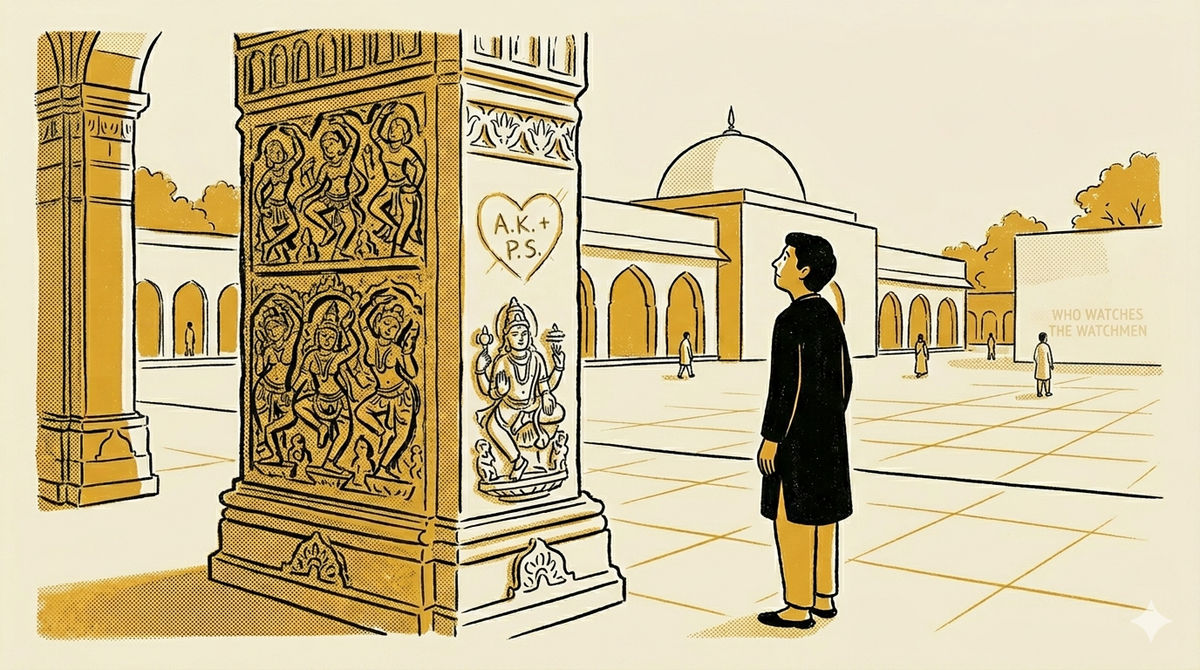
You are at Hampi's Vittala Temple, walking toward the famous stone chariot. The sun is brutal at 11:30 am. You notice the carved pillars at eye level. Among 500-year-old dancing figures, someone has scratched "Rohit + Pooja, 2019" into a 16th-century pillar. Below it, "RT + SK Forever." Below that, an attempted heart with an arrow. The carving has cut through the original surface to expose paler stone. The graffiti is permanent. The next 500 years of visitors will see this.
What's actually happening
Almost every famous Indian monument has this problem. The Taj Mahal has names scratched into marble. The Qutub Minar has graffiti up to about seven feet (where humans can reach). Hampi, Khajuraho, Mahabalipuram, Konark, Ajanta, Chittorgarh, every one has the names, dates, hearts, initials.
The people doing this are not malicious. They are mostly young, often on a school trip or college break, almost always doing what previous visitors have done. The defacement is contagious: once the first name is on the wall, the next visitor feels less inhibited about adding theirs.
The structural failure is enforcement. The Ancient Monuments and Archaeological Sites and Remains Act 1958 (AMASR), Section 30, criminalises defacement of a centrally protected monument. The 2010 amendment raised penalties to up to 2 years imprisonment, ₹1 lakh fine, or both. In practice, ASI prosecutes a handful of cases a year. Visitors know this.
The civic failure is collective. The graffiti has not stopped because, on the day each name was carved, no other visitor said anything.
What works better
Do not carve. Do not scratch. Do not write. Do not sticker. Do not paint. Do not chalk. Do not apply mehendi to monument walls (yes, this happens). Do not tie threads, wedge coins into cracks, or stick chewing gum on stone.
Do not touch where you do not need to. Most monument damage is incidental: thousands of hands, skin oils and acids slowly eating through stone over decades. Hands off, even where touching is not prohibited.
Do not climb. The "I'm just standing for the photo" climb is the bulk of climbing damage. The photo can be taken from two metres away.
Do not bring food inside. Even where allowed, litter gets left behind. Eat outside.
Do not use flash where prohibited. Flash damage to ancient pigments (Ajanta especially) is permanent.
If you witness defacement, report to on-site ASI staff. They sometimes intervene. The reporting is the only mechanism between "individual deciding to deface" and "monument permanently damaged."
Why it matters
Indian monuments are among the world's largest collections of pre-modern architecture. They survive because successive generations chose not to dismantle them. Each generation votes on whether the next inherits an undamaged stone, or a stone with "Rohit + Pooja" scratched into it.
The Hampi 2019 pillar-pushdown is the cleanest example of the system working. A visitor's video went viral. ASI filed an FIR. The accused were arrested, made to re-erect the pillar in front of ASI officials, and fined ₹70,000 each. The law has teeth. It needs visitor reporting to activate.
Try this next time
For your next monument visit, commit to leaving it as you found it. No marking, no climbing, no littering.
If you are a parent, frame it before the visit: "We are guests here. The monument was here before us and will be here after." Most kids understand.
If you witness defacement and feel safe, alert ASI staff. Photograph (without confronting) and email the ASI circle office. The Hampi case started exactly this way.
Quick check
1. You are at the Konark Sun Temple. You see a couple in their early 20s about to carve their initials into a stone block at the temple's outer wall. They have a small key in hand. What is the right move?
Select an answer.
2. You are at the Taj Mahal. A school group is on a guided tour. One student picks up a small loose stone from near the western minaret and pockets it as a souvenir. The teacher is busy with another group. What is the most useful move?
Select an answer.