Catholic, Protestant, Orthodox: small differences, common respect
TL;DR
- Indian Christianity is three broad families (Catholic, Protestant, Orthodox) and dozens of churches inside them. The visitor-facing differences are small and practical.
- The Communion line is the one moment worth knowing about. If you are not of that church, stay seated. The row will step past you and nobody will comment.
- Shoes, standing and photography vary by church. In Kerala's Syro-Malankara churches shoes come off outside; in a Goa or Delhi parish they stay on. Watch the row ahead.
- Old Goa's churches are a UNESCO site and working parishes at the same time. Weddings and funerals happen in them, so the camera waits for a gap between services.
Contents
The moment
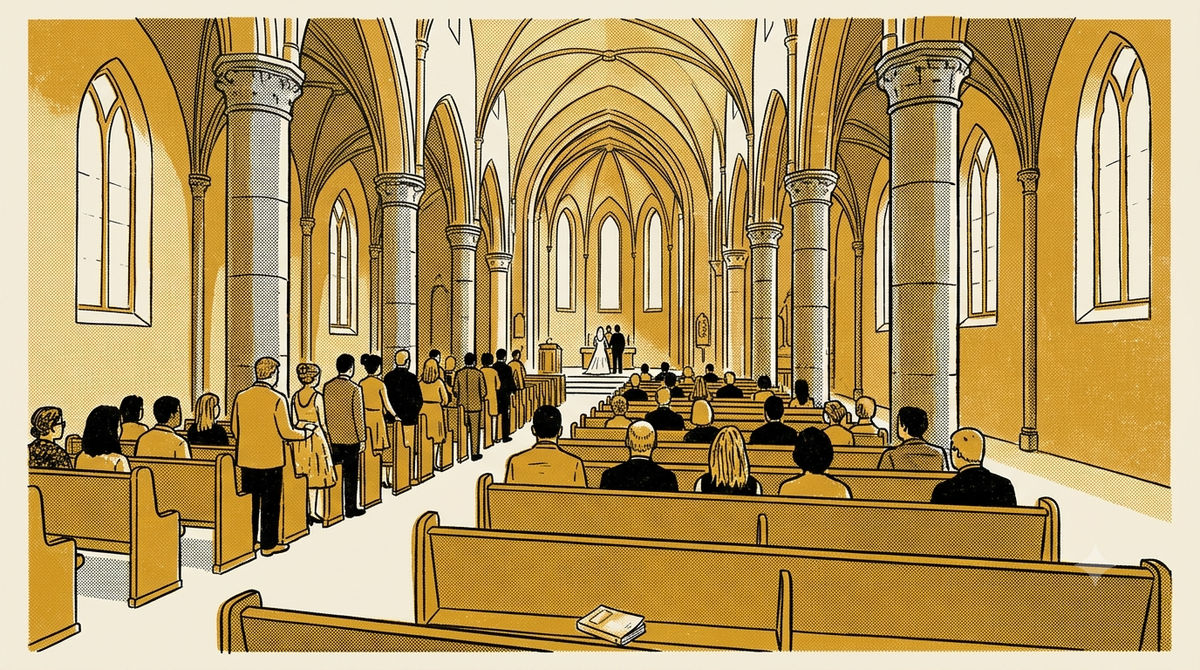
Your colleague's wedding, a church in Chennai, Saturday morning. Two-thirds of the way through, people begin rising row by row and walking to the front. Your row stands. You have roughly four seconds to decide whether you are supposed to follow, and no way to ask.
What's actually happening
Indian Christianity is not one thing. It runs in three broad families: Catholic (Latin, Syro-Malabar, Syro-Malankara), Protestant (CSI, CNI, Baptist, Methodist, Pentecostal and more), and Orthodox (Malankara Orthodox Syrian, Jacobite). Even one entry on that list contains a merger. The Church of South India was inaugurated in 1947 after thirty years of union talks between Presbyterians and Congregationalists, the Anglican dioceses of the south, and the Methodist districts. It now has 22 dioceses and about 3.5 million members.
The differences a guest actually meets are small and concrete: whether you go up for Communion, whether shoes come off, how much standing there is, whether you may photograph.
Communion is the one that matters, and the Catholic Church publishes its own answer. Members of churches not yet in full communion are ordinarily not admitted. Non-Christians are welcomed to the celebration and asked to pray for peace and the unity of the human family, but not to receive. Orthodox visitors are a documented exception under canon law, and are urged to follow their own Church's discipline anyway. Protestant practice varies, parish by parish.
What works better
When the line forms. If it is not your church, stay seated. The row steps past you; nobody is counting. Some parishes invite non-communicants forward for a blessing with arms crossed over the chest, but that is a local custom, not a general rule. If nobody has told you it applies here, seated is the quiet, correct choice.
At the door. At Syro-Malankara liturgies in Kerala, shoes are left outside and men and women sit on different sides of the nave. At a Goa parish or a Delhi CNI church, shoes stay on. Look at the rack, look at the row ahead, do what they do.
Standing and sitting. Every tradition has its own rhythm of standing, sitting and kneeling, and no visitor gets it right cold. Follow the congregation half a beat late. Nobody minds.
Dress and phones. Shoulders and knees covered, caps off inside, phone on silent.
Photography. Old Goa's seven churches and convents are a UNESCO World Heritage site, inscribed in 1986, and they are working parishes at the same time. UNESCO's own file notes that prayers, weddings and funerals are held in these living monuments. Photograph the architecture in a gap between services, not the family in the front pew.
The collection plate. Optional for guests. Passing it on is completely normal.
Why it matters
The differences between the three families are real and old, and none of them are yours to settle in the ninety minutes you are inside. What is yours is the row you are sitting in. Learn one rule and you can attend a wedding, a funeral or a Christmas service in any of them. The rule: do not join a line that is not for you.
Try this next time
Before a service at a church you do not know, ask whoever invited you two questions: what time does it actually finish, and should I go up at Communion? Thirty seconds of asking replaces an hour of guessing.
Then sit two-thirds of the way back, where you can see what everyone else does first. Be the guest who is easy to have there.
Quick check
1. You are at a Catholic Mass in Mumbai for a friend's wedding. You are not Catholic. The Communion line starts forming and your entire row stands up. What is the move?
Select an answer.
2. You are in Old Goa on a Sunday morning to photograph the Basilica of Bom Jesus. You reach the door and a service is under way inside. What is the right call?
Select an answer.