The video call on the metro
TL;DR
- A video call in a shared coach is a triple broadcast: your voice, the other person's face, and everyone behind you swept into a stranger's frame.
- Earphones plus the phone held low, screen angled at you, makes the call private again. ₹199 wired, often free in the box.
- If it can be audio, drop the video. 'Let me switch off the camera, I'm on the train' is a normal thing to say.
- If someone near you is on a loud video call, a polite 'would you mind using earphones' shifts the norm more than a glare.
Contents
The moment
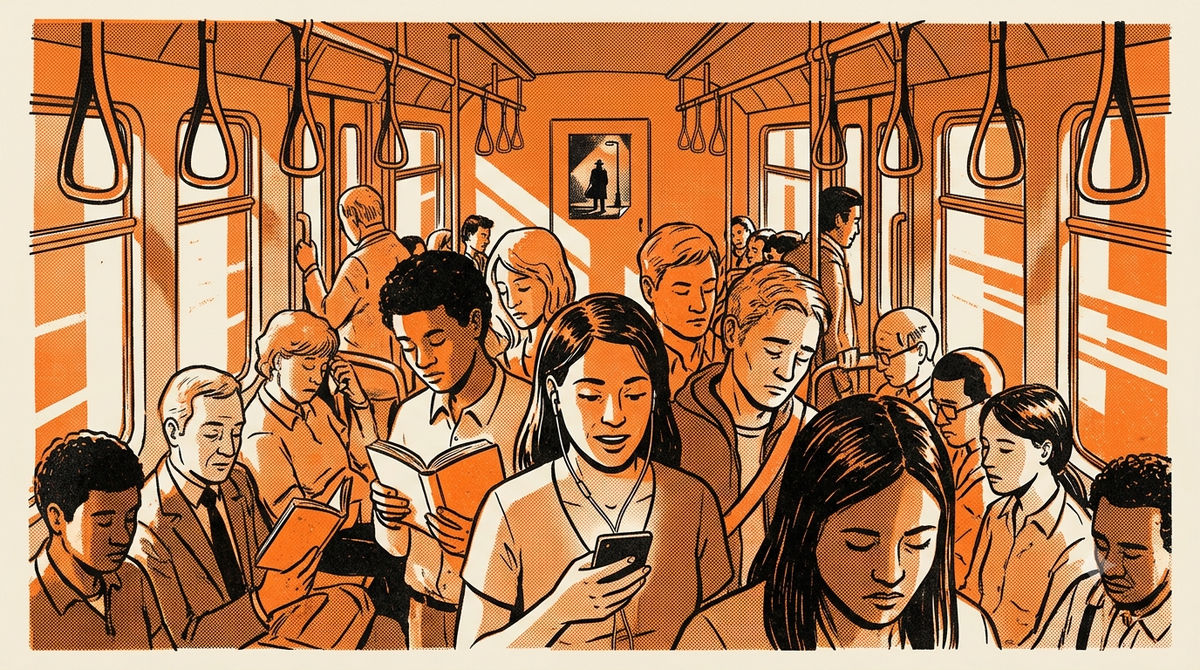
You are on the 6:40 metro home, standing room only. A woman near the doors has her phone up at face height, front camera on, talking to her mother about dinner. Her mother's voice fills the coach. Her mother's face is on the screen, visible to everyone. And every person standing behind her is now in the background of a call they never joined.
What's actually happening
A phone call on speaker broadcasts one thing: your conversation. A video call broadcasts three. Your voice. The other person's voice and face. And the faces of everyone standing behind you, swept into the frame of a call they did not agree to be in.
Most people doing this are not being rude on purpose. The phone sits at face height because that is where the camera works. At that height, the speaker points straight into the coach. You hear it as a normal chat near your ear. The person two feet away hears it as the loudest thing in the carriage.
Then there is the consent piece. The colleague on the other end did not sign up to have their face shown to eighty strangers. The strangers did not sign up to appear in the call. Nobody chose this except the one person holding the phone.
What works better
Earphones, and the phone held low with the screen angled at just you. ₹199 wired, and most phones ship with a pair. The call becomes private again. The other person's face stays for your eyes only. The coach gets its quiet back.
If it is a call you can take on audio, drop the video. Stepping onto a metro is a fine reason to say, "let me switch off the camera, I'm on the train." Any reasonable person accepts that.
If the video genuinely cannot wait (a doctor, a document someone must see), keep it under a minute, volume low, phone close. If it runs long, step off at the next station.
Why it matters
The Noise Pollution Rules, 2000 cap residential and commercial ambient noise, 55 dB by day and 45 dB at night. A coach full of one-sided video calls climbs past comfortable listening fast. WHO's community-noise work ties sustained ambient noise to stress and weaker concentration, the exact things a tired commuter is already short on at 6:40 pm.
Then the privacy math. One video call on a packed coach can put fifty uninvolved faces on a stranger's screen. That is a lot of people paying for one person's convenience.
Try this next time
For one week, take every video call on the metro with earphones in and the screen angled at yourself only. Notice that the person on the other end sounds clearer to you, not muffled by coach noise. Notice that nobody around you flinches. Be the rare commuter whose calls stay inside their own head and their own screen. The default is quietly private. Make it yours.
Quick check
1. You are about to take a video call from your sister while standing on a packed metro. What is the move?
Select an answer.
2. The person next to you is on a loud video call, their contact's face and voice filling the coach. You would like it quieter. What works best?
Select an answer.