The car-stereo culture and the case for windows up
TL;DR
- A song you chose is music; the same song through someone else's window is just noise. Windows down at volume makes it everyone's.
- Rolled up, a car is almost a sealed box. Windows up lets you play anything as loud as you like without the street paying for it.
- The Noise Rules, 2000 cap residential nights at 45 dB. A stereo with the windows down clears that easily.
- Idling outside a building late at night? Kill the volume or roll up. Sleep is the first thing noise takes.
Contents
The moment
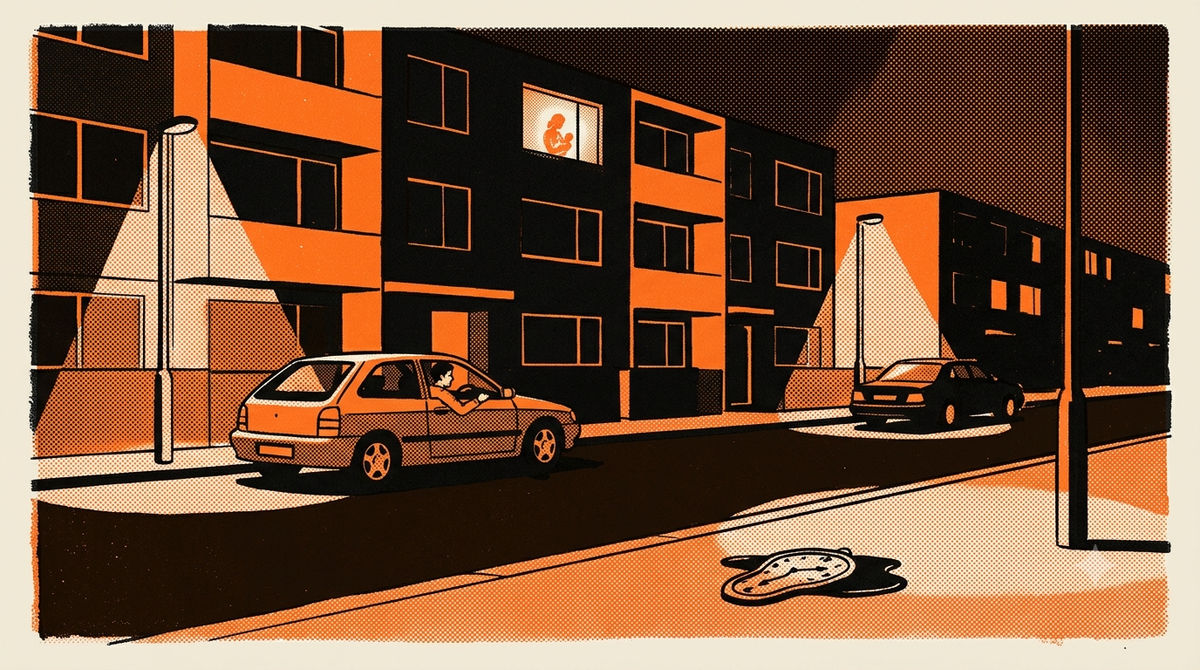
It is 11:20 pm on a quiet residential lane. A car pulls up outside the building, engine idling, windows all the way down. The stereo is turned up to a level meant for a stadium. Bass thumps through the shut windows of the flats above. A baby in 3C stirs. The driver is not angry, not showing off at anyone in particular. He just likes the song, and the song is loud, and the windows are down. He is waiting five minutes for a friend. To him it is five minutes of a good track. To the lane it is five minutes of everyone's night.
What's actually happening
Car-stereo culture runs on one small, honest mistake: the driver hears the music as his, because he chose it. Everyone within fifty meters hears it as noise, because they did not. A song you love and a song forced on you are the same sound waves and completely different experiences.
Windows down multiplies it. Glass and metal absorb a lot of sound, so rolled up, a car is close to a sealed box. Rolled down, the cabin becomes a speaker pointed at the street. The driver gains nothing from the windows being open at that volume. The neighborhood loses its quiet.
There is also a timing blindness. Music at 6 pm on a main road blends into traffic. The same music at 11 pm on a residential lane lands on people who are asleep, or trying to be. The volume did not change. The cost did.
What works better
Windows up when the music is loud. That is the entire fix, and it costs nothing. Inside a closed car, you can play the song at any volume you like, and the street stays out of it. The car is the one public-facing space where you get a private sound room for free. Use it.
If you want windows down for the air, drop the volume to a level where the person in the next car cannot name the song. On a residential lane at night, treat the stereo like a conversation, not a concert. Idling outside a building waiting for someone, kill the volume or roll up.
What does not work: full volume, windows down, parked outside homes. You get the song you already have on your phone, and forty strangers get it too, uninvited.
Why it matters
The Noise Pollution Rules, 2000 set residential limits of 55 dB by day and 45 dB at night. A car stereo with the windows down clears both easily. The night limit exists because sleep is the thing noise steals first, and lost sleep does not come back the next morning.
Beyond the number, it is a matter of consent. The people in the flats above did not choose your playlist. Windows up hands them back the choice.
Try this next time
For one week, make windows-up the default whenever the music is above conversation volume, especially after dark. Notice that the song sounds exactly as good. Notice the lane you park on stays quiet because you did not fill it. The rare driver is the one whose great taste in music nobody outside the car ever has to hear. Be that driver, and keep the windows up.
Quick check
1. You pull up outside a friend's building at 11 pm to wait for them, windows down, music playing. You will only be a few minutes. What is the move?
Select an answer.
2. On a residential street after 10 pm, what does the law actually set as the noise limit?
Select an answer.